Can dogs get hay fever?
Symptoms, causes and how to help a dog with allergies.

Dr Scott Miller
26 March 2026
For many people, hay fever means itchy eyes, sneezing and runny noses during spring and summer. And it’s not just humans who are affected – dogs can experience seasonal allergies too… But not necessarily in ways you might expect.
Expert vet Dr Emma Chandley explains how hay fever affects dogs, what symptoms to look out for and how you can help keep your pet comfortable during high-pollen months.
Quick facts
- Average claim for hay fever in 2025: £59.31 (vs £665.31 average overall claim)*
- Average claim for allergic dermatitis in 2025: £259.30*
- The condition affects more dogs than cats
- Do dogs get hayfever?
> Which dog breeds are more likely to get hayfever? - Can dogs be allergic to different types of pollen?
> When are dogs most likely to get hayfever? - Dog hayfever symptoms
> How to manage your dog’s hayfever - Diagnosing dog hayfever
- What can I give my dog for hayfever?
> Can dogs have hayfever tablets?
> Home remedies for dog hayfever
> How to remove pollen from dog fur - Other dog hayfever questions
> Can I cure my dog’s hayfever?
> Can I prevent my dog from getting hayfever?
Do dogs get hay fever?
Yes – dogs can develop hay fever and other environmental allergies, just like people.
According to Dr Emma Chandley:“Hay fever in dogs is usually part of a broader condition we refer to as atopic dermatitis, which is an allergic response to environmental triggers such as pollen.”
Some dogs show signs from a young age, while others may develop symptoms later in life. Because dogs spend a lot of time outdoors, especially in warmer months, they can come into frequent contact with pollen.
If your dog seems uncomfortable during spring or summer, it’s worth paying closer attention to their behaviour.
Which dog breeds are more prone to hay fever?
While any dog can develop hay fever, certain breeds are thought to be more susceptible due to genetics, coat type or skin sensitivity.
These include:
- Boxers
- Cocker Spaniels
- Golden Retrievers
- Dalmatians
- Terriers
- Irish Setters
That said, hay fever can affect dogs of any breed or crossbreed.
According to Petgevity figures in 2025, the breeds most affected by allergic dermatitis include the Labrador Retriever and German Shepherd.

What types of pollen affect dogs?
Dogs can react to different types of pollen, including:
- Tree pollen
- Grass pollen
- Weed pollen
Pollen particles can be inhaled through the nose or absorbed through the skin. They can also cling to your dog’s coat during walks, increasing exposure.
When is hay fever season for dogs?
Pollen levels vary throughout the year, and different types peak at different times:
- Tree pollen – typically peaks in March and April
- Grass pollen – usually highest between May and July
- Weed pollen – often peaks from June to August
Symptoms may worsen during these periods, especially on warm, dry and windy days.
Symptoms of hay fever in dogs
According to Dr Emma Chandley: “Unlike people, dogs don’t tend to show classic sneezing and watery eyes as their main signs. Instead, the symptoms are often skin-related and can be subtle at first. Because the changes can be gradual and seasonal, it is easy to miss patterns until the signs become more persistent.”
As such, dogs often show hay fever symptoms through their skin rather than respiratory issues.
Common signs include:
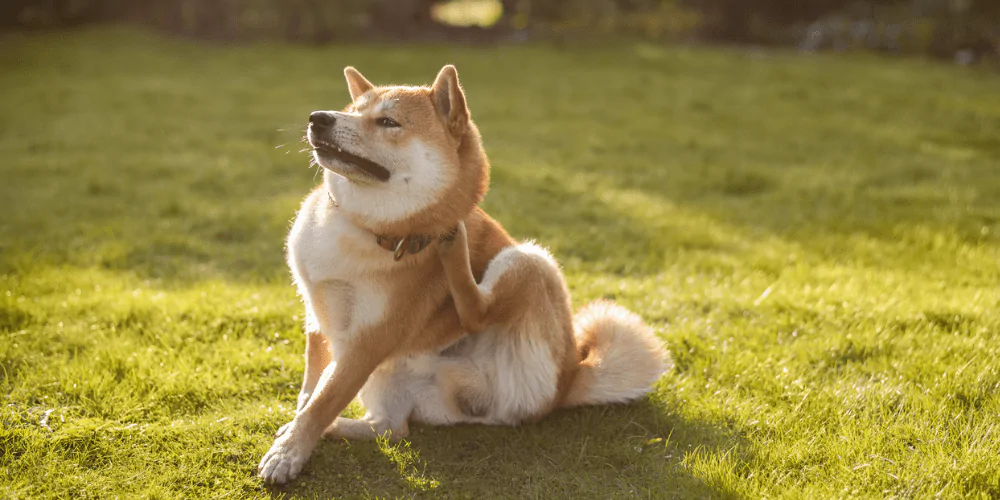
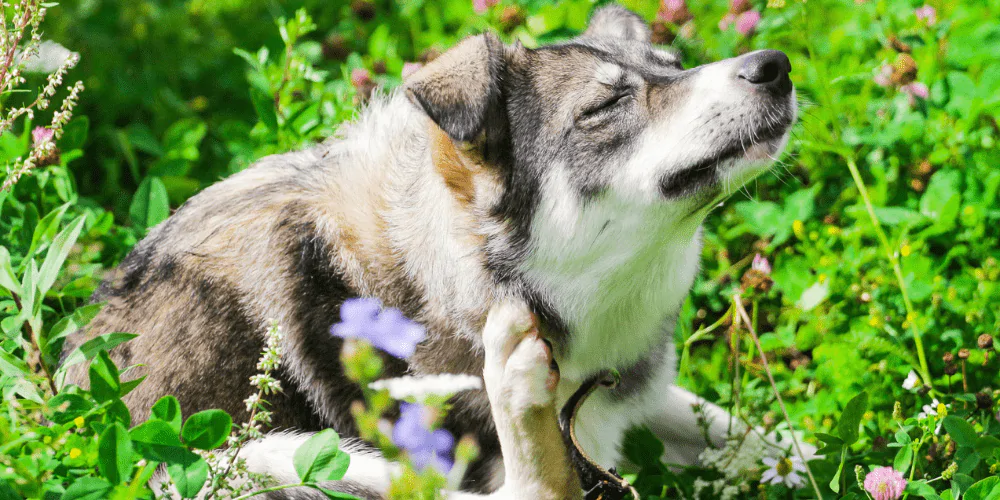
- Itching around the face, ears, paws, belly or groin
- Increased licking, especially of the paws
- Rubbing their face or ears on surfaces
- Sneezing or a runny nose
- Sore, flaky or irritated skin
- Redness between the toes, or other rashes
- Digestive upset such as diarrhoea
- Lethargy
If you notice persistent itching or behaviour changes, it’s worth speaking to your vet.
Don’t forget: if you have a policy with Petgevity, you can make free video calls to FirstVet 24/7.
How to manage your dog’s hay fever
Dr Emma says: “Complete prevention is rarely possible because pollen exposure can’t be eliminated entirely. Management usually involves reducing allergen contact and controlling the immune response.
“Practical steps include wiping paws and underbellies after walks, rinsing off visible pollen during peak seasons, and washing bedding frequently. Avoiding freshly cut grass and walks during very high pollen counts may also help some dogs.”
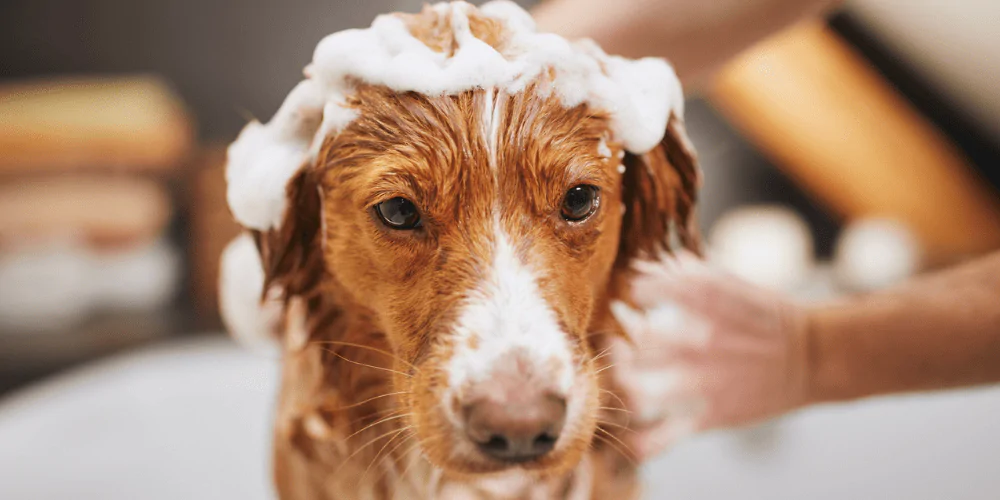
To keep your dog comfortable during a hay fever flare up, Dr Emma adds: “Focus on reducing the itchiness and protecting the skin barrier. Regular bathing with a veterinary-recommended soothing shampoo can help remove allergens from the coat and calm inflamed skin. Omega-3 supplementation may also support skin health over time.
“For dogs prone to ear flare-ups, regular ear checks and early treatment at the first sign of redness can prevent more painful infections from developing.”
It can also be helpful to do the following:
- Keep up to date with flea and worming treatments
- Close windows during high pollen periods
- Brush your dog’s coat frequently
- Walk your dog early in the morning or later in the evening when pollen levels are lower
Small changes to your routine can make a noticeable difference.
How vets diagnose hay fever in dogs
Hay fever can be difficult to diagnose, as symptoms often overlap with other conditions such as food allergies or dermatitis.
Your vet may:
- Carry out a physical examination
- Ask about when symptoms occur and whether they’re seasonal
- Recommend allergy testing, such as blood or skin tests
- Suggest a food elimination trial to rule out dietary causes
This helps identify the underlying trigger and guide treatment.
Treatment options for dog hay fever
Dr Emma says: “Antihistamines can be used in dogs, but their effectiveness is variable and generally mild. It’s not advised to use over-the-counter products without veterinary guidance, as dosing differs from humans and combination products can be unsafe.
“For dogs with moderate to severe symptoms, prescription medication may be required. In some cases, allergen-specific immunotherapy is considered, particularly when symptoms are long-standing.”
So treatments vary, depending on the severity. Your vet may recommend:
- Antihistamines
- Steroids or immuno-modulating medications
- Medicated shampoos, sprays or creams
- Eye or ear drops
- Immunotherapy (allergy desensitisation)
- Supplements to support skin health
Treatment is usually tailored to your dog’s individual needs.
Can dogs take hay fever tablets?
Some dogs may be prescribed hay fever tablets, but these should only ever be given under veterinary guidance.
Dosage can be difficult to calculate, and certain medications may not be safe for dogs. Possible side effects can include:
- Drowsiness
- Vomiting or diarrhoea
- Dry mouth or increased salivation
Always check with your vet before giving your dog any medication.
Are home remedies safe for dog hay fever?
It’s best to speak to your vet before trying home remedies.
Some products or natural treatments may not be suitable for dogs, could interfere with prescribed medication or even make symptoms worse.
How to remove pollen from your dog’s coat
After walks, gently wiping your dog down with a damp cloth or towel can help remove pollen from their fur.
Pay particular attention to:
- Paws
- Legs
- Face
This simple step can help reduce ongoing exposure and irritation.

Other dog hay fever questions
Can hay fever be cured in dogs?
There’s no cure for hay fever, but symptoms can usually be managed effectively.
With the right approach – including treatment, grooming and environmental changes – most dogs can continue to live happy, comfortable lives.
If symptoms worsen or become difficult to manage, it’s important to seek veterinary advice – not least because there may be long-term effects.
“Ongoing allergic inflammation can lead to secondary complications” says Dr Emma, and “repeated scratching and chewing damages the skin barrier increases the risk of bacterial and yeast infections. These infections can become recurrent and more difficult to control over time.
“Chronic ear inflammation may lead to thickening of the ear canals and long-term structural changes if not treated appropriately.
“Persistent discomfort also affects behaviour and overall quality of life. Dogs who are constantly itchy may become more irritable, restless, or withdrawn.”
She also states that “dogs with pre-existing medical conditions that affect the skin barrier – such as seborrhoeic disorders – may experience more significant symptoms because allergens can penetrate the skin more easily.
“Dogs with chronic ear disease can also appear to ‘suffer more’ because allergic inflammation often targets the ears. Usually, it’s underlying immune sensitivity and skin health that influences how strongly a dog reacts.
“If an elderly dog suddenly develops new itching, hair loss or skin inflammation, it’s important not to assume it is hay fever. Hormonal conditions such as hypothyroidism or Cushing’s disease, as well as parasitic or infectious causes, need to be ruled out by a vet.”
Can you prevent hay fever in dogs?
It’s not always possible to prevent hay fever entirely.
Some research suggests early exposure to environmental allergens may help build tolerance, but dogs can still develop allergies at any stage of life.
The best approach is to stay aware of symptoms and act early if you notice changes.
Supporting your dog all-year round
Seasonal allergies can be frustrating, but with the right care, your dog can stay comfortable throughout the year.
And if your pet needs treatment, having the right cover in place can help. With Petgevity dog insurance, you can focus on managing your dog’s health – whatever the season brings.
*Claims from customers with Petgevity Lifetime Plus policies, treatment beginning 1/1/2024 – 31/12/2025

