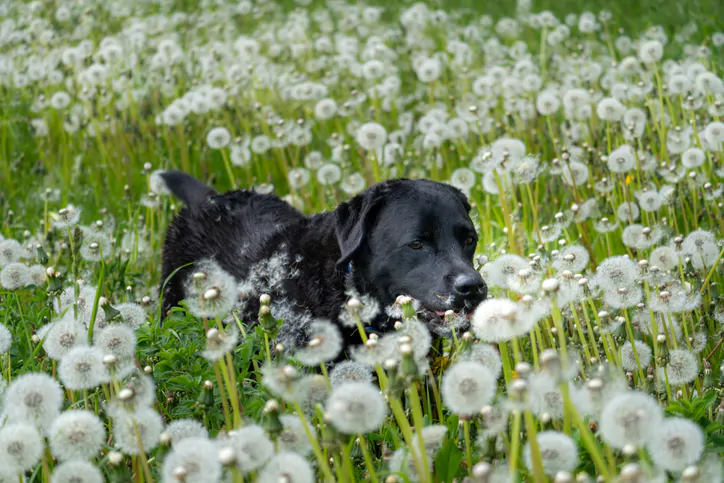
Seed the Danger
Why summer grass isn’t always pet friendly.

Aisha-Lee Jackson
12 August 2025
You’ve packed the treats, clipped the lead, and headed out for walkies — what could go wrong? Unfortunately, summer strolls come with a seasonal hazard: grass seeds. These barbed troublemakers might seem harmless, but for dogs and cats, they can spell discomfort, vet visits, and even surgery. Before your pet dives nose-first into the summer grass, here’s everything you need to know about grass seeds this season.
What Are Grass Seeds (and why should you care)?
Grass seeds are sharp, dart-like seeds found on common wild grasses in parks, fields, and even your back garden. From June through late August, these seeds are at their most dangerous. They’re small but mighty: thanks to their pointed shape and barbed edges, they can easily burrow into your pet’s fur, ears, eyes, paws, or skin. And once they’re in, they don’t come out without a fuss often leading to infections, abscesses, or even surgery.
In short? They’re lawn sharks hiding in plain sight.
Pets Most at Risk
Grass seeds don’t discriminate, but dogs tend to be the most affected, especially breeds with long fur, floppy ears, or hairy feet. Think Spaniels, Retrievers, Cockapoos, and Poodles. Cats can be affected too, especially adventurous outdoor types who love a good garden snooze. If your pet’s a fan of rolling in meadows or diving into hedgerows, you’ll want to keep an extra eye out.
Signs a Grass Seed Might Be Stuck
Not every itch is cause for alarm, but here are some red flags:
- Limping or paw chewing: Check between their toes. Grass seeds love to lodge in soft paw pads.
- Shaking their head or scratching at ears: Seeds can work their way deep into ear canals, causing irritation or infection.
- Sudden sneezing or nasal discharge: Seeds can even make their way up the nose!
- Swelling, abscesses or licking at one spot: This could indicate a seed has burrowed under the skin.
If in doubt, get your pet checked by a vet.
Prevention Tips: Nip It in the Bud
You can’t avoid grass altogether (nor would your dog forgive you if you tried), but you can reduce the risk.
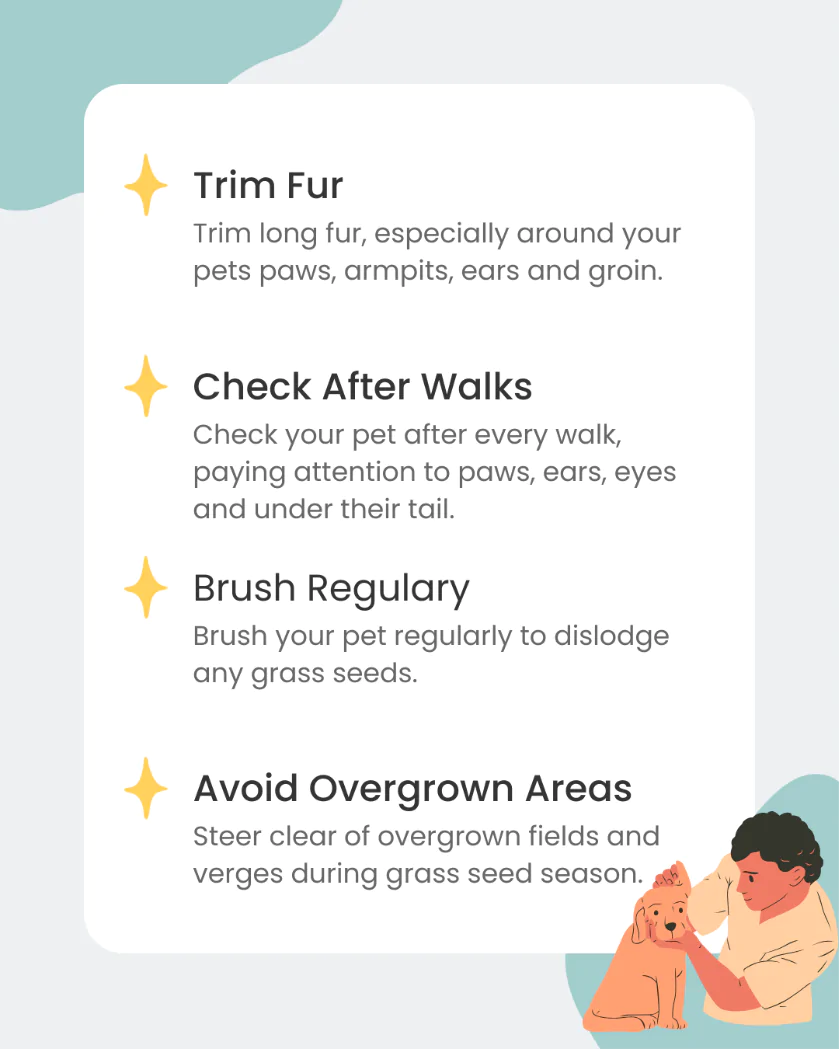
Bonus Tip: Get Them Used to a Once-Over
If you’ve got a puppy (or even an adult pet, yes, you can teach an old dog new tricks), start gently introducing them to being handled. Make checking their paws, ears, gums, and belly a normal, calm part of daily life, use treats, praise, and short, positive sessions to help them feel relaxed.
Why? Because if a grass seed does sneak in, your pet will be more likely to tolerate you (or a vet) examining them without stress, possibly catching the problem early and avoiding invasive procedures or eye-watering vet bills.
Think of it as training today to prevent trouble tomorrow.
Stay Grass-Savvy This Season
Grass seed season is no joke, but with a few checks, a trim, and some handling training, you can keep your pet safe, happy, and ready to enjoy the great British summer.
At Petgevity, we know that unexpected vet bills can weed out your savings fast. So, we hope you’ve found this guide helpful. If the worse happens rest assured our policies are designed to help protect pets and pockets alike—so you can focus on fun in the sun, not funding the vet.

