
Caring for your dog’s teeth
A practical guide to canine dental health

Dr Emma Chandley BVetMed MRCVS PGCertSAS
27 January 2026
Keeping your dog’s teeth clean isn’t just about fresh breath and a winning grin – it plays a vital role in their overall health and wellbeing.
Veterinary expert Dr Emma Chandley shares her advice on maintaining good dental hygiene for dogs, including when to start brushing, how to do it properly and how often it should be done.
- Why is dental care important for dogs?
> When should I begin brushing my dog’s teeth? - A step-by-step guide to brushing your dog’s teeth
> How often should dogs’ teeth be brushed? - Can a vet professionally clean my dog’s teeth?
> How much does dog dental cleaning cost in the UK? - Other ways to support your dog’s dental health
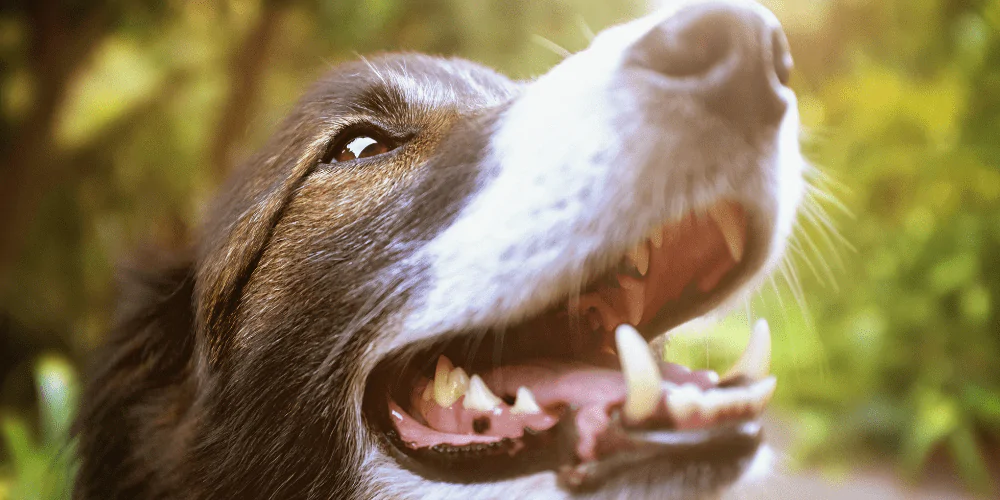
Why is dental care important for dogs?
Dogs need regular dental care just as much as we do. Brushing your dog’s teeth helps to:
- Reduce plaque and tartar build-up
- Lower the risk of gum disease and tooth loss
- Prevent bacteria from spreading from the mouth to other parts of the body
Dental disease, particularly periodontal disease, is one of the most commonly diagnosed health conditions in dogs across the UK.
Research carried out by the Royal Veterinary College, which studied over 22,000 dogs, found that approximately one in eight were affected by periodontal disease.
Some breeds were shown to be more at risk, including:
- Greyhounds
- Cavalier King Charles Spaniels
- Toy Poodles
- Yorkshire Terriers
- Border Terriers
However, dental problems can develop in dogs of any breed or age, making routine oral care essential for all.
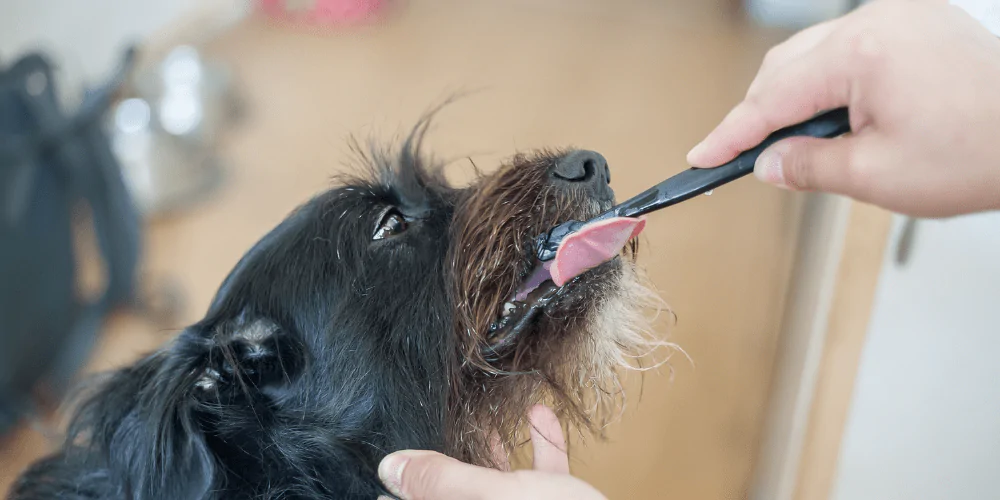
When should I begin brushing my dog’s teeth?
Introducing tooth brushing early in life can make it much easier to build a positive routine. Puppies who become used to having their mouths handled often adapt more quickly to regular brushing.
By the time adult teeth appear – usually around six months of age – your dog should ideally already be comfortable with dental care.
That said, older dogs can still learn to tolerate tooth brushing. It’s never too late to improve your dog’s oral hygiene.
If you’re worried about signs of dental disease, speak to your vet. They can assess your dog’s mouth and advise on the most appropriate care or treatment.
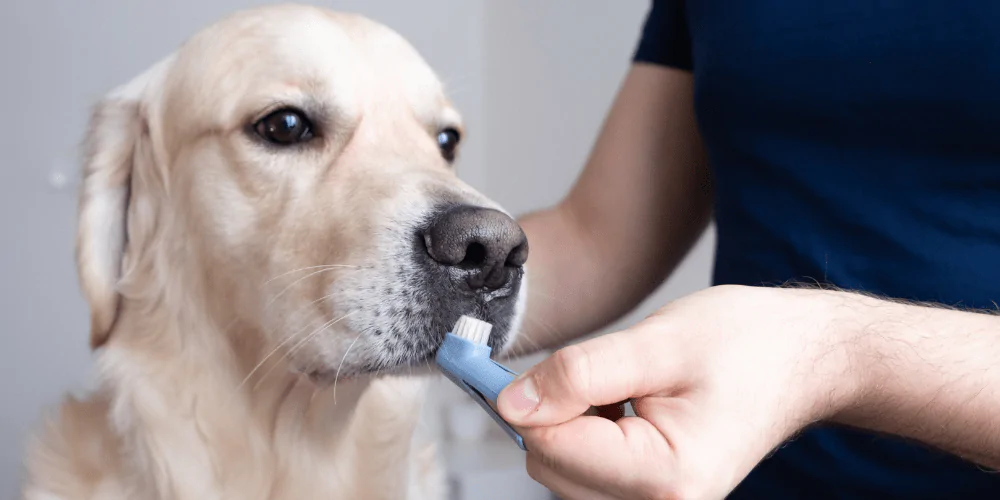
A step-by-step guide to brushing your dog’s teeth
Patience, reassurance and positive reinforcement are key when brushing your dog’s teeth. Always use toothpaste designed specifically for pets, as human toothpaste can irritate a dog’s mouth or stomach.
To help your dog get used to the process:
- Start by gently touching and rubbing their gums and teeth with a clean finger dipped in a dog-safe, tasty liquid.
- Introduce a soft dog toothbrush and allow your dog to lick something appealing from it, so they become familiar with the bristles.
- Add a small amount of dog toothpaste and let them taste it before brushing.
- Using calm encouragement, begin brushing the large canine teeth with gentle circular movements. Stop if your dog seems uncomfortable.
- Gradually increase the number of teeth you clean as your dog becomes more relaxed.
- Remember to clean the back molars, which can be reached by lifting the lips or brushing along the inside of the cheek.
- Take things slowly and reward your dog with praise throughout the process.
How often should my dog’s teeth be brushed?
Daily brushing is ideal and offers the best protection against dental disease. If that isn’t possible, aim to brush your dog’s teeth at least two to three times a week.
If your dog shows signs of stress, pain, or resistance, speak to your vet or a qualified behaviourist for advice on making the process more comfortable.
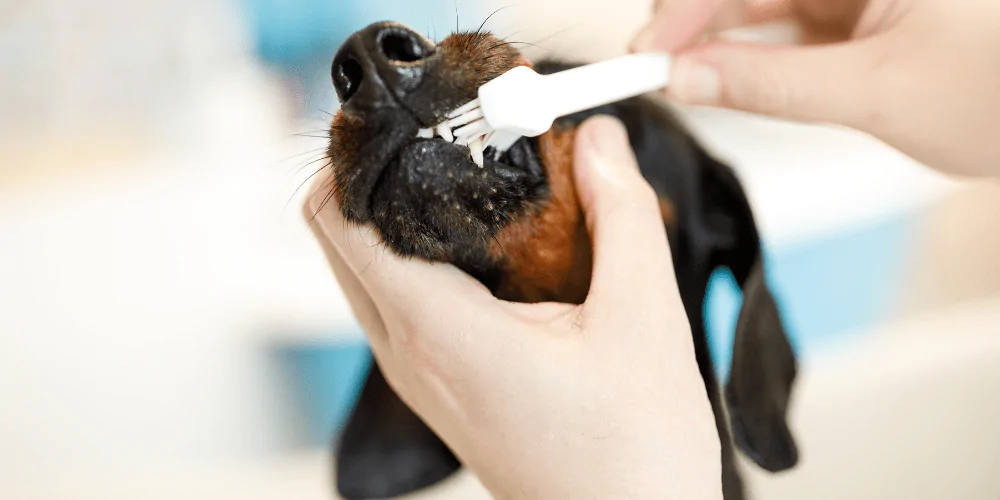
Can a vet professionally clean my dog’s teeth?
If brushing at home isn’t enough, or if your dog already has significant tartar build-up, your vet may recommend a professional dental clean.
This procedure is usually carried out under general anaesthetic to keep your dog calm and pain-free. During the treatment, your vet may:
- Examine the teeth, gums, and mouth thoroughly
- Take dental X-rays if required
- Remove plaque and hardened calculus
- Polish the teeth to slow future build-up
How much does dog dental cleaning cost in the UK?
The cost of professional dental treatment varies depending on the veterinary practice and the level of care needed. It’s best to ask your vet for a detailed estimate.
Additional procedures, such as X-rays or tooth extractions, may increase the overall cost.
For example, Animal Trust charges £419* for 90 mins of dental procedure, which typically includes:
- Scale and polish
- Any necessary extractions identified during treatment
- Anaesthetic
- Pain relief following the procedure, if required

Other ways to support your dog’s dental health
In addition to brushing, you can help maintain your dog’s oral health by:
- Feeding dry kibble designed to support dental hygiene
- Attending regular vet check-ups, where teeth and gums are routinely examined
- Using vet-recommended dental products such as chews, gels, sprays or prescription dental diets
Always consult your vet before adding new foods, supplements or dental products to your dog’s routine.
With Petgevity, dental accidents are covered as standard, and you can add dental illness cover if you need it. Find out more about our dog insurance.
*Prices correct 27 January 2026

