

Heart murmurs in cats

  • Up to £15,000 vet fees

  • No compulsory excess or bill share, even as your pet ages†

  • No upper age limit

  • Free 24/7 access to FirstVet video consultations

  • All pre-existing conditions considered*†

Why choose Petgevity pet cover for Why choose Petgevity pet cover for Heart murmurs in cats?

Vet fees up to £15,000

More info

To suit your pet’s needs, choose vet fee cover from £1,000 to £15,000. The limit resets every year you renew.
Design your own pet insurance

More info

Policies as unique as your pet. Set your own limits, excess and optional extras, for cover as snug as a collar.

Switch with unbroken cover

More info

If you switch to us from a like-for-like policy, there’ll be no gap in cover, with protection starting straight away**.

What is a feline heart murmur?

A heart murmur is an extra whooshing sound that can be heard between or instead of the normal ‘lub-dub’ sounds the heart makes. It happens when blood flow becomes turbulent rather than smooth, a bit like the sound of a waterfall.

Vets often grade murmurs from I–VI based on how loud they sound, but louder doesn’t always mean more serious.

What Causes What Causes
Overview
  • Murmurs are common in cats
  • Many conditions can cause a murmur
  • Loudness does not predict severity
  • Some murmurs never require treatment
  • Kittens can have innocent murmurs that disappear with age
What Causes What Causes
What causes heart murmurs in cats?

Heart murmurs can be caused by changes to the heart itself or by conditions that affect how smoothly the blood flows. Common causes include heart disease, such as thickening of the heart muscle (hypertrophic cardiomyopathy, HCM) or leaky heart valves.

Less commonly, murmurs can be due to developmental issues, such as a blood vessel or hole in the heart that did not close properly as a kitten.

Not all murmurs come from heart disease. Conditions such as anaemia, high blood pressure or heartworm can disrupt blood flow, creating turbulence and a murmur even though the heart itself is normal.

What Causes What Causes
Which breeds are most affected?

Heart murmurs are relatively common. Around 30% of cats have or will develop one at some point in their lives. While any cat can be affected, certain breeds are more prone to heart conditions that can cause murmurs, including Maine Coons, Persians, American Shorthairs, British Shorthairs and Siamese cats.

What Causes What Causes
Do loud and quiet murmurs mean different things?

It’s natural to assume that a louder murmur means a more serious problem, but this isn’t always true. Loudness reflects how much the blood is churning and mixing, not how well the heart is functioning.

What do heart murmur grades mean?

​​Although loudness doesn’t indicate what’s causing a murmur or how serious it is, it is a simple way to describe and monitor it over time. As you may see different vets, a universal grading system helps ensure everyone is describing the murmur in the same way:

  • Grade I: very quiet, difficult to hear
  • Grade II–III: about as loud as the normal heart sounds
  • Grade IV–VI: loud, sometimes with vibrations felt through the chest wall

Once a diagnosis has been made, changes in murmur grade can sometimes reflect progression of the underlying condition. However, this isn’t always reliable, which is why monitoring usually involves scans and other tests as well.

What Causes What Causes
Can a quiet murmur be serious?

Yes. A good example is hypertrophic cardiomyopathy (HCM), a condition that causes the heart muscle to become thickened and stiff. Even with significant changes to the heart, this condition may only produce a quiet murmur. This is why further investigation is often recommended, even if a murmur sounds mild.

Can a loud murmur be harmless?

Also yes. Some kittens and young cats have louder ‘innocent’ murmurs that are not linked to heart disease and may disappear as they grow. 

What Causes What Causes
What are the signs and symptoms of heart murmurs?

Some cats won’t show any signs of a heart murmur because a heart murmur itself doesn’t cause symptoms. Problems arise when the underlying cause – whether that’s heart disease or another condition affecting circulation – begins to interfere with how the heart works.

In more serious cases, this can lead to heart failure, where the heart can’t pump blood effectively around the body. Signs that heart function or circulation are being affected may include:

  • Fast or laboured breathing
  • Lethargy or reduced activity
  • Loss of appetite or weight loss
  • Collapse, fainting or weakness
  • Coughing
  • Sudden pain or paralysis in the back legs (a medical emergency caused by a blood clot)

Whether your cat has a known murmur or not, these symptoms should always be checked by a vet as soon as possible.

Diagnosis

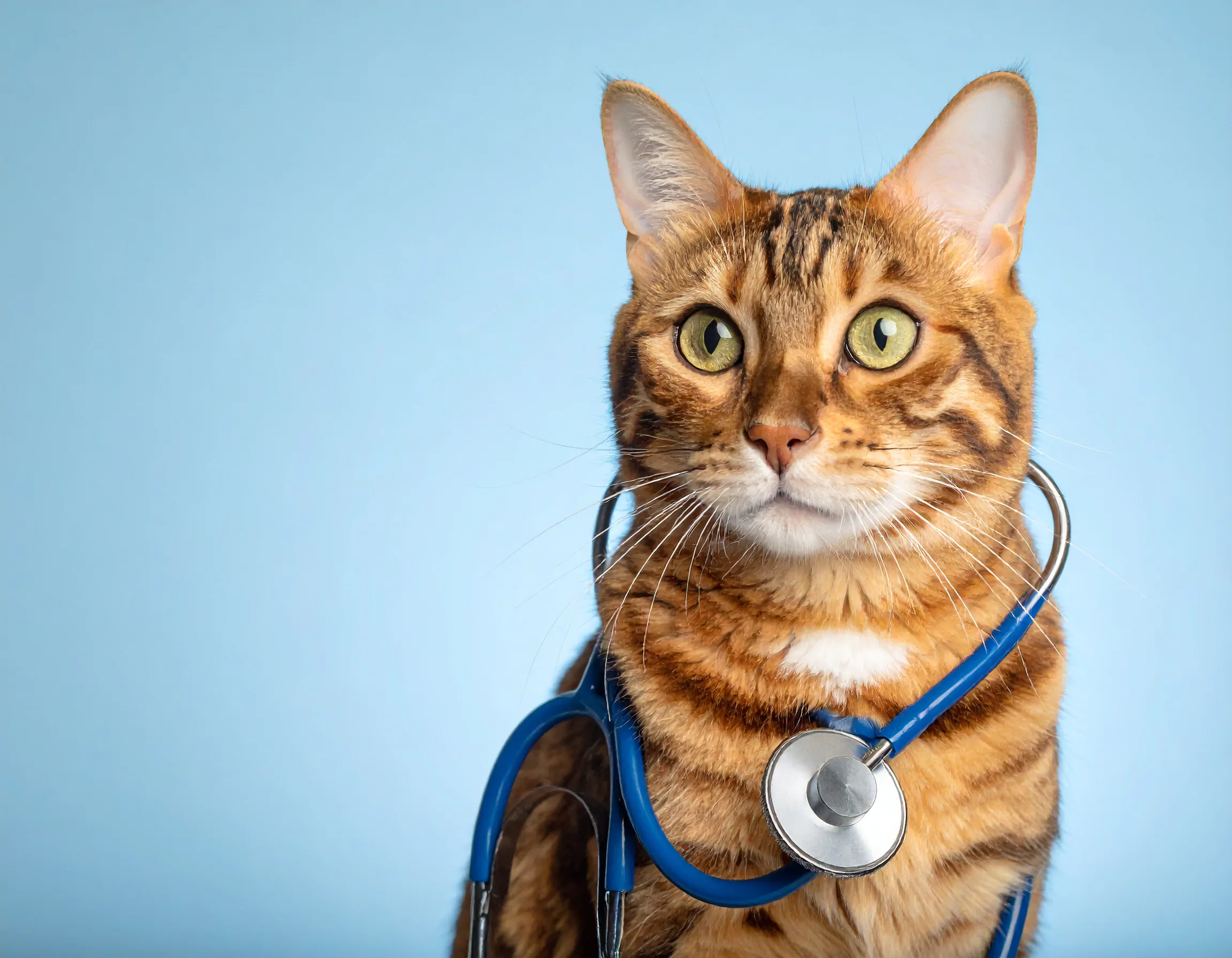
A heart murmur is first picked up by listening to the heart with a stethoscope. To find out what’s causing it and whether treatment is needed, further tests are often recommended, including:

  • Blood tests to check for underlying conditions such as anaemia or thyroid disease
  • Blood pressure measurement
  • Chest X-rays
  • Echocardiography (an ultrasound scan of the heart), which is the most useful test for assessing heart structure and function
What Causes What Causes
Treatment of heart murmurs

Treatment depends entirely on the underlying cause of the murmur. Some cats do not need any treatment at all. Others may require lifelong medication to support heart function, manage fluid build-up or control blood pressure.

If an underlying condition, such as hyperthyroidism or anaemia, is present, treating that condition may resolve the murmur.

Prognosis

The outlook for a cat with a heart murmur varies widely and depends on the underlying cause. Some cats will live normal, healthy lives without ever developing symptoms or needing treatment.

For those with progressive conditions, stress on the heart can lead to heart failure or life-threatening complications, such as blood clots. When symptoms begin to significantly affect quality of life, euthanasia may sadly become the kindest option.

What Causes What Causes
Our expert says...

“Finding out your cat has a heart murmur can send your heart into a flutter. It’s completely natural to want clear answers straight away, and I know what a stressful time this can be for owners. But properly assessing a murmur often means scanning the heart and taking precise measurements of how it’s functioning, which is usually done by a specialist. So bear with your vet here if it involves a bit of travel or a short wait for an appointment.

“It can feel like a lot to go through, especially if you’re ultimately told there’s nothing to worry about. But that reassurance is based on detailed measurements, not just how loud the murmur sounds or a gut feeling. And that’s important.

“For more serious causes of heart murmurs, picking up changes early can make a real difference to how well we can manage the condition.”

Dr Nicole Olewinski – BVSc MRCVS

What Causes What Causes
Can I get cat insurance for heart murmurs?

If you’re considering a Petgevity Lifetime Plus policy, we’ll consider all conditions when offering cover for your cat*. 

When you apply for cat insurance, just let us know: 

  • Which medical conditions they’ve had in the last two years 
  • Their health status now

Find out more about Petgevity’s cat insurance for pre-existing conditions.

What Causes What Causes

What’s included in your pet cover

Choosing Petgevity to protect your pets gives you more than just vet fee cover. Here's what you get from our policy.

Dental accident

More info

Covers your pet up to the chosen vet fee limit if they have a dental accident or injury. Always be sure to take your pet for annual dental check-ups, and follow your vet’s advice.

Behavioural treatment

More info

Get expert help with your pet’s mental and emotional wellbeing, as advised by your vet. Cover up to your chosen vet fee amount or the cost of up to 12 sessions, whichever is lower (Lifetime Plus); or up to £1,000 (Lifetime).

Complementary therapy

More info

As advised by your vet, this covers alternative treatments like acupuncture or hydrotherapy. Cover up to your chosen vet fee amount (Lifetime Plus); or up to chosen vet fee amount or £1,500, whichever is lower (Lifetime).

Emergency care

More info

If you can’t look after your pet due to an emergency, such as an unplanned hospital visit, this covers you for up to £1,500 (Lifetime Plus) in minding costs.

Third-party liability for dogs

More info

Covers you for legal costs if your dog causes injury to somebody or their pet, or causes loss or damage to someone’s property. Protects you for up to £2 million in a legal action.

Choice of optional extras

More info

Need extra protection? Choose from several optional extras to cover your pet’s needs, including dental illness, or cover if your pet is stolen or lost.

Award-winning pet insurance provider

best_pet_insurance_provider_logo

Defaqto 5 star rating when you choose vet fees over £4,000 with all optional add-ons included.

Basic cover alone has 3 star rating

best_pet_insurance_provider_logo

Three-time winner National Insurance Awards Pet Insurance Award 2022, 2023 & 2024.

best_pet_insurance_provider_logo

Awarded Best Pet Insurance Provider at The Money Mentor Awards 2024

Compare our multi-pet cover

petgevity-logo-white p-only-petgevitylogo ManyPets Petplan Agria
Maximum vet fees £15k per year £15k per year £12k per year £20k per year
Cover for pre-existing conditions?
No compulsory excess?
No compulsory co-payments for older pets? 20% (from age 9) 20% (from age 7) Min. 10% (from any age)
Tailor limits per pet on a multi-pet policy
Dental treatment for accidents?
Behavioural treatment and complementary therapy?

†For Lifetime Plus policies only – details correct as of 10 September 2024 via competitor websites. Competitor products are subject to their own T&Cs and can have different limits and requirements for cats versus dogs at different ages. For full details, please check the relevant policy wording.
For full details of Petgevity pet insurance, please read our policy wording.

Frequently asked questions

  • What does a heart murmur mean in pets?

    A heart murmur means there’s a change to the way the blood flows through the heart. Instead of flowing smoothly, turbulence creates an extra sound that can be heard with a stethoscope.


  • Can a heart murmur be harmless?

    Yes. Some murmurs, particularly in kittens or young cats, are considered ‘innocent’ and are not linked to heart disease. These may disappear over time and never cause problems.

  • How is a heart murmur diagnosed?

    A heart murmur is detected by listening to the heart with a stethoscope. Determining the cause takes a bit more investigation, most commonly an ultrasound scan of the heart.


  • Will my pet need lifelong medication?

    This depends on the cause of the heart murmur. If your cat is experiencing symptoms linked to the cause of the heart murmur, then the answer is probably yes.

  • Can a heart murmur get worse over time?

    Some murmurs do become more noticeable over time, particularly if linked to progressive heart disease. However, changes in loudness don’t always reflect how the condition is progressing.

†Lifetime Plus policies only

*Cover for pre-existing medical conditions is subject to acceptance. They will not be covered unless you have declared them and they are shown on your Confirmation of Cover.

**Illnesses and symptoms won’t be covered in the first 14 days and accidents won’t be covered in the first 2 days of the policy. This is unless you are switching from another lifetime pet insurance product with no break in cover and the claim you want to make would have been covered by your previous policy. Other exclusions may apply to other sections.