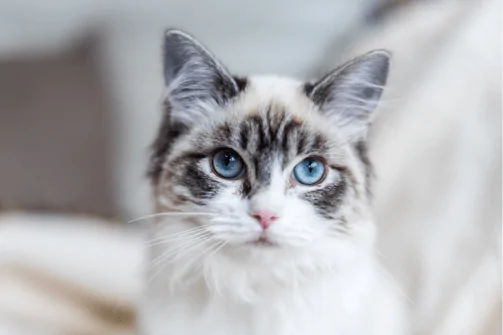
The Ragdoll is a soft, silky and cuddly cat breed known for its gentle nature and striking blue eyes. They’re affectionate, laid-back and happiest in your company. While generally healthy, some genetic conditions are worth being aware of, so choosing a responsible breeder is essential.
A guide to owning a Ragdoll
Looking for a calm, loving cat that enjoys cuddles but is not overly needy? The Ragdoll might just be the perfect pet. In fact, it’s easy to see why – as far as pedigree breeds go – these are one of the most popular in the world. They’re often described as being like puppies in their behaviour: they’ll likely follow you around, greet you at the door, and enjoy a cuddle or two without being too demanding.
But like all cats, they come with their own care needs and quirks. Here’s everything you should know before bringing a Ragdoll home.
Are Ragdolls good family pets?
Yes, they’re fantastic family pets. They’re gentle, affectionate, and tend to get along well with children and other animals.
Ragdoll size and appearance
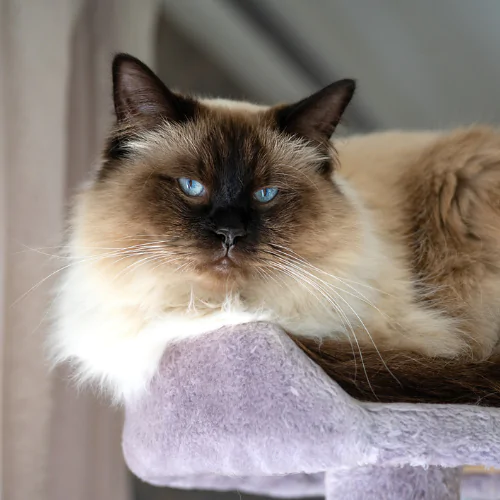
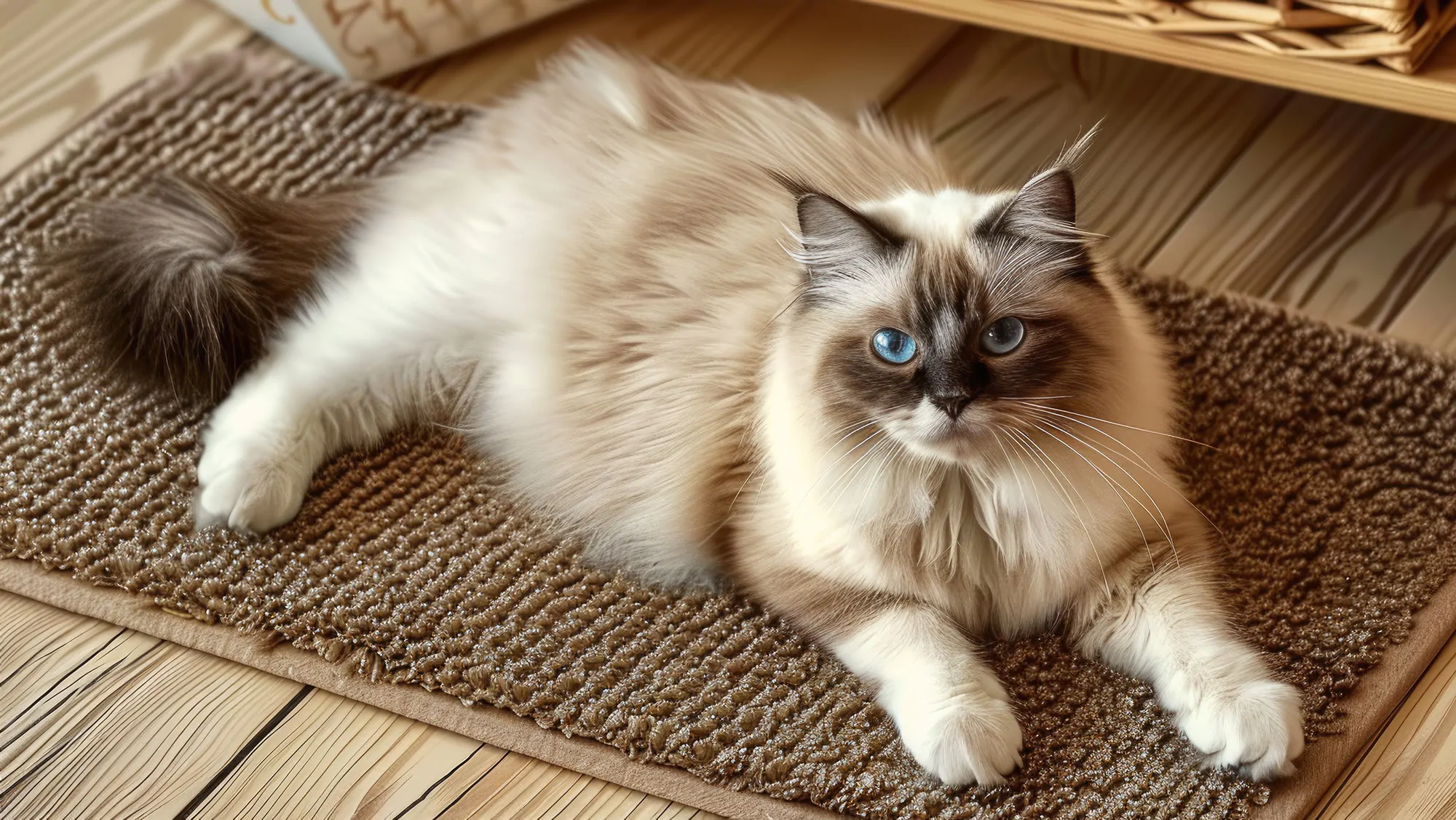
Ragdolls are known for their luxuriously soft, semi-long coats and signature colour-point markings – lighter bodies with darker faces, ears, paws and tails. Their large blue eyes and relaxed posture make them instantly recognisable.
These are big, sturdy cats. Males often weigh between 6-9kg, with females around 4.5-6.5kg. Like Maine Coons, Ragdolls mature slowly and may not reach full size until they’re about 3 or 4 years old.
Ragdolls come in a range of colours and patterns. Common ones include:
- Seal point (where the body is a pale cream or fawn, with darker ‘points’ (face, ears, paws and tail)
- Blue point
- Chocolate or lilac
- Cream or flame
- Bicolour, mitted (white markings that look like mittens or socks on their paws) or colourpoint pattern variations
What is a Ragdoll’s temperament?
The Ragdoll’s personality is:
- Affectionate: They thrive on attention and love to be near you.
- Floppy: As their name suggests, they often go limp when picked up – like a ragdoll!
- Social: While not overly needy, these cats don’t love being left alone for long periods.
- Gentle: They’re rarely aggressive and tend to be tolerant and sweet-natured.
- Laid-back: Great for households that want a calm and cuddly cat.
How much exercise does a Ragdoll need?
Your Ragdoll will be kept healthy and happy with just 15 minutes of play with you a day. So that they can entertain themselves, make sure they have plenty of toys, and a cat tree they can jump up and down on.
Our expert says…
“Ragdoll cats are very beautiful with their piercing blue eyes and long coats with colour point markings.
“In my consultation room, I see young Ragdoll cats coming in with two main breed related conditions, namely hypertrophic cardiomyopathy (HCM) and polycystic kidney disease (PKD). In both conditions the normal healthy tissue of the organ either gets thickened (in HCM) or replaced with fluid filled cysts (PKD), leading to early onset heart failure or kidney failure respectively. Neither condition is curable, but has to be managed with lifelong medication, and overall life expectancy is reduced.
“Sourcing your Ragdoll kitten from a reputable breeder who is trying to eliminate these conditions in their lines is vital.”
Dr Siân Burwood MA VetMB MRCVS

How long do Ragdolls live?
The average lifespan of a Ragdoll is around 12-15 years.
What are the common health issues for a Ragdoll?
Ragdolls can develop a few health issues worth keeping in mind. One of the most common is hypertrophic cardiomyopathy (HCM). This is a heart condition where the heart walls thicken, which can lead to failure if not managed with ongoing treatment.
They can also be prone to polycystic kidney disease (PKD), a genetic condition that causes cysts to form in the kidneys and can lead to early kidney failure.
Ragdolls might be more likely to develop bladder problems or urinary stones too, so keeping them well-hydrated and on a balanced diet is extra important.
Ragdoll grooming and hygiene
Despite their long coats, Ragdolls are relatively low maintenance. Their fur tends to tangle less than some long-haired breeds, but it still benefits from a weekly brush to prevent this and reduce shedding. As with any cat, regular nail trimming, dental care and ear checks should also be part of their grooming routine.
Do Ragdolls shed?
All cats shed, but Ragdolls tend to shed seasonally. While not the worst offenders, they do lose more hair during spring and autumn. Regular grooming can help keep your furniture (and clothes) free from fluff.
Are Ragdolls hypoallergenic?
No cats are truly hypoallergenic and Ragdolls aren’t typically considered allergy-friendly. Their shedding and dander (dead skin) can still cause reactions in sensitive individuals.
How to train a Ragdoll
Ragdolls are intelligent, affectionate and often eager to please (especially when there’s a treat involved). They enjoy interaction and can even be taught tricks or simple routines.
Here are a few pointers:
- Use positive reinforcement like treats, praise and play.
- Ragdolls are bright but not always the most motivated, so keep sessions short and fun for best results.
- Leash walking. It won’t be for every cat, but you can try leash-training your Ragdoll if you fancy taking them for a stroll. Be patient though, and don’t ever force it.
- Start young. Early socialisation helps them become well-adjusted adult cats.
What insurance do I need for my Ragdoll?
The level of cat insurance you choose for your Ragdoll will usually come down to your circumstances and budget. So you know exactly what you’re getting for your money, read our guide to whether pet insurance is worth it.
We think that all cats deserve the most comprehensive level of cover as possible, which is why we only sell different types of lifetime cover. We could also cover your Ragdoll for any pre-existing conditions they may have with our Lifetime Plus policy, subject to acceptance*.
Guides and advice from experts
Our expert vets and behaviourists have great pointers to help keep your pet happy and healthy.

If your dog gets ill or has an accident, you want to give them the best care possible. Let’s take a look at why having pet insurance is important for your pooch.


How to choose the best pet insurance for my pet
We explain the top things you may want to think about when it comes to researching pet insurance policies, including how you can compare pet insurance.
What is lifetime pet insurance?
We’re saying farewell to all of the confusion around lifetime pet insurance. Join us as we explore what it is and how it works.
*Cover for pre-existing medical conditions is subject to acceptance. They will not be covered unless you have declared them and they are shown on your Confirmation of Cover.