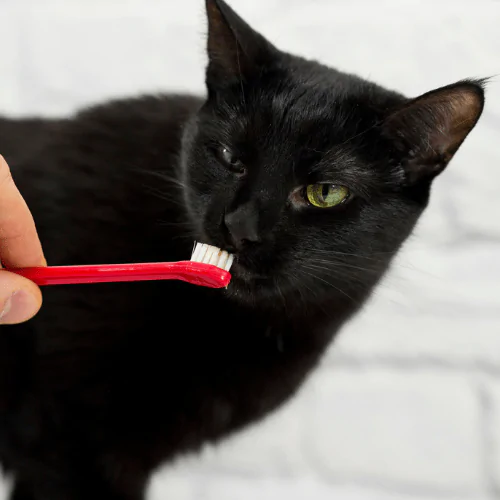
How to look after your cat’s teeth
Here's how to stay on top of your feline friend's dental care.

Dr Lizzie Youens BSc (Hons) BVSc MRCVS
5 January 2026
| 7 minutes read
Cats may be clever, but without opposable thumbs (thankfully), they’re not brushing their own teeth any time soon. That job falls to you – their devoted owner and humble servant.
Here expert vet Dr Lizzie Youens explains why feline dental care matters, walking you through the simplest ways to keep your cat’s teeth in good nick.
- Should I brush my cat’s teeth?
> When’s the best time to start a dental routine for my cat?
> How can I tell if my cat’s teeth are healthy? - Step-by-step guide to cleaning your cat’s teeth
> How frequently should I brush my cat’s teeth? - Can a vet clean my cat’s teeth?
> How much does a vet dental clean cost?
> Is anaesthetic-free cat dental cleaning safe or recommended? - Additional ways to support your cat’s dental health
- Common questions about cat dental care
> Is it possible to maintain dental hygiene without brushing?
> Does kibble help clean a cat’s teeth?
> Will my pet insurance cover dental treatment or dental disease?
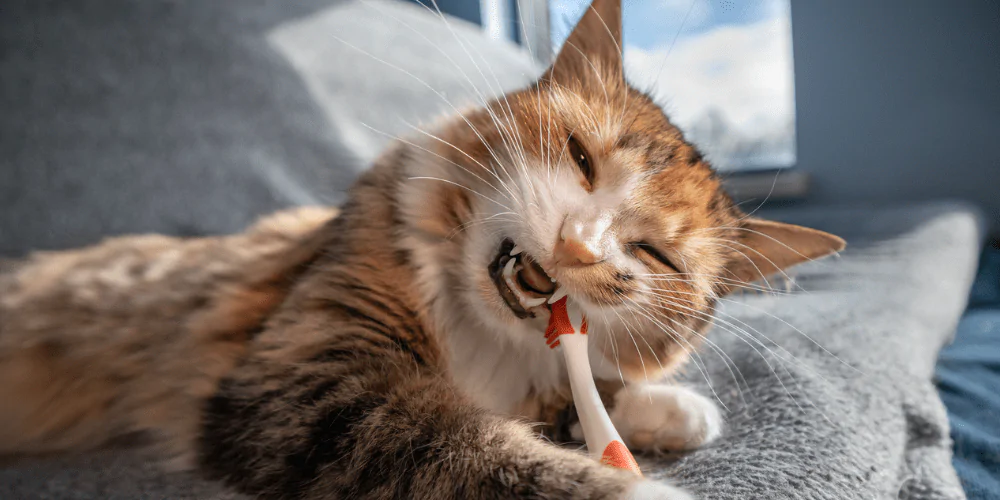
Should I brush my cat’s teeth?
A solid dental routine is key to keeping your cat’s teeth bright, clean and healthy.
Spending a little time each day on dental care can make a huge difference to your cat’s long-term health.
Periodontal disease is the most common dental problem in cats, affecting around 70% of cats over two years old. Plaque – a thin film of bacteria that forms after eating – hardens into tartar if it isn’t removed. Left untreated, this can lead to:
- Inflamed or sore gums
- Tooth loss
- Bacteria entering the bloodstream and causing infections elsewhere in the body
Brushing your cat’s teeth helps to:
- Reduce plaque and tartar build-up
- Tackle bad breath
- Prevent gum disease (such as gingivitis) and other painful oral conditions
It does take patience, especially if your cat is an adult or senior, but most eventually tolerate the routine.
It’s never too late to start – just make sure a vet checks for existing dental issues before you begin.
When’s the best time to start a dental routine for my cat?
The ideal time to introduce tooth brushing is when your cat is an older kitten, roughly from six months onwards. Earlier than this isn’t recommended, as brushing during teething can be uncomfortable.
It’s also good to get your kitten accustomed to gentle handling around their face and mouth from a young age.
How can I tell if my cat’s teeth are healthy?
A healthy feline mouth should have:
- Clean, white teeth without cracks or chips
- Pink, non-swollen gums with no bleeding
- No ulcers, growths, or odd lumps
- Breath that doesn’t smell foul
Your cat shouldn’t be drooling excessively, pawing at their mouth, or struggling to swallow. Other signs of dental problems include:
- A reduced appetite or preference for soft food
- Chewing on one side of the mouth
- Not grooming themselves properly
- Hiding away or behaving differently
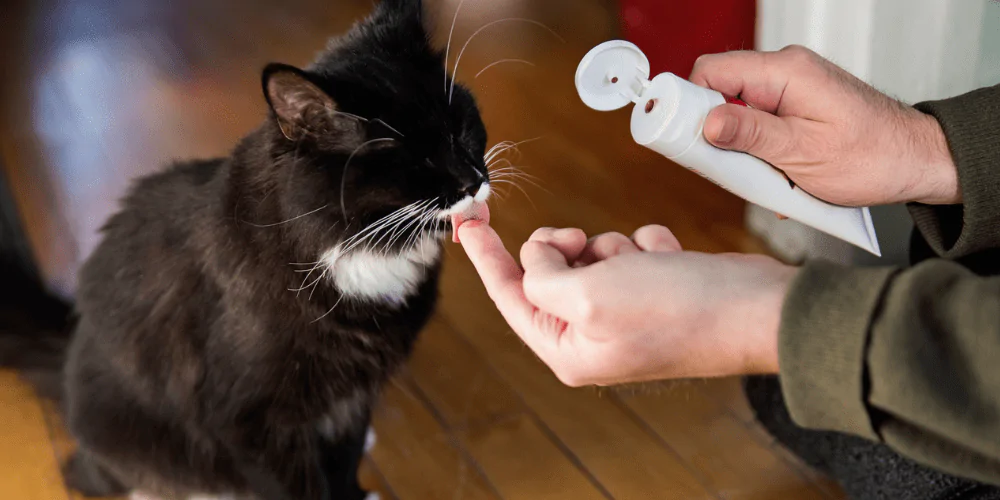
Step-by-step guide to cleaning your cat’s teeth
To make dental care a positive experience, move slowly, stay calm and offer plenty of praise. It’s best to choose a quiet moment when neither of you is rushed.
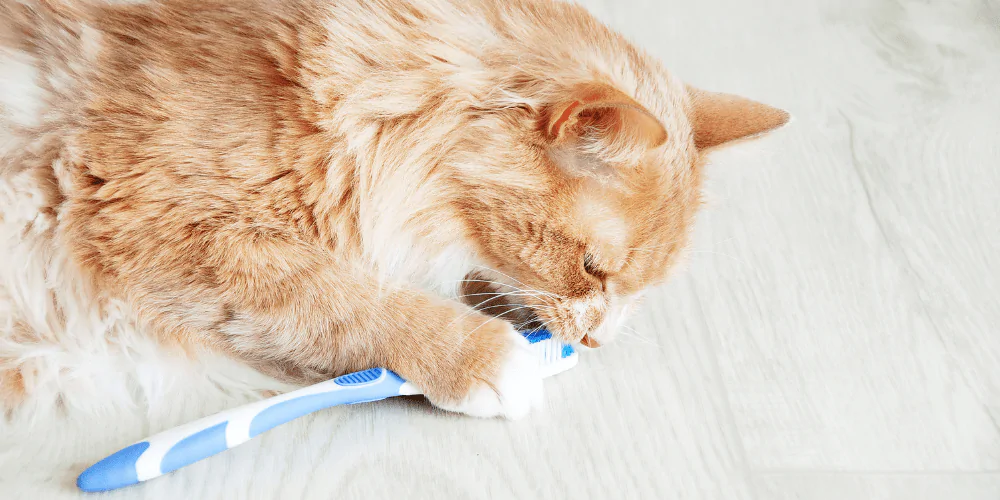
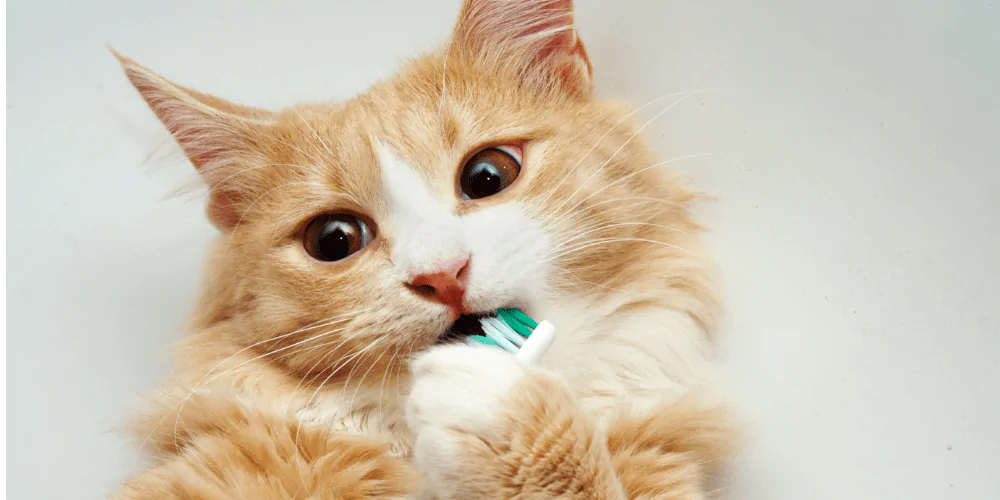
Ask your vet to suggest a cat-friendly toothbrush and toothpaste. Never use human toothpaste – it can be toxic to cats. Leave the toothbrush somewhere visible for a few days so they can sniff and get familiar with it.
- Start with your finger. Gently rub along their teeth and gums so they get used to the sensation.
- Add toothpaste. Put a tiny amount on your finger and let your cat taste it while you rub around their mouth.
- Introduce the brush. Let them lick a little toothpaste off the bristles so the texture isn’t a surprise.
- Begin brushing. Using gentle, circular motions, start with the easiest teeth to reach – usually the upper canines. Offer calm reassurance. If your cat becomes stressed, stop and try again later.
- Gradually build up. Once they’re comfortable, move on to other teeth.
- Reach the back teeth. Lift the lip gently or slide the brush inside the cheek to get to the molars.
How frequently should I brush my cat’s teeth?
Daily brushing is ideal for maintaining healthy teeth and gums. Cats like routine, so aim for the same time each day.
If your cat is older or unsure about the process, begin with brushing a few times a week. Over time, increase the frequency until you reach once a day.
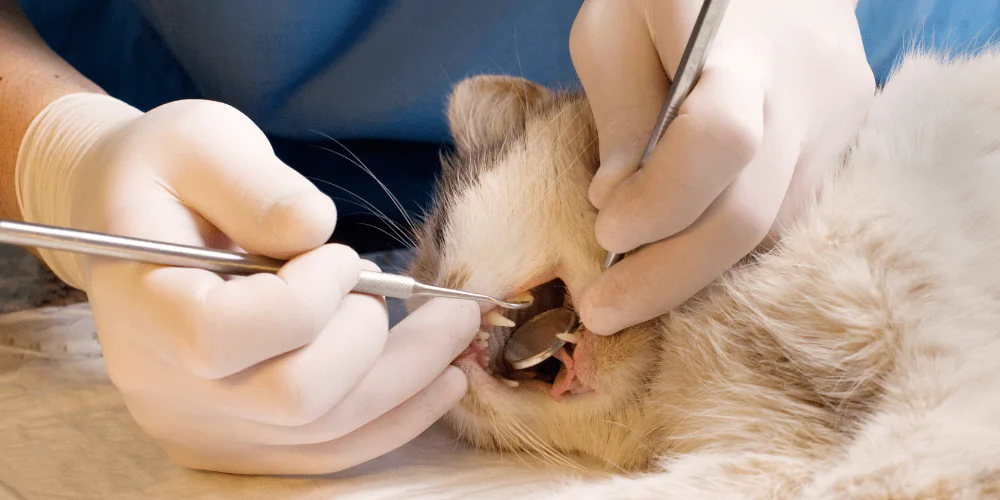
Can a vet clean my cat’s teeth?
Yes – vets can carry out professional dental cleaning. Brushing at home only removes soft plaque; hardened tartar needs a vet’s tools. Cats are given a general anaesthetic so the vet can safely perform a thorough examination.
During the procedure, the vet will assess each tooth, take x-rays if needed, remove plaque and calculus, and polish the teeth.
How much does a vet dental clean cost?
Prices vary depending on where you live and whether your cat needs extra treatment such as x-rays or extractions. Check your vet’s website or ask for an estimate.
As an example, Animal Trust lists a fixed price of £419* (for up to 90 minutes of procedure time), which usually includes:
- Scaling and polishing
- Anaesthetic
- Any extractions identified during the procedure
Is anaesthetic-free cat dental cleaning safe or recommended?
Anaesthesia-free cleaning involves restraining an animal while tartar is scraped from the teeth. The Royal College of Veterinary Surgeons (RCVS) strongly advises against it because:
- A full dental examination can’t be performed, so problems may be missed
- Key areas – like the gumline – can’t be properly cleaned
- It risks causing mouth injuries
- It can be painful, frightening, or stressful for the animal
Additional ways to support your cat’s dental health
Alongside brushing, you can support your cat’s oral health by:
- Keeping up with routine vet check-ups
- Using Veterinary Oral Health Council (VOHC) approved products such as gels, sprays or dental chews
- Limiting sugary treats (also good for their waistline)
- Feeding dry kibble, or a mix of kibble and wet food
- Asking your vet for tailored recommendations
Common questions about cat dental care
Is it possible to maintain dental hygiene without brushing?
While daily brushing is the gold standard, some cats simply won’t tolerate it. Between professional cleans, you can try:
- Dental treats
- Prescription dental diets
- Dental toys
- Cat dental gels
Does kibble help clean a cat’s teeth?
Unfortunately, kibble isn’t a substitute for brushing, and it won’t remove hard tartar. However, some studies suggest a dry food diet may support better oral health overall.
If needed, your vet can prescribe a specialist dental diet as part of a broader care plan.
Will my pet insurance cover dental treatment or dental disease?
Some pet insurance providers include dental illness cover as standard, while others offer it as an optional add-on. Always read your policy carefully to understand what’s covered.
Petgevity cat insurance, for example, allows you to add dental illness cover if you’d like your cat to have extra protection.
Be aware of the following T&Cs:
- Your pet must have a yearly check-up.
- Any advice from your vet at the check-up must be followed within six months.
- If your pet has already had a dental issue, it must be declared and accepted for the cover to be purchased (Lifetime Plus policies only).
*Prices correct 11 December 2025

