Ringworm in dogs
How to identify, treat and prevent ringworm

Dr Rachel Cox, FirstVet vet
26 January 2026
| 5 minutes read
Although ringworm isn’t life-threatening, it can be uncomfortable, frustrating and highly contagious for both dogs and their owners.
FirstVet vet Dr Rachel Cox explains how to spot the signs of ringworm in dogs, what treatment usually involves, and how to reduce the risk of it spreading.
Table of contents
- What is ringworm in dogs?
> How do dogs catch ringworm? - How to tell if your dog has ringworm
- How ringworm is treated in dogs
> How long does ringworm last in dogs?
> Managing ringworm at home - Can humans catch ringworm from dogs?

What is ringworm in dogs?
Despite the name, ringworm has nothing to do with worms. It’s a fungal skin infection that affects dogs and many other animals, including cats, rabbits, horses and rodents. The condition gets its name from the circular, ring-shaped patches of irritated skin it often causes.
Ringworm tends to take hold more easily if the skin is damaged, but even dogs with healthy skin can become infected. Puppies, older dogs and those already unwell are usually more vulnerable and may experience more severe symptoms.
Because ringworm can be persistent and may require repeated treatment, having appropriate dog insurance in place can help cover unexpected veterinary costs.
How do a dogs catch ringworm?
Ringworm spreads very easily. Dogs can become infected through direct contact with another infected animal or by touching contaminated objects such as bedding, grooming tools, collars or towels.
The fungus can survive in the environment for up to two years, which is why thorough cleaning is essential if ringworm is suspected. Wearing gloves and disinfecting shared items can help reduce the risk of further spread.

How to tell if your dog has ringworm
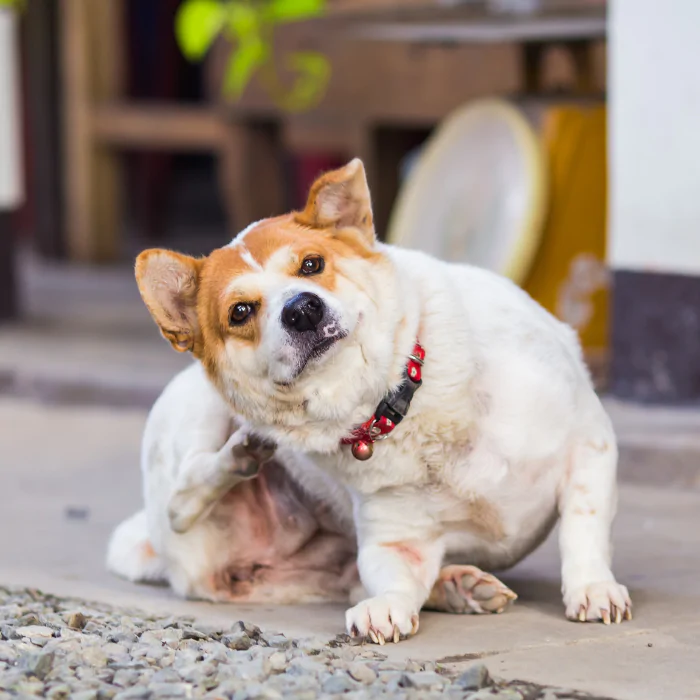
The most common signs of ringworm in dogs include hair loss and patches of sore-looking skin that may be red, flaky, scaly or crusty. These patches are often circular but don’t always form a perfect ring.
Ringworm is frequently spotted on the paws, legs, head and ears, but it can appear anywhere on your dog’s body.
It’s important to note that ringworm can look very similar to other skin problems, such as bacterial or yeast infections and allergic reactions. For this reason, it’s important to get a proper veterinary diagnosis.
If you notice any suspicious skin changes, contact your vet straight away. They may examine your dog using a Wood’s lamp, which emits ultraviolet light that can sometimes highlight ringworm infection. However, not all strains fluoresce, so this method isn’t always conclusive.
Your vet may also take hair samples or skin scrapings to send to a laboratory for testing. Results can take several weeks to come back.
How ringworm is treated in dogs
In some very mild cases, ringworm may resolve on its own. However, without treatment it often spreads to other areas of the body or to other animals and people.
Once ringworm is confirmed, your vet will usually prescribe antifungal treatment. This may include tablets, medicated shampoos or topical creams, and often a combination of these works best.
Dogs with longer coats may need to have the affected areas clipped so treatments can reach the skin properly. While this might result in an unusual haircut for a short time, it can significantly improve recovery.
How long does ringworm last in dogs?
With appropriate treatment, ringworm can be successfully cleared, but it often takes several weeks and sometimes multiple treatment cycles. The exact duration varies depending on your dog’s age, health and how severe the infection is.
Because treatment plans are tailored to each dog, your vet will advise on what to expect in your individual case.
Managing ringworm at home
If your dog has ringworm, take extra care to prevent it spreading:
- Wear disposable gloves when handling your dog or applying treatments
- Clean and disinfect areas your dog uses regularly, such as carpets, sofas and floors
- Wash bedding, blankets and towels frequently at a high temperature
- Keep your dog away from other pets during treatment
Dogs remain contagious for around three weeks after treatment begins. Limiting them to one room can help reduce contamination throughout the house.
Ringworm can recur, particularly if your dog becomes run down or unwell. Keep an eye out for returning symptoms and contact your vet if you’re concerned.
Can ringworm in dogs go away on its own?
In very mild cases, ringworm may eventually resolve on its own. However, this isn’t something you should rely on. Untreated ringworm often spreads across your dog’s body and can easily be passed to other pets or people in the household.
Early vet treatment helps shorten the infection, reduces discomfort for your dog, and lowers the risk of reinfection or transmission.

Can humans catch ringworm from dogs?
Yes, ringworm can be passed from dogs to people. In humans, it usually appears as red, itchy or inflamed patches of skin. Children and people with weakened immune systems are more at risk.
Infection can occur through direct contact with an infected dog or by touching contaminated items such as bedding, towels or furniture. Ringworm is more likely to take hold if the skin is broken or affected by conditions like eczema.
If you think you may have ringworm, speak to your GP or pharmacist for advice on appropriate treatment.
Your dog deserves the very best care. That’s why we offer tailored dog insurance to help keep tails wagging.

