
Fun enrichment ideas for dogs
How to keep your dog happy, active and mentally stimulated.

Owe Carter
1 April 2026
| 8 minutes read
Keeping your dog entertained isn’t just about fun… It plays an important role in their overall health and wellbeing (although it does help that it’s often fun).
Enrichment helps stimulate your dog’s mind and body, reducing boredom and encouraging positive behaviours. Here we look at what dog enrichment is, why it matters, and share some practical ideas you can try at home.
Table of contents
- What is dog enrichment?
- Why is enrichment important for your dog?
- What are the different enrichment activities for dogs?
> What is environmental enrichment for dogs?
> What is social enrichment for dogs?
> What is cognitive enrichment for dogs?
> What is nutritional enrichment for dogs? - Does age and breed matter for dog enrichment?
- DIY dog mental stimulation toys
> Other DIY dog toy ideas
What is dog enrichment?
Dog enrichment refers to activities and experiences that stimulate your dog mentally and physically.
This could include anything from interactive toys and training exercises to exploring new environments or socialising with other dogs.
Providing enrichment can help:
- Reduce boredom and destructive behaviour
- Improve confidence and problem-solving skills
- Support emotional wellbeing
- Strengthen the bond between you and your dog
In the wild, dogs would spend much of their time exploring, foraging and interacting with their surroundings. Enrichment activities aim to replicate some of that stimulation in a safe, domestic environment.

Why is enrichment important for dogs?
Without enough stimulation, dogs can become bored, frustrated or anxious. This can lead to unwanted behaviours like chewing, barking or digging.
Regular enrichment can help keep your dog:
- Mentally engaged
- Physically active
- More relaxed and settled at home
It also provides valuable opportunities for training and bonding, helping to build trust and improve behaviour over time.
Types of dog enrichment?
Dog enrichment can be grouped into four main areas: environmental, social, cognitive and nutritional.
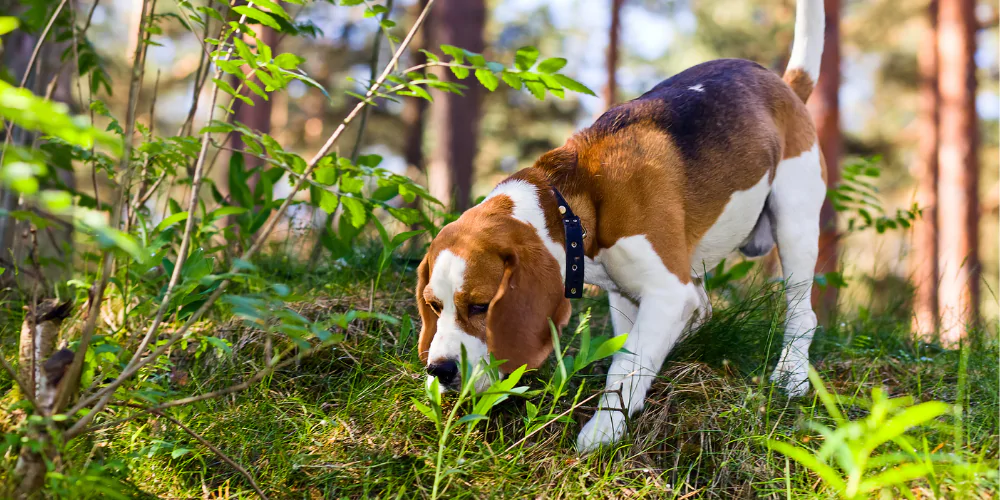
Environmental enrichment
Environmental enrichment focuses on making your dog’s surroundings more interesting and engaging.
Simple ways to do this include:
- Rotating toys to keep them feeling new
- Introducing different textures, sounds or objects
- Taking your dog on new walking routes
- Creating a digging area with sand or soil
- Setting up a sensory garden with dog-safe plants
Even small changes – like rearranging toys or exploring a new park – can make a big difference.
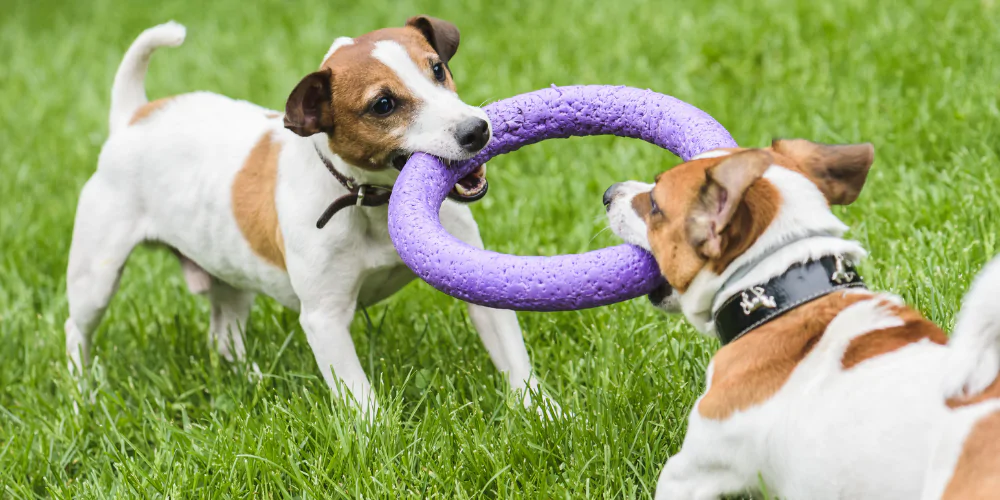
Social enrichment
Dogs are naturally social animals, benefiting from regular interaction with people and other dogs.
You can support social enrichment by:
- Taking your dog on regular walks
- Arranging playdates with other dogs
- Visiting dog parks or open spaces
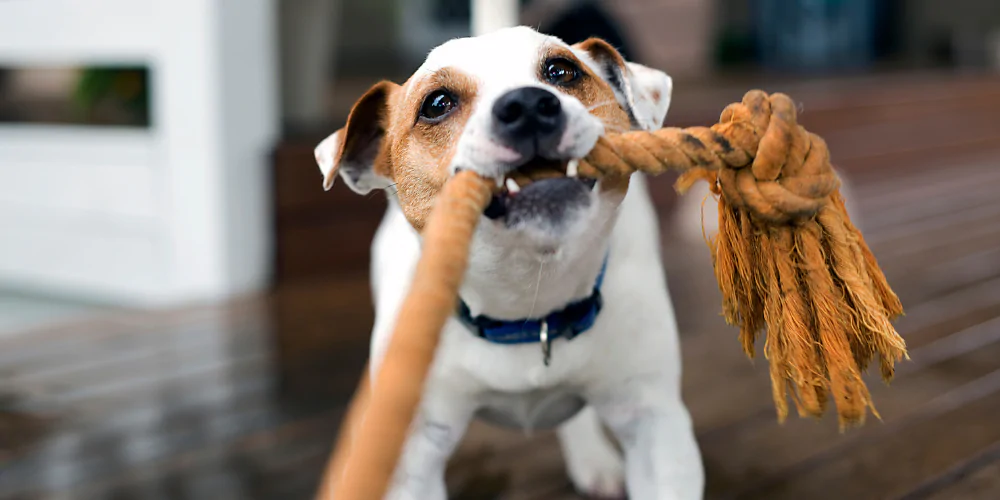
- Engaging in interactive play like fetch or tug
If your dog is nervous or reactive, it’s best to introduce social situations gradually. You could also seek advice from a behaviourist if they’re particularly tricky.
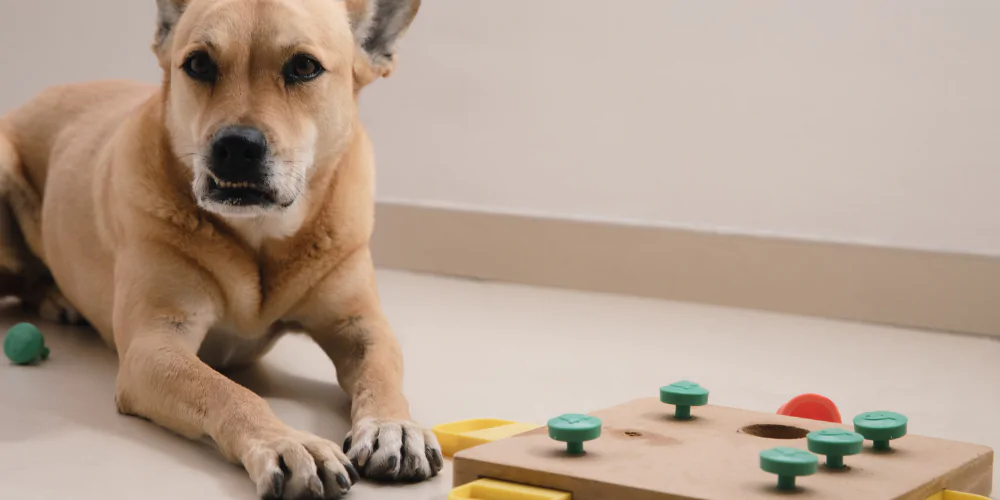
Cognitive enrichment
Mental stimulation is just as important as physical exercise. Cognitive enrichment challenges your dog to think, learn and solve problems.
Ideas could include:
- Puzzle toys
- Interactive feeders
- Training sessions with new commands or tricks
- Hide-and-seek games using toys or treats – as scent works help to tap into their natural instincts
Short, regular sessions are often more effective than longer ones. This helps to keep your dog engaged without becoming overwhelmed.
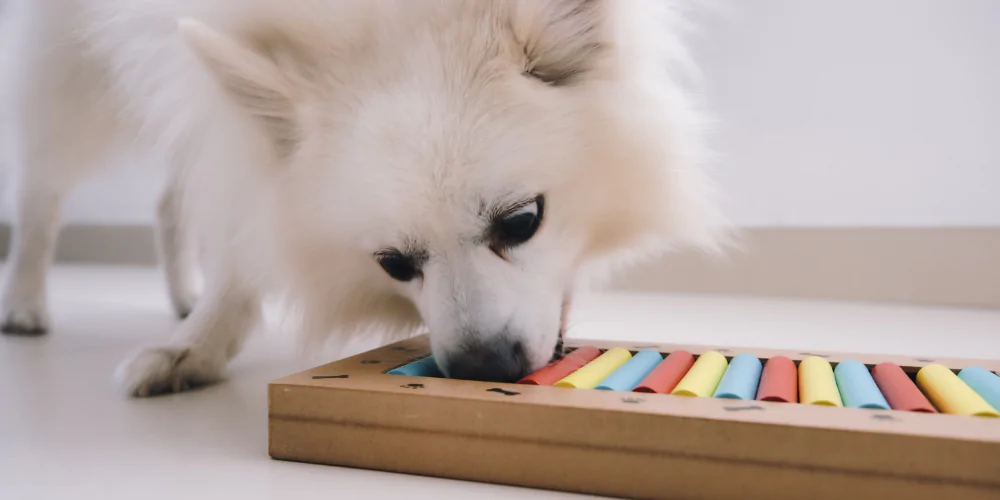
Nutritional enrichment
Food-based enrichment encourages natural foraging behaviour and can make mealtimes more engaging.
Options to try:
- Snuffle mats or treat-dispensing toys
- Stuffed rubber toys filled with dog-safe foods
- Scatter feeding to encourage searching
- DIY ‘destruction boxes’ filled with treats and toys
Just be mindful not to overfeed your dog. Treats should still form part of a balanced diet, and not make up more than about 10% of their daily intake.
Does enrichment depend on your dog’s age and breed?
Yes! You should absolutely tailor enrichment to your dog’s individual needs.
- Puppies often need more stimulation due to their energy and curiosity
- Senior dogs are more likely to prefer gentler activities that suit reduced mobility
- Working breeds (such as herding or hunting dogs) tend to benefit from more mentally challenging tasks
- Anxious dogs may respond better to calming, low-pressure activities
There’s no one-size-fits-all approach, so it’s important to adapt activities to suit your dog.
DIY dog enrichment ideas
You don’t need to spend a lot of money to keep your dog entertained. There are plenty of simple, low-cost ideas you can try at home.
For example:
- Fill a cardboard tube with kibble and fold the ends closed
- Use a plastic bottle (with supervision) as a treat dispenser
- Create homemade snuffle mats or scent games
These activities can provide both mental stimulation and physical activity using everyday items.
We all want our dogs to lead happy and fulfilled lives. Our lifetime dog insurance can give you peace of mind that your dog is covered when they’re not feeling so perky.

