
How to recognise and prevent poisoning in dogs
If you’re worried your dog might have consumed something toxic to them, here are the signs to look out for, and what to do about it.

Allie Simpson
23 February 2026
| 5 minutes read
Dogs explore the world with their noses and mouths – which unfortunately means they can sometimes swallow things they shouldn’t.
Poisoning is one of the more common reasons pet parents make claims on their dog insurance. Knowing what’s toxic, spotting symptoms early and acting quickly can make all the difference. Read our guide on how to recognise the signs of poisoning and protect your pup from harm.
- What plants and flowers are poisonous to dogs?
- Household items that are toxic to dogs
- Dog poisoning symptoms
- How is dog poisoning treated?
> How long does it take for a dog to recover from poisoning? - How to prevent dog poisoning

Poisonous plants and flowers for dogs
Some of the most attractive plants in our homes and gardens can be dangerous to dogs.
Common toxic plants include:
- Lilies – Peace, Peruvian and calla lilies can cause severe kidney damage within hours.
- Conkers – May trigger vomiting, diarrhoea, drooling and abdominal pain. In serious cases, they can affect the nervous system.
- Acorns – Contain tannic acid, which can upset the stomach and potentially cause kidney damage if large amounts are eaten.
- Daffodils – The bulb is particularly harmful and can cause vomiting, diarrhoea and stomach pain. Other parts may lead to drooling, lethargy or convulsions.
- Ivy – Can cause skin irritation on contact and digestive upset if swallowed.
- Hydrangeas – Release toxins when chewed that may result in vomiting, diarrhoea and lethargy. Severe cases can involve confusion or seizures.
- Foxgloves – Can interfere with heart function.
- Azaleas and rhododendrons – May cause digestive upset, weakness and in serious cases, coma or death.
- Autumn crocus – Associated with respiratory failure and multi-organ damage.
- Lily of the Valley – Can affect heart rhythm and reduce heart rate.
- Yew – All parts of the plant are toxic and can lead to sudden death.
On the other hand, dandelions are generally considered non-toxic and are sometimes used in natural remedies. However, always check with your vet before offering any plant-based treatments.

Toxic household items to watch out for
Many everyday items around the home can pose a risk to dogs. Keeping these safely stored away is one of the simplest ways to prevent accidental poisoning.
Harmful foods
- Chocolate – Can cause vomiting, diarrhoea, heart issues and, in severe cases, death.
- Xylitol – Found in sugar-free gum and sweets, this artificial sweetener can lead to dangerously low blood sugar.
- Onions and garlic – May irritate the stomach and, in larger amounts, cause anaemia.
- Grapes and raisins – Even small quantities can trigger kidney failure in some dogs.
The good news is there are plenty of dog-safe treats you can share instead. See our list of which human foods dogs can eat (and which they can’t).
Other dangerous household items
- Human medications such as paracetamol, ibuprofen and aspirin can cause ulcers, kidney damage and other serious complications.
- Cleaning products, including dishwasher tablets and metal polishes, may cause chemical burns or digestive problems.
- Antifreeze is highly toxic and can cause kidney failure even in tiny amounts.
- Pest control products, including rodenticides and slug bait, can lead to seizures, internal bleeding or neurological issues.
Be mindful of where you store these products, and make sure no inquisitive pets can access them.

Symptoms of poisoning in dogs
The effects of poisoning vary depending on what has been ingested. But common warning signs include:
- Vomiting
- Diarrhoea
- Lethargy
- Weakness
- Jaundice (yellowing of the eyes or gums)
- Unexplained bruising or bleeding
If you suspect your dog has eaten something toxic, contact your vet immediately. Prompt treatment is vital.
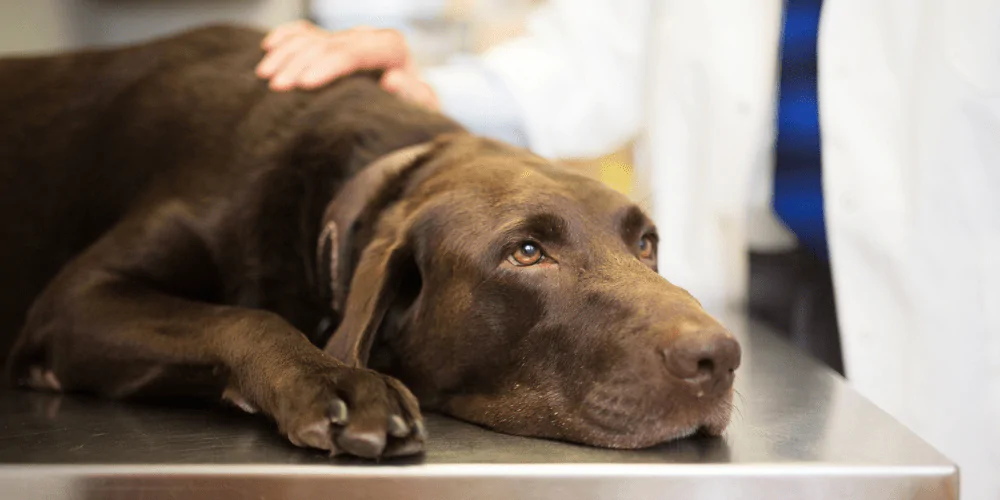
How is dog poisoning treated?
In emergency cases, your vet’s first priority is stabilising your dog. If the substance was swallowed recently, they may induce vomiting.
Once stable, treatment may involve:
- Blood tests to assess organ function
- Intravenous fluids to maintain hydration and flush toxins
- Specific antidotes, if available
- Temperature management
- Oxygen therapy if breathing is affected
The exact treatment plan depends on the type of poison and how quickly care was provided.
How long does recovery take?
Mild poisoning cases can improve within hours to a few days when treated promptly. More serious cases may require hospital care and take days or even weeks to recover fully.
Your vet will guide you on giving any medication or at-home care needed during recovery.
How to prevent dog poisoning
As always, prevention is better than cure. You can reduce risk by:
- Storing cleaning products and medications securely
- Researching dog-safe plants before adding them to your home or garden
- Securing bins and compost containers
- Keeping harmful foods out of reach
- Educating family members about what dogs should and shouldn’t eat
A little vigilance goes a long way in protecting your dog from accidental poisoning. And having peace-of-mind dog insurance in place can provide valuable financial support if the unexpected does happen.

