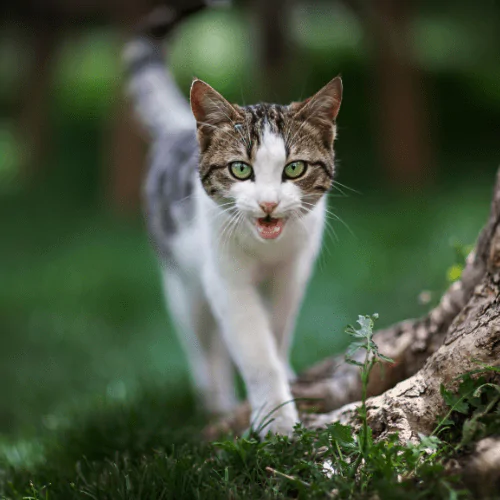
Why your cat meows
Why does your cat meow? We look at what its vocalisations mean.
Lucy Hoile
5 January 2026
If you enjoy a good chinwag with your moggy and want to understand what all those sounds actually mean, this guide is for you.
Here feline behaviour specialist Lucy Hoile explores the world of cat vocal behaviour. Learn why your cat meows at you, whether they ‘talk’ to other cats, and what all their noise-making really signals.
- What makes a cat meow?
> Do cats meow at other cats? - Why do cats meow at people?
> What should I do about too much meowing? - Cat vocalisations and their meanings
- Other questions about cat meowing
> Why is my female cat meowing so loudly?
> Why doesn’t my cat meow?
What makes a cat meow?
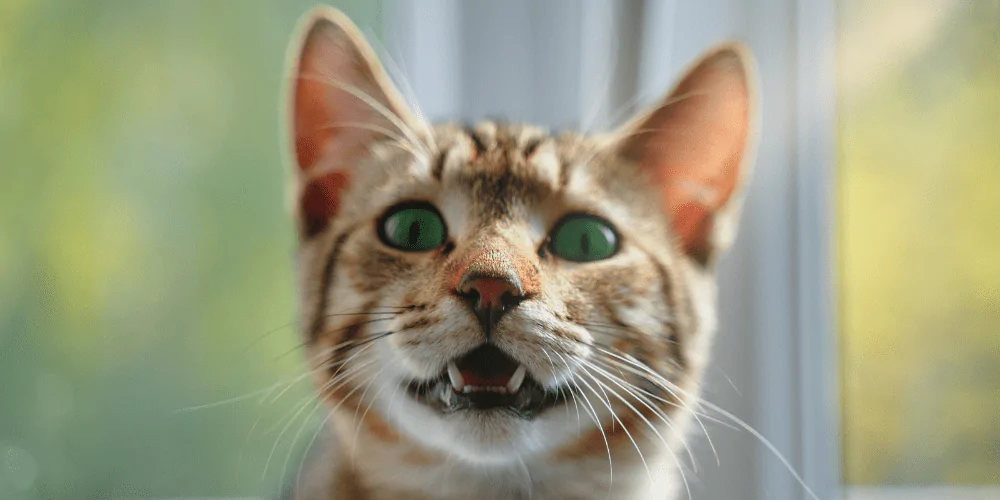
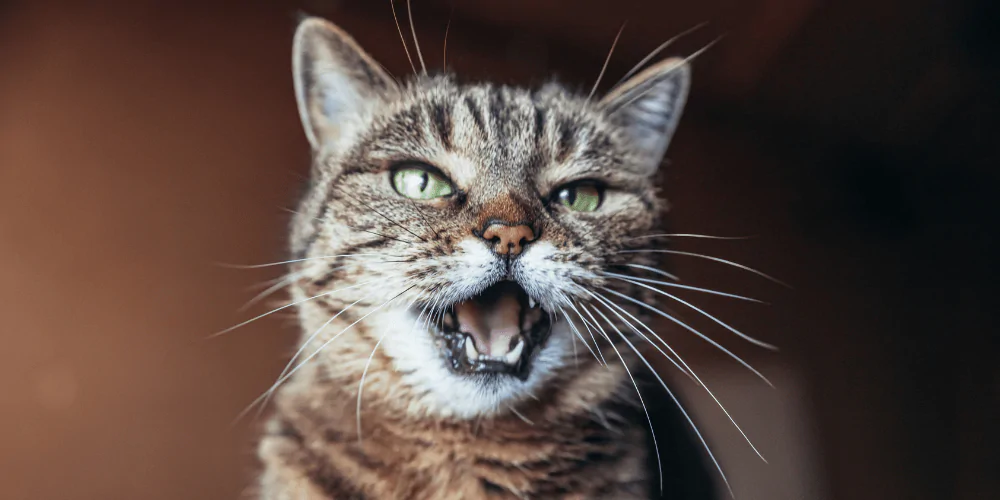
You might be surprised to know that the classic ‘meow’ doesn’t seem to play a meaningful role in communication between adult cats. It’s mostly something they reserve for us – a sort of cross-species language we’ve encouraged.
Other feline sounds, however, do have a clear purpose – more on those shortly.
Some cats are naturally more talkative than others, including:
- Vocal breeds such as Siamese and Bengals
- Cats who live closely with humans rather than those roaming freely outdoors
- Cats who are unwell, anxious or frustrated
Do cats meow at other cats?
Adult cats rarely meow at one another. They tend to use other noises instead when communicating with their own kind.
The main exception involves kittens communicating with their mother:
- Newborn kittens can’t see at first, so they vocalise to help mum locate them if they’ve drifted away from the nest
- Kittens will also purr while feeding to show they’re content, and mum purrs back to reassure them
Why do cats meow at people?
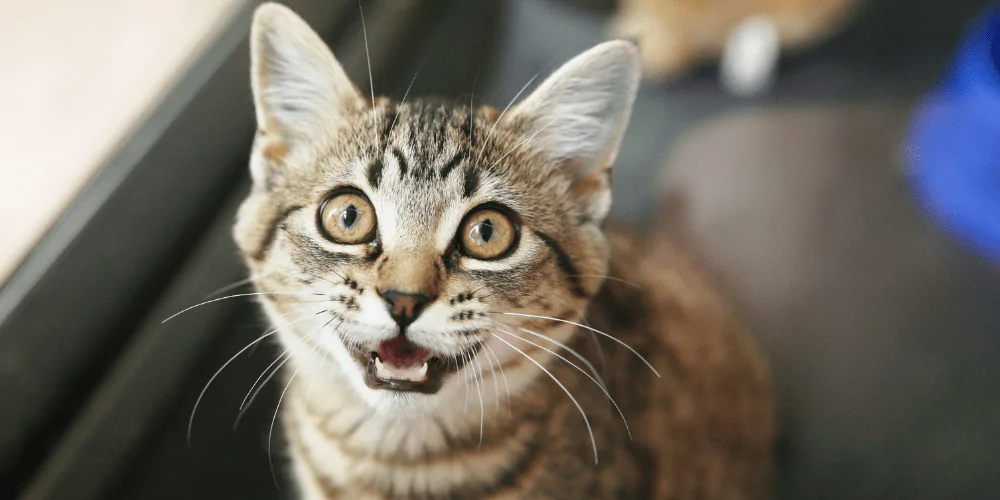
Some experts believe cats continue meowing at us because they see us as parental figures, mirroring the way they once called out to their mother.
For many cat owners, it’s simply a friendly, familiar interaction.
They want something
Most meowing directed at humans is a request for something – and once we respond, it becomes a habit.
Cats often choose inconvenient times, such as the middle of the night or dawn. So it’s important to be mindful of how you react. Cats quickly learn that meowing gets them food, fuss, play or access to a preferred spot.
Frustration
Cats might meow when they’re fed up or impatient – for instance, when you’re preparing their food and they feel you’re taking far too long.
If you serve their meal while they’re still complaining, you may be unintentionally rewarding the behaviour.
They’re in pain
Some clues that your cat’s meowing might indicate discomfort include:
- Sudden or unusual vocalising
- Reduced activity
- Heightened reactivity or irritability
- Being reluctant to be handled
- Changes in appetite
- Excessive grooming, especially around the tummy (as cats may develop UTIs or kidney issues)
- Prolonged squinting
- Ears flattened backwards
If you think your cat may be in pain or unwell, always contact your vet.
Cognitive decline
Older cats can develop cognitive dysfunction – similar to dementia – which can lead to unexpected and often loud meowing, especially when they’re alone.
Other signs include confusion, disorientation, changes in sociability, and altered sleep or activity patterns. If you’re worried, speak to your vet.
Anxiety
A worried or unsettled cat may vocalise to express distress, especially when the house is quiet or no one is around. Darkness and silence can make anxious cats feel more vulnerable.
If you suspect anxiety or stress, it’s worth reaching out to a qualified behaviourist.
What should I do about too much meowing?
Understanding why your cat is meowing excessively is the first step to managing the noise.
Asking for food
If your cat meows for food, you have several options:
- Try free-feeding (leaving dry food available at all times) so they can eat little and often as they naturally would. Keep an eye on their weight – it’s not suitable for cats prone to overeating
- Break their daily food allowance into several smaller meals to help avoid tension around feeding times
- Stick to a strict feeding schedule if you prefer set meal times; bending the rules encourages earlier demands.
- Consider an automatic feeder, which dispenses food at fixed times – handy if your cat wakes you at unpleasant hours
Looking for attention
For cats without anxiety issues, meowing is often an attempt to get your attention. Try to ensure that interactions happen on your terms.
- If you’re in bed, avoid getting up to them while they’re calling – this simply reinforces the behaviour
- If they meow at a closed door, wait for a moment of quiet before opening it, or you’re teaching them that noise gets results. Protect your carpets first in case they scratch as well as meow
Cat vocalisations and their meanings
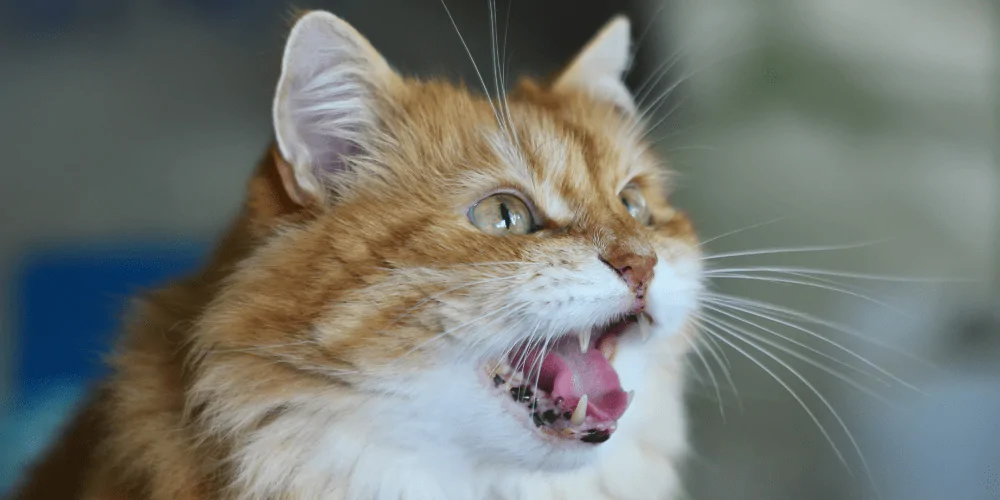
Cats have a surprisingly broad ‘vocabulary’, using different sounds to express their feelings toward people, other animals, and situations.
Purring
- Usually a sign of happiness and comfort – a throwback to kittenhood, when mum would soothe them with purrs
- Cats often purr when stroked, as it mimics the sensation of being groomed
- Purring may accompany kneading, reflecting how kittens stimulate milk flow
- ‘Solicitation purrs’ are higher-pitched and often paired with attention-seeking behaviours, such as pacing around food bowls
- Cats may also purr when in pain – the frequency can have a self-soothing effect
Chirruping and chattering
- A chirrup (or trill) is usually a friendly greeting aimed at humans or other cats
- Chattering tends to be an expression of longing – often when a cat spots prey they can’t reach
- It’s common at windowsills, near trees or anywhere birds tempt them
Hissing
- Cats may hiss at people, other cats, dogs, objects or smells they don’t like
- It’s commonly mistaken for anger, but it’s actually a warning: your cat is saying they need space
- During play, a hiss means they’ve had enough – always take this as a cue to stop
Growling
- A growl or low rumble signals serious displeasure
- Cats may growl at unfamiliar cats or if they fear something they’re holding (like prey or a toy) will be taken away
- It’s another clear ‘back off’ signal – ignoring it risks escalation
Yowling
- A loud, intense noise somewhere between a meow and a growl
- Often heard during cat stand-offs outside at night
Yowling suggests aggression is close, and physical conflict may follow.
If one cat yowls, the other may move slowly away in an attempt to avoid confrontation.
Caterwauling
- A distressed, panicked cry indicating that a cat feels seriously threatened
- Common during attacks or high-stress encounters
- It suggests the cat may be injured or desperately trying to escape
Cat meowing: frequently asked questions
Why does my female cat meow loudly?
If your female cat hasn’t been neutered, loud, drawn-out meows – especially if frequent – are often signs she’s in heat.
You’ll recognise these calls because:
- They’re extremely loud and prolonged
- They’re accompanied by behaviour changes such as rubbing, pacing and restlessness
- She may ‘present’ – lowering her front body while lifting her hindquarters and tail
Why isn’t my cat making any meowing sounds?
There’s no known physical reason why a cat would be unable to meow, and no particular breed is predisposed to being quieter.
Just like people, cats have individual personalities. Some are naturally more vocal; others choose silence.
Why does my cat meow at night?
Cats are naturally more active during dawn and dusk, but some will be especially vocal at night. Common reasons include:
- Attention-seeking: Your cat may want food, play or simply company
- Hunger or thirst: Nighttime meows can be a reminder that their needs aren’t met
- Medical issues: Pain, discomfort or cognitive changes in older cats can cause nighttime vocalisation
- Boredom or stress: Changes in environment or routine may make your cat more restless after dark
Give your chatty cat comprehensive cover for all of life’s adventures with flexible cat insurance from Petgevity.

