Crate training your dog
Why crate training helps and how to do it successfully

Philippa Short
16 March 2026
| 12 minutes read
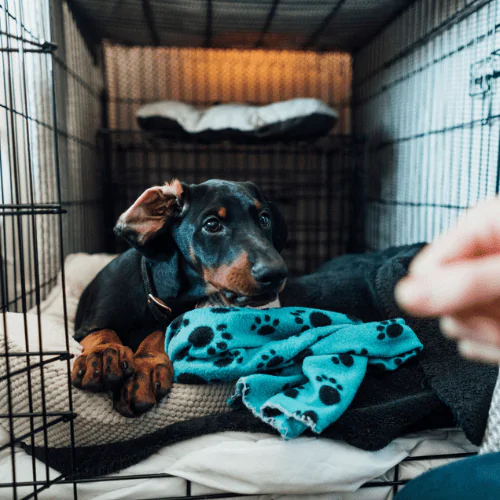
Crate training can be a valuable life skill for dogs of any age. When introduced correctly, it helps your dog feel safe, relaxed and comfortable spending time in a contained space.
Expert dog behaviourist Philippa Short shares practical advice on how to introduce crate training positively, making the experience rewarding for both you and your dog.
- What is crate training?
> What size crate do I need for my dog? - Why should you crate train a puppy?
> Should I follow a crate training schedule? - How to set up your dog’s crate
- How to crate train a puppy
> Teaching your puppy to enjoy time alone in the crate
> Teaching your puppy to go to their crate on cue - How to crate train an older dog
- Crate training safety tips
- When should you stop crate training?
What is crate training?
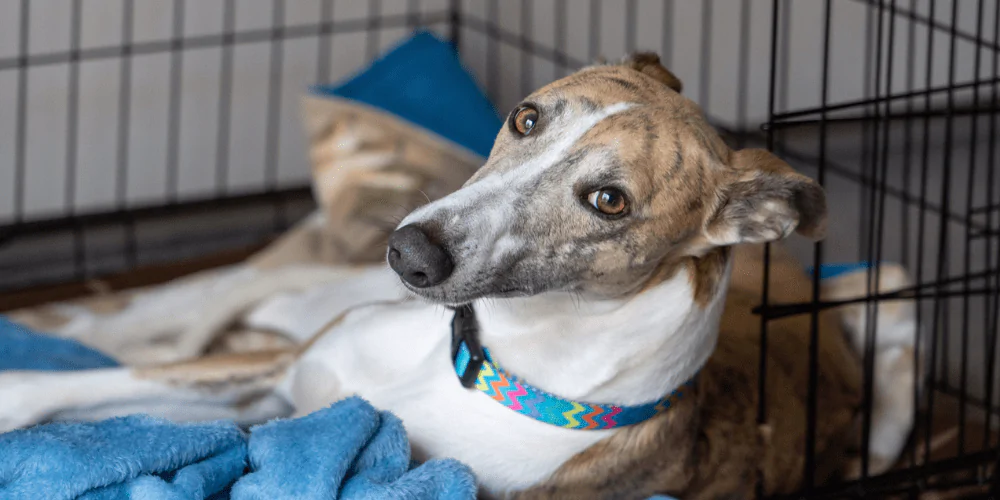
Crate training is the process of teaching your dog to feel comfortable spending time in a safe, enclosed space. Some trainers prefer the term ‘containment training’, as the goal isn’t confinement – but rather creating a secure place where your dog can rest and relax.
There are several ways to create a contained area for your dog, including:
- Fabric or soft-sided crates
- Wire crates
- Furniture with built-in crate spaces
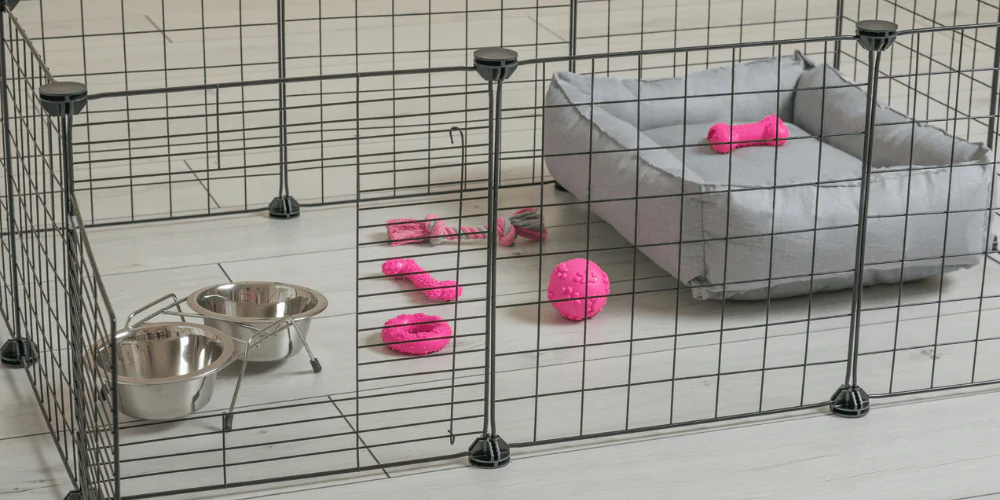
- Puppy or baby pens
- Room dividers or gated areas
The key idea is to give your dog a space that feels calm, familiar and predictable.
While this training can be introduced at any time, it’s most commonly employed when you bring a new puppy home.
What size crate should you choose?
You may hear different advice about crate sizes.
Traditionally, owners were told to choose a crate that’s only large enough for a dog to:
- Stand comfortably
- Lie down normally
- Turn around easily
The theory behind this is that dogs are less likely to toilet where they sleep.
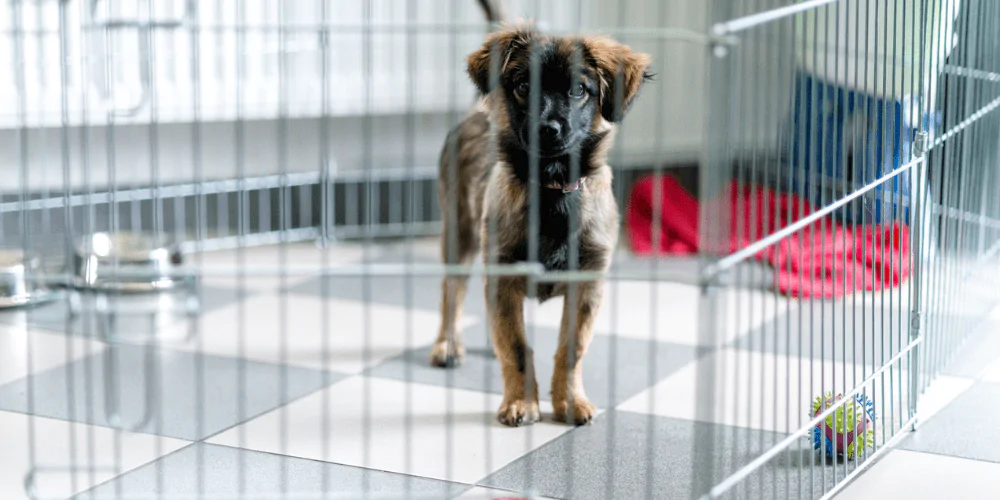
But some behaviourists prefer using a larger crate with additional space around it, such as a pen area with puppy pads. This approach can:
- Give your puppy more room to move and stretch
- Reduce stress during the early settling-in period
- Provide a place for emergency toilet breaks while training is still underway
Puppy pads should only be used temporarily while your puppy learns to toilet outdoors and develop bladder control.
Why crate training can be helpful
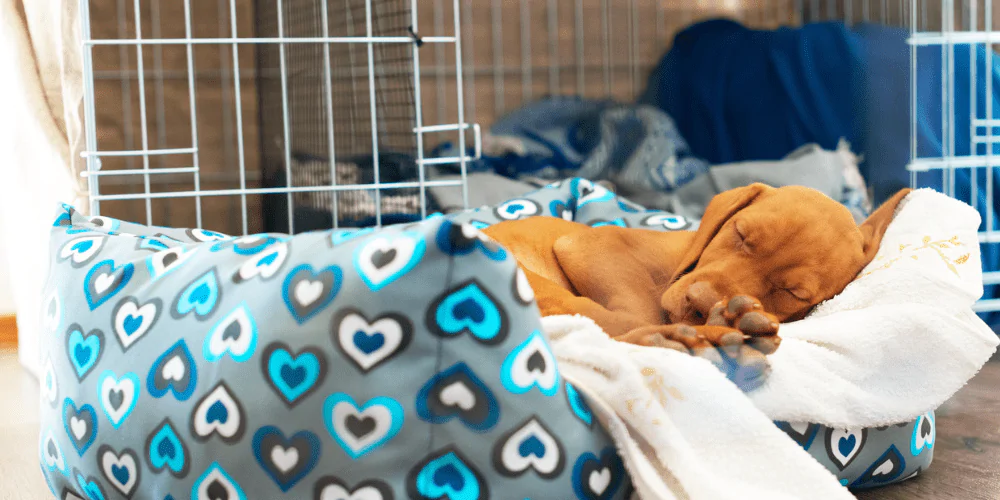
Some people worry that crates restrict a dog’s freedom. In reality, dogs can learn to view their crate as a comfortable and reassuring space – if it’s introduced properly.
Containment training can be useful in several situations throughout your dog’s life, including:
- Vet visits or overnight stays
- Recovery after surgery or illness
- Times when workmen are in the house
- Giving your dog a quiet place to rest
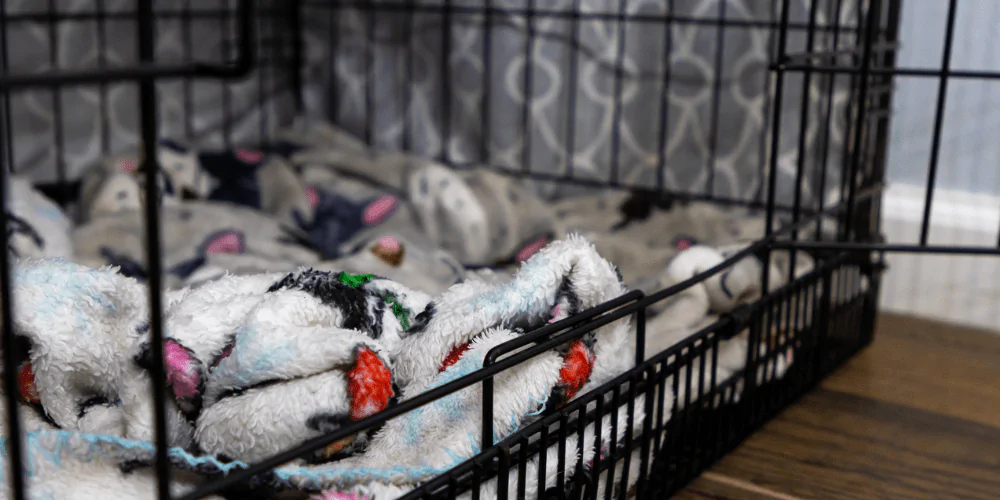
When done correctly, crates can become a familiar ‘safe zone’ where dogs choose to relax.
Should you follow a strict crate training schedule?
Routine is helpful for dogs, but overly rigid schedules aren’t always necessary.
Predictable patterns can be especially helpful for dogs with behavioural challenges such as anxiety. But for most healthy dogs, it’s better to aim for a flexible routine rather than fixed times.
For example, instead of feeding breakfast at exactly 8am every day, offer it within a time window, such as between 7am and 9am. This helps dogs adapt to small changes in daily life without becoming stressed if a routine shifts slightly.
Setting up your dog’s crate
Before starting crate training, take time to create a comfortable environment.
Choose the type of crate
Decide what type of containment area works best for your home and dog. Options include traditional crates, pens or gated rooms.
Decide how many crates you need
Some owners find it helpful to have more than one crate – for example:
- A bedroom crate during the early settling-in period
- A living room crate for daytime use
Pick the right location
Think carefully about where the crate will go.
Consider:
- Temperature – Avoid cold drafts or direct sunlight through windows
- Noise levels – Somewhere calm but not completely isolated
- Access outside – Puppies need quick access to the garden for toilet breaks
Add bedding
Choose bedding that keeps your dog comfortable without overheating.
Some helpful options include:
- Absorbent vet bedding as a base layer
- Soft blankets or crate bumpers for warmth
- Durable crate liners for puppies that chew
A larger crate allows you to create both cooler and warmer areas so your dog can choose where to rest.
Provide water
Dogs should generally have constant access to fresh water unless your vet advises otherwise.
Clip-on bowls attached to the crate wall are often best, as free-standing bowls can easily be tipped over by curious puppies.
How to crate train a puppy
Some breeders introduce puppies to crate or pen environments before they go to their new homes. But many puppies will encounter a crate for the first time when they arrive with you.
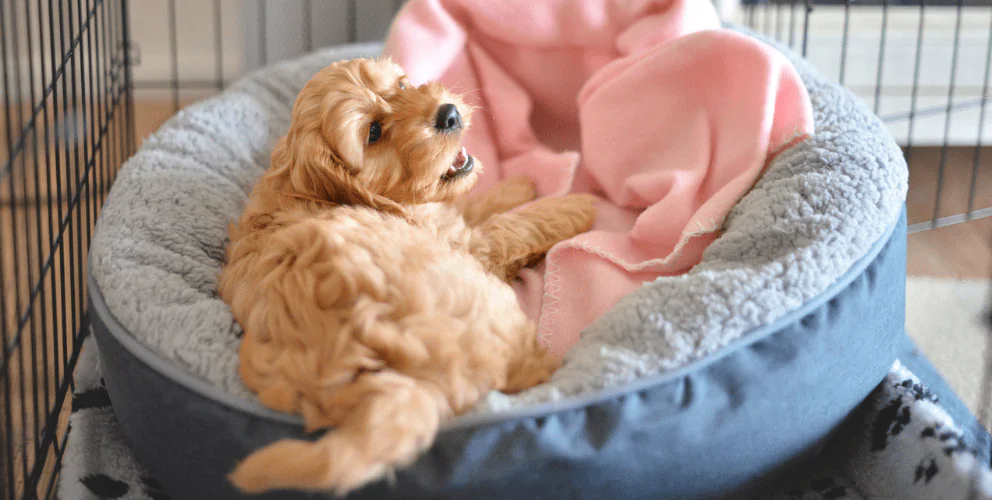
The goal is to make the crate a place associated with positive experiences.
Puppies should:
- Eat meals in the crate
- Receive treats and enrichment toys there
- Discover new toys inside the crate
Training typically focuses on two key skills:
- Teaching your puppy to enjoy spending time in the crate independently
- Teaching them to go into the crate when asked
Helping your puppy to enjoy the crate
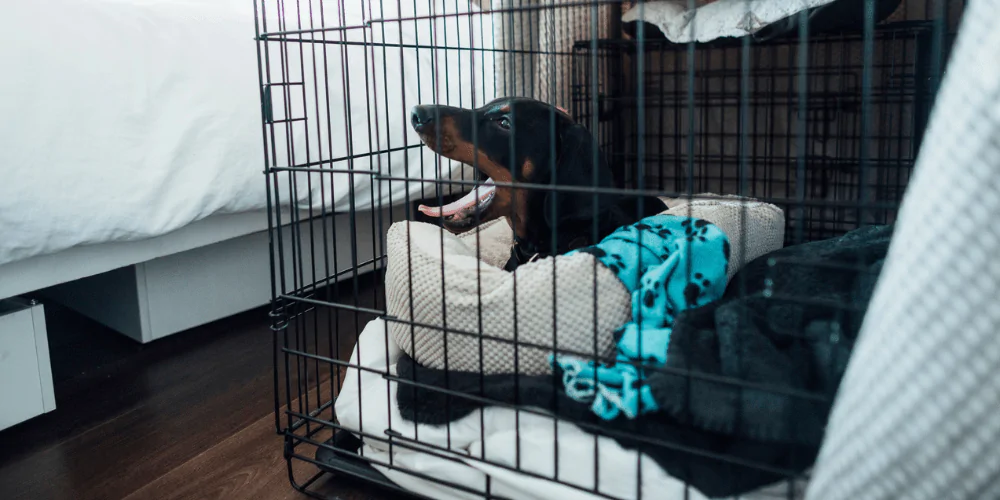
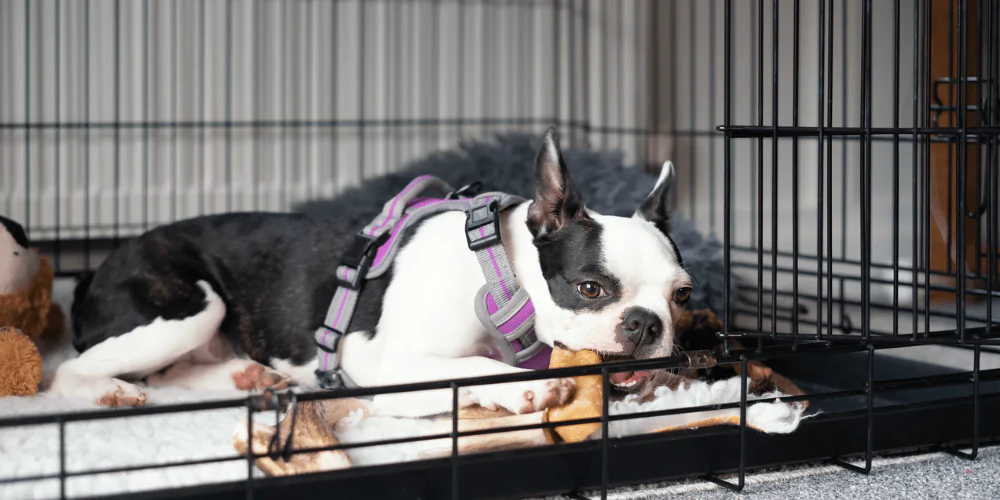
Start by placing your puppy’s food bowl inside the crate with the door open. Allow them to walk in, eat and leave freely.
Over several days:
- Continue feeding meals in the crate
- Scatter small treats inside once the bowl is removed
- Let your puppy discover the treats on their own
This helps them learn that the crate is a place where good things happen.
After a few days, introduce longer-lasting enrichment such as a stuffed food toy tied safely to the back of the crate. This encourages your puppy to stay in the crate longer while enjoying the activity.
Teaching your puppy to enter the crate on cue
You can also train your puppy to go into the crate when asked.
Choose a cue phrase such as:
- “Crate”
- “Bed”
- “Place”
Say the cue and toss a treat inside the crate. Praise your puppy when they go in.
Next:
- Toss a treat when they come out
- Then another when they go back in
This turns the exercise into a fun game.
As training progresses, stop luring your puppy with food. Instead, say the cue and reward them after they choose to go into the crate.
Once your puppy is comfortable entering the crate, briefly close the door while rewarding them with treats and praise. After a few seconds, open the door again and release them.
Gradually increase the time with the door closed while ensuring your puppy remains relaxed.
Important training tips
Successful crate training depends on patience and positive reinforcement.
Keep these points in mind:
- Always reward your dog when they enter the crate
- Increase crate time gradually
- Night-time can be easier for longer crate periods as dogs are naturally resting
- Never release your dog immediately if they bark for attention
Instead, aim to let them out before they become distressed, helping prevent barking habits from forming.
Crate training can also help dogs settle and relax rather than becoming overly excited in the home.
Crate training an older dog
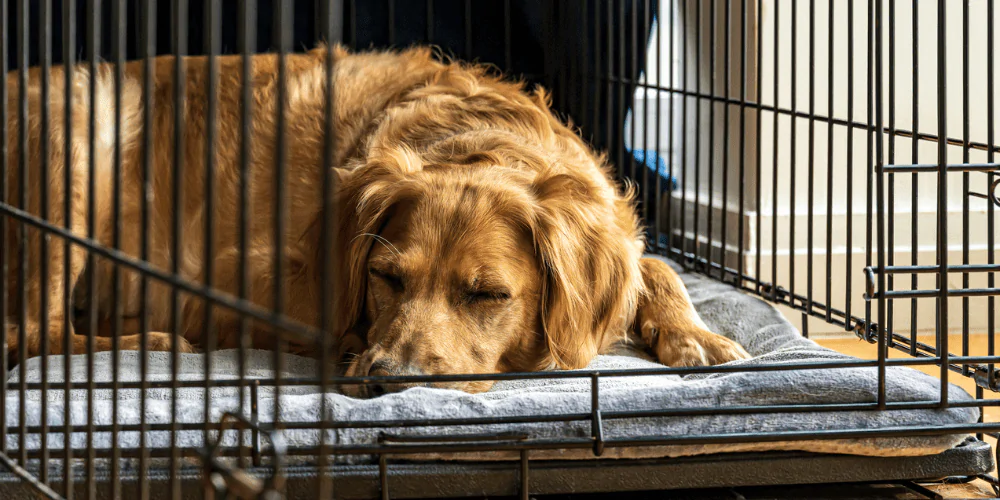
Adult dogs can learn to enjoy crates using the same training steps as puppies.
That said, progress may be slower if the dog has had negative past experiences with confinement – for example, rescue dogs that were previously kept in unsuitable environments.
In these cases:
- Leave the crate door open initially
- Focus on positive crate games
- Allow the dog to choose when to enter
This helps rebuild positive associations with the space.
If your dog remains anxious around the crate, consider working with a qualified behaviourist.
Crate safety tips
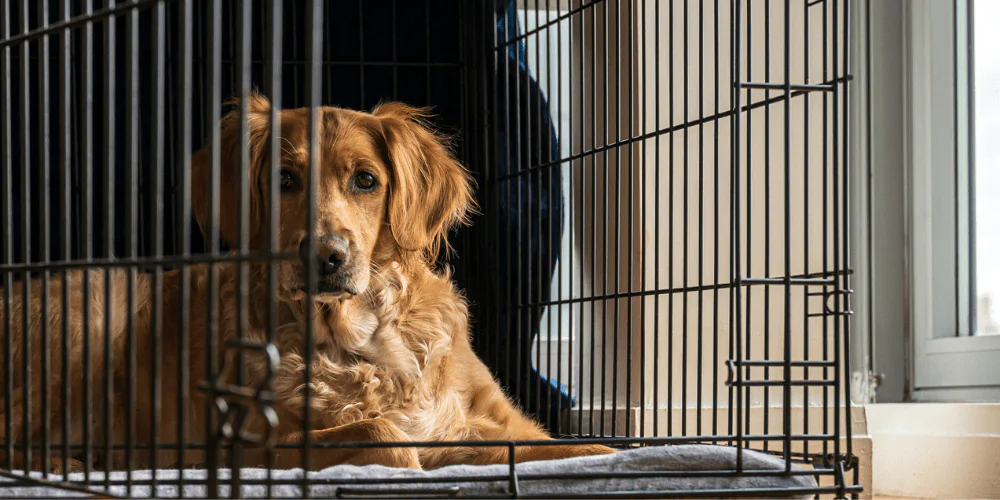
Safety should always come first when using a crate.
Follow these guidelines:
- Remove your dog’s collar before placing them in a crate
- Check second-hand crates carefully for rust or damage
- Avoid draping loose blankets over the crate if your puppy might chew them
Specially designed crate covers can be safer alternatives.
How long should dogs stay in a crate?
Healthy dogs shouldn’t spend excessive time in a crate during the day.
As a general guide:
- No more than around four hours during daytime periods
- Up to seven or eight hours overnight, when dogs are naturally sleeping
Regular interaction, exercise and attention are still essential.
When crate training is complete
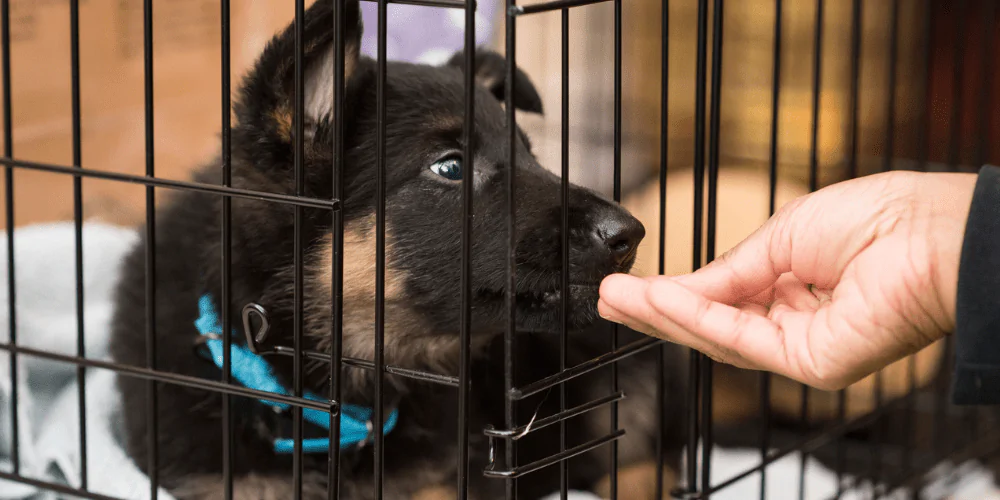
Most dogs quickly learn to enter their crate on cue when training is consistent and positive.
Success depends on:
- Introducing the crate at the right pace
- Making the space comfortable
- Providing enrichment and rewards inside the crate
Avoid using the crate only when leaving the house. Spend time nearby while your dog rests inside so they learn the crate is part of normal daily life.
With patience and positive reinforcement, crate training can give your dog a calm and reassuring place to relax whenever they need it.
If your dog develops behavioural issues related to anxiety or confinement, professional support can help. With Petgevity dog insurance, behavioural consultations with qualified animal behaviourists could be covered, as advised by your vet.

