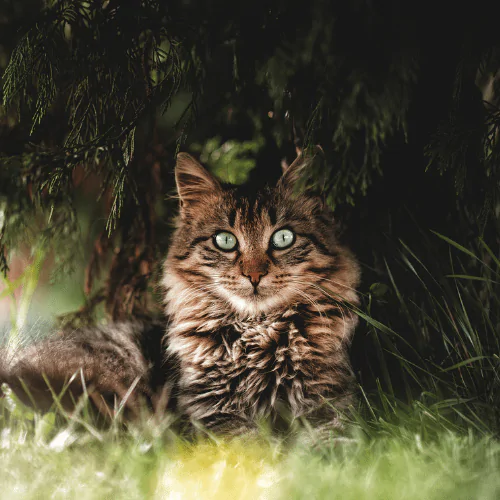
Should I let my cat outside?
Lucy Hoile
30 August 2023
| 10 minutes read
Outdoor versus indoor cats is a big debate among many feline parents. With so much information out there, deciding whether to let your kitty go outside can be overwhelming.
But don’t worry, our cat expert is here to help. Read on to learn all about the pros and cons of giving your cat outdoor access from feline behaviourist Lucy Hoile.
- Deciding whether to let your cat outside
- Letting your cat outside
> Pros of cats having outside access
> Cons of cats having outside access - Keeping your cat inside
> Pros of being an indoor cat
> Cons of being an indoor cat - Secure outdoor area ideas for indoor cats
> Benefits of cat flaps - Supervised outdoor access for cats
- When should I let my cat outside?
> Should I let my cat outside at night?
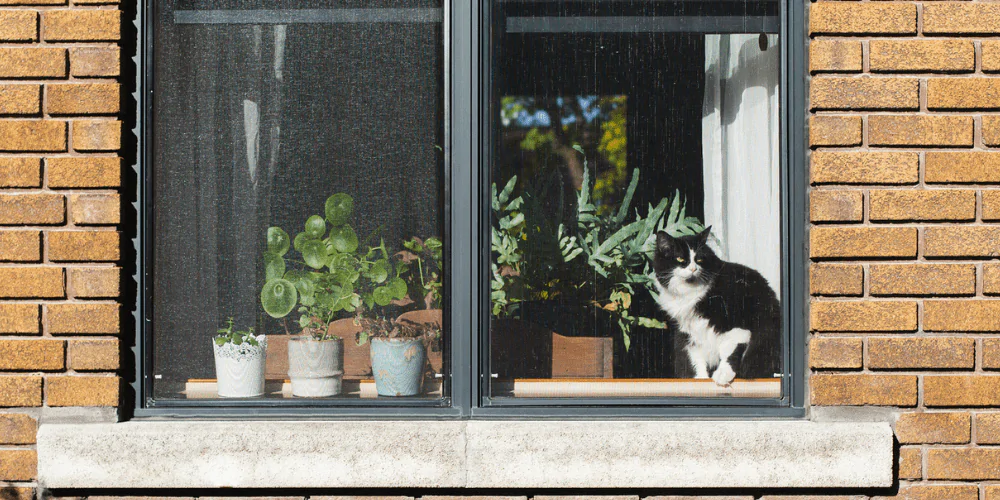
Deciding whether to let your cat outside
There’s no right or wrong answer when it comes to keeping your cat in or letting them outside. It really depends on their individual personality and the environment around them.
Some kitties absolutely love sitting in the sunshine by the window or hanging out at home all day. Others get bored and unsettled, needing more stimulation than they find in the house.
It all comes down to physical versus emotional health and whether your cat’s indoor area will be stimulating enough for them. Plus what excitement awaits them outside.
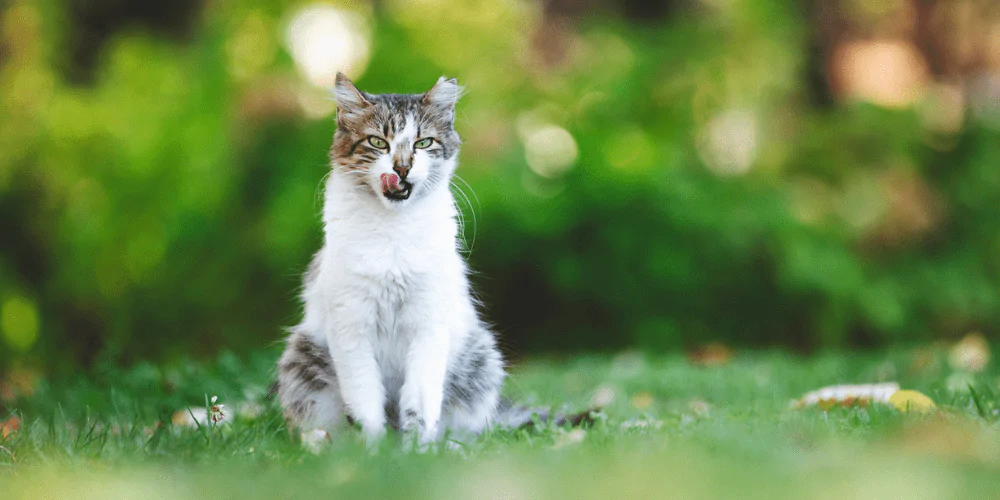
Letting your cat outside
Giving your cat the freedom of the great outdoors is great for their emotional well-being but can bring significant physical risks.
> Pros of cats having outside access
The positives of allowing your cat to go out include:
- More opportunity to display natural behaviours – it’s a great outlet for hunting or just channelling their physical drive for predatory behaviour
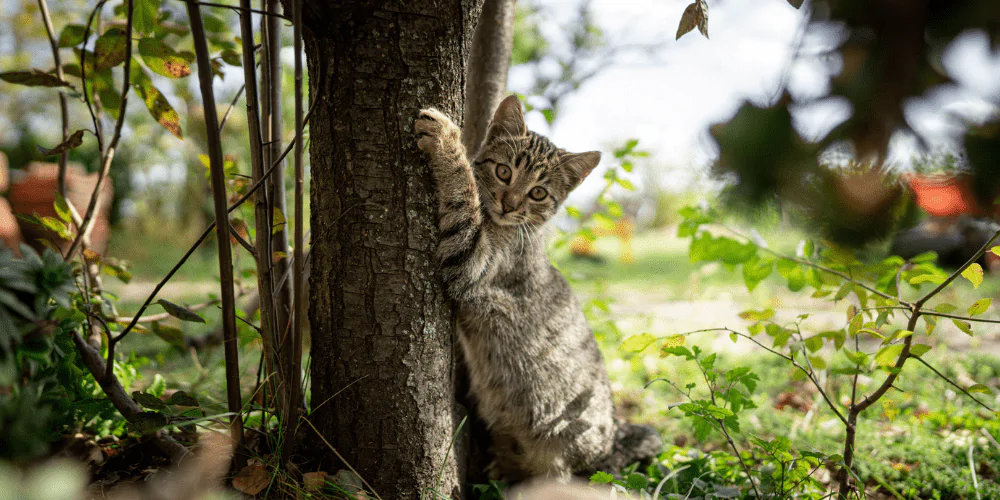
- Being able to perform territorial actions – this includes marking and scratching on natural textures like tree trunks
- Expanding their territory – many cats stay close to home but they have lots more space and opportunities to enjoy themselves
- Getting the chance for social interaction – they can hang out with other friendly cats
- Giving them an escape from stressful situations – for example, if their home environment is busy they need some peace
- Helping to resolve some behavioural problems – such as giving them alternative toileting areas outside the home they may prefer to use
> Cons of cats having outside access
Here’s some of the negatives of a cat spending time outside:
- Traffic – this is usually the biggest risk for an outdoor feline in the UK
- Chance of picking up illnesses such as feline infectious peritonitis (FIP), feline leukaemia (FeLV) and feline immunodeficiency virus (FIV)
- Fighting with other cats
- Run-ins with foxes or dogs – there could also be other predators depending on where you live
- Falling from trees
- Getting stuck or trapped in various places (such as in or behind sheds and garages)
- Getting lost – especially if you have an indoor cat who isn’t as street-wise
- Upsetting the neighbours if your kitty wees and poos in their garden
- Causing problems for other cats – this could be intimidating them, going into their house, eating their food
- Bringing in prey like birds and mice – not a negative for your cat but it is for the wildlife and you may not like finding these surprises around the house!
Keeping your cat inside
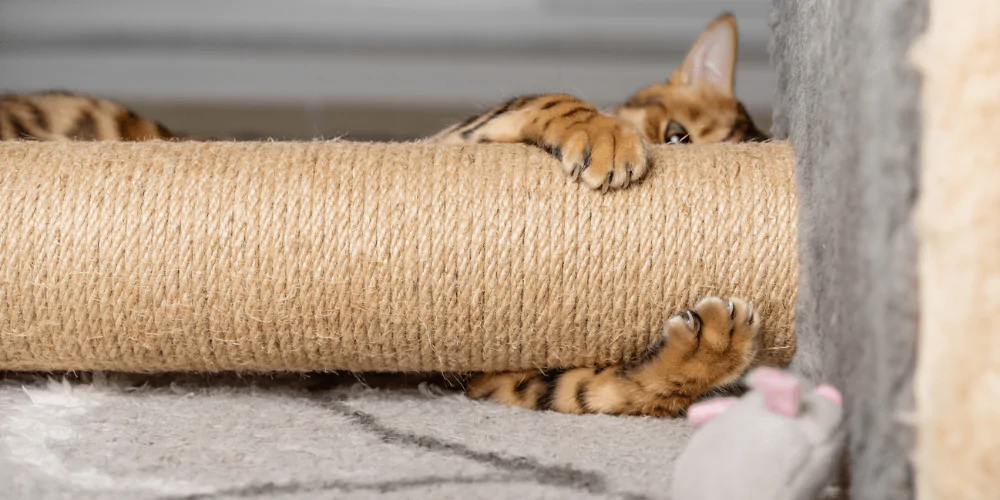
Choosing to keep your cat inside the house protects them from the dangers of the outside world. But their indoor environment may not be as enriching or stimulating for their mental health.
> Pros of being an indoor cat
The biggest pro of having an indoor cat is that they’re safe from the outdoor risks we’ve mentioned above.
Your feline’s world is also a lot smaller, so they may have a closer bond with you.
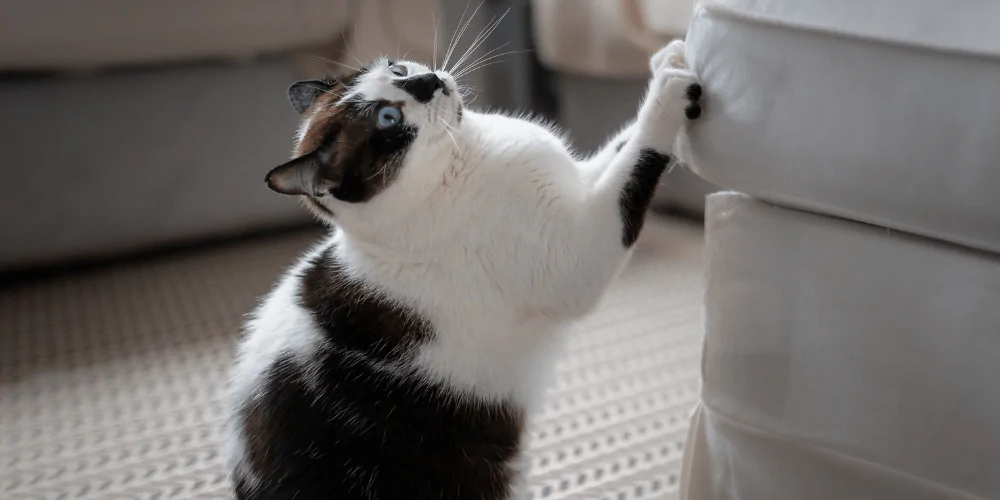
> Cons of being an indoor cat
Some of the cons of keeping your cat inside include:
- Behavioural problems possibly getting worse – for example, toileting issues and having fewer places to wee. Or aggression issues with not having space to get away from other animals or people.
- Extra pressure to give your cat enrichment – you’ll need to play with your cat more and encourage predatory behaviour. You’ll also have to create lots of high places for them to scale and add fun items like cat tunnels.
- Frustration at seeing other cats outside the window or door and not being able to chase them off or interact.
There’s also situations where certain cats may find it more difficult to cope with indoor life:
- Former strays – they’ve lived a free life and hunted outdoors so are likely to feel limited being kept inside.
- Unneutered males – they’ll be motivated to mate and want to wander quite far. But they are also more likely to fight over females and could get bitten and infected.
- Unneutered females in heat – they’ll be constantly calling to go out when in season as they want to mate.
- Cats with inconsistent outdoor access (for example, taken out on harnesses or a cat flap opening at different times) – they can become quite demanding and get pent up if you don’t let them out fast enough.
Secure outdoor area ideas for indoor cats
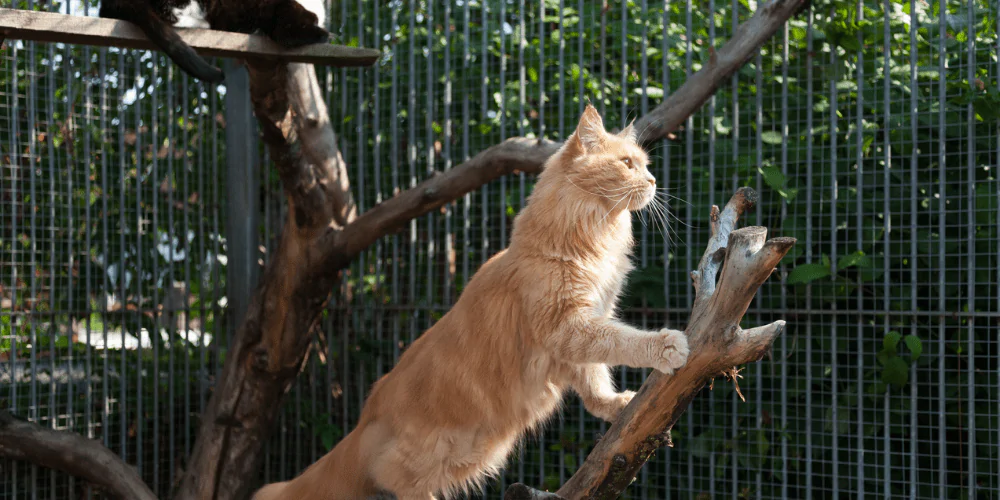
A good compromise for cat parents struggling with the decision to let their cat outside is to create a contained outdoor area.
Cat-proof fencing
Cat-proof fencing adapts your existing boundary and stops your cat from going over the fence.
- Both you and your kitty still have access to the whole garden
- You can have a standard cat flap anywhere in the home that leads into the garden
- The fencing can be added to tree trunks to stop your cat from climbing up too high
I recommend fencing at a 45-degree angle so no cats can get in or out. Be wary of roller-type fencing as other cats can still get into the garden and can’t get out again.
Catios
Catios can give your feline lots of enrichment and be made as big or small as needed.
- You can add multiple levels and places for your cat to climb and hide
- Sometimes they’re just as fun as an entire garden, particularly if the garden itself isn’t overly interesting
- You can leave space for seating areas so you can sit and enjoy the catio with your cat
- Be wary that other cats can still approach and get close – you can install solid panels at the bottom to stop this from happening
Electric fences
Electric fences are unethical and simply not worth it. They may not affect the landscape of your garden but this is for your benefit, not your cat. Electric fences:
- Are very expensive
- Use bulky collars that are uncomfortable for your kitty to wear
- Need to be painful to work
- Don’t stop other cats from coming into your garden but do stop your feline from being able to chase them away past the boundary
- May just be ignored by your cat if they’re running at full pelt to chase something, making the fence pointless
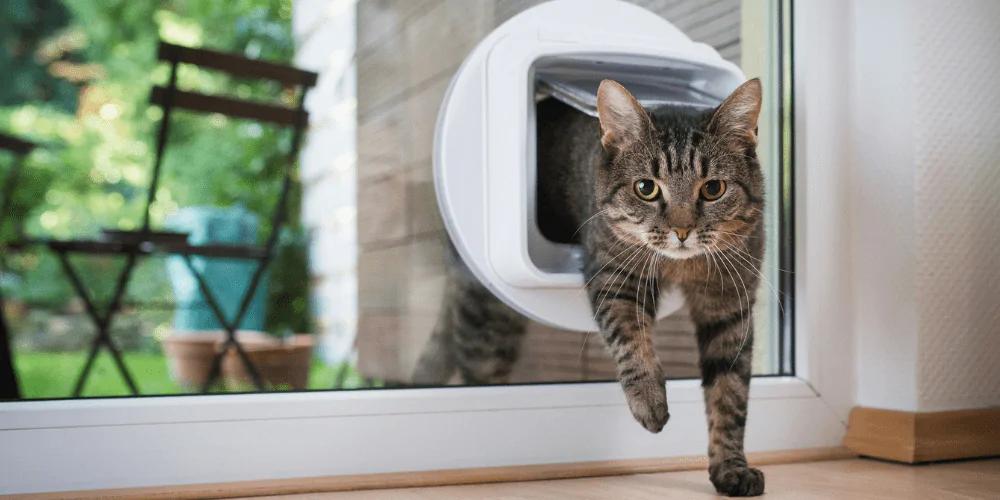
> Benefits of cat flaps
A cat flap is normally the best way of letting your cat out if you have a garden, catio, or cat fencing. It’s on their terms and they can come and go as they please.
Microchip cat flaps are ideal as:
- Other cats can’t get through them
- You can set timers to let your cat in and out
- Some come with apps that mean you can remotely control the cat flap
- With multiple cat flaps, you can set up different exits for each cat – this helps them stay out of each other’s way if they don’t get along
Not having a cat flap means that your cat is reliant on you to open and close doors. This can encourage attention-seeking behaviour and your cat waking you up early to be let out.
Cat flaps can be a place of ambush if you have tension between two cats. So having separate access points means they don’t have to go into each other’s territory to get outside.
Supervised outdoor access for cats
Some cat parents choose to give their felines supervised access to the outside world. Let’s run through the options and see if they’re safe and beneficial for your kitty.
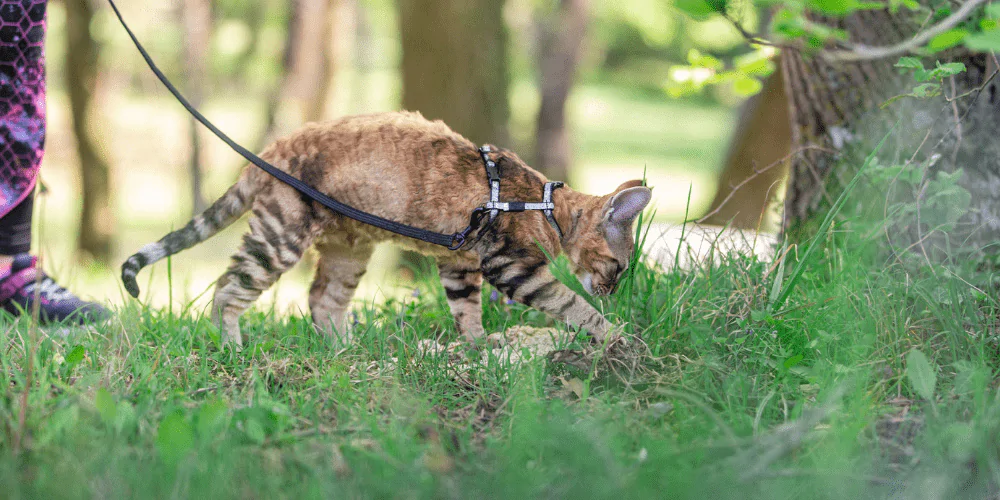
Harnesses
A lot of people will put a harness on their cat and just wait for them to get used to it. But this can be stressful and your cat is only learning to tolerate the harness.
If you’re thinking about introducing your cat to a harness, here’s some key need-to-knows:
- Use positive techniques and reward-based training so your kitty learns to like the harness, not just tolerate it.
- Go for walks in areas where you’re less likely to be approached. Dogs approach as a social behaviour but cats don’t like this and will get spooked.
- Take them out for walks in areas where there’s no risk of being chased. A cat’s natural response is to run away when threatened, which they can’t do in a harness.
- Go at your cat’s pace and where possible let them lead you to where they want to go.
- Don’t take your feline out if they don’t want to or it will lead to problems.
- You may be able to use a long line lead in the garden to give them an opportunity to explore. But as there’s a risk of tangling they’ll need supervision.
Always remember that there may be an enrichment benefit to walking your cat but it still comes with risks.
Backpacks
A rising trend on social media, backpacks are thought to be a great way to expand your cat’s world. But in reality, they don’t give extra appropriate stimulation and offer little real benefit.
- Backpacks are small and many of them have a clear front which doesn’t allow your feline anywhere to hide or protect themselves from something scary.
- Your cat can’t perform natural behaviours like hunting, marking, roaming, and having appropriate interactions with other cats.
- A backpack faces your cat in the opposite direction of where you’re walking. This means they can’t see what’s coming and could get spooked and panic.
- The walking movement is uncomfortable and there’s nowhere for your cat to properly lay down, curl up, and take themselves away.
- You’ll likely get a lot of attention and people may crowd around which could scare your cat.
Pushchairs
Pushchairs and baskets are good for transporting your kitty short distances if they find car travel stressful. For example, if you need to take them to the vet.
But they shouldn’t be used for generally taking your cat out into the world.
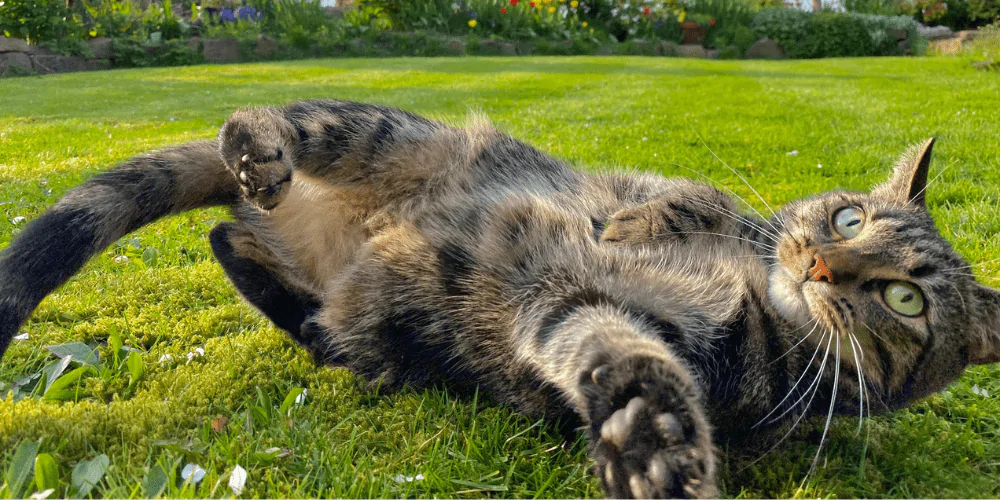
When should I let my cat outside?
Kittens can be let outside once they’ve been neutered, vaccinated, and had an opportunity to settle into their new home as their new territory.
Rescues vary depending on the individual cat but will need at least two to three weeks to settle and establish their new house as their territory. You don’t want them going off looking for where they used to live.
This is also true if you’ve moved house. Be extra careful if you’ve relocated somewhere close to your old home as your cat could pick up their previous roaming patch.
When letting your cat outside for the first time, set them up to want to come back to you:
- Let them out before their regular mealtime when they’re still hungry so they don’t want to go far.
- You can have treats to hand for routinely calling them back while they’re out (not just when they need to come in).
- Make the garden fun and interesting to encourage them to stay close to home – this includes shrubs to hide behind, things to explore, and toys to play with.
Supervise short periods outside at first. Speak to a qualified cat behaviourist if you’re at all worried about your cat being outside.

> Should I let my cat outside at night?
There’s no hard and fast rules for cats to be out at night so letting them out comes down to personal preference.
A few things to keep in mind with this:
- Cats hunt more at night as this is when prey animals come out
- They’re still at risk from traffic at this time as fewer cars can mean they’re caught off guard
- It’s more difficult to supervise them and their activity as you’re not around
- Some cats may be disruptive with you at night time as they’re full of energy, so allowing them to be outside can release this
Whether your kitty is an intrepid outdoor explorer or a proud stay-at-home feline, protect them with flexible cat insurance from Petgevity.

