
Ageing Canine Toolkit: A free guide for senior dogs
Is a change in your older dog a normal part of ageing, or a sign of something that needs a vet? The Ageing Canine Toolkit is a free booklet and checklist that helps you spot the difference.

Owe Carter
3 November 2026
Your dog’s slowing down on walks. They’re a bit slower getting up in the morning, or a little more tired than they used to be. It’s easy to put it down to getting older, and sometimes that’s all it is.
But sometimes it isn’t. Research from the University of Liverpool found that owners often find it hard to tell normal signs of ageing from signs of disease that a vet could help with. That’s why BSAVA PetSavers, which funds veterinary research, helped create a free guide to help.
What is the Ageing Canine Toolkit?
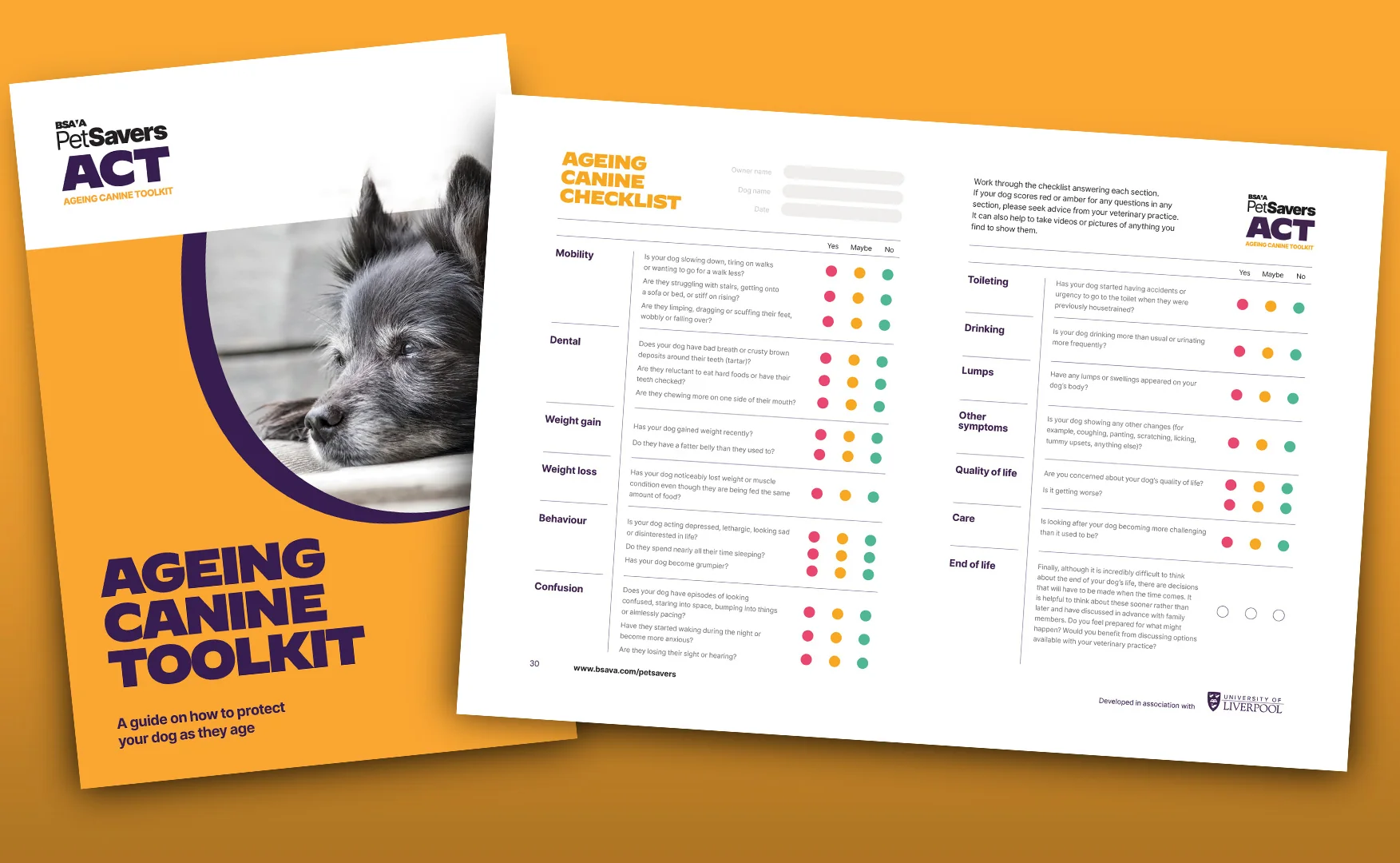
The Ageing Canine Toolkit is a free booklet for owners of older dogs, developed by BSAVA PetSavers with the University of Liverpool. It’s based on research that questioned dog owners and vets, while also looking at veterinary records.
At its heart is a simple checklist. You work through a series of questions on things like:
…and answer yes, maybe or no. If any answers come back red or amber, it’s time to talk to your vet.
The booklet also explains the most common health problems in older dogs, what to look out for, and how your vet can help. It even covers quality of life and caring for an older dog, which isn’t always easy.
Pat and Gina’s story
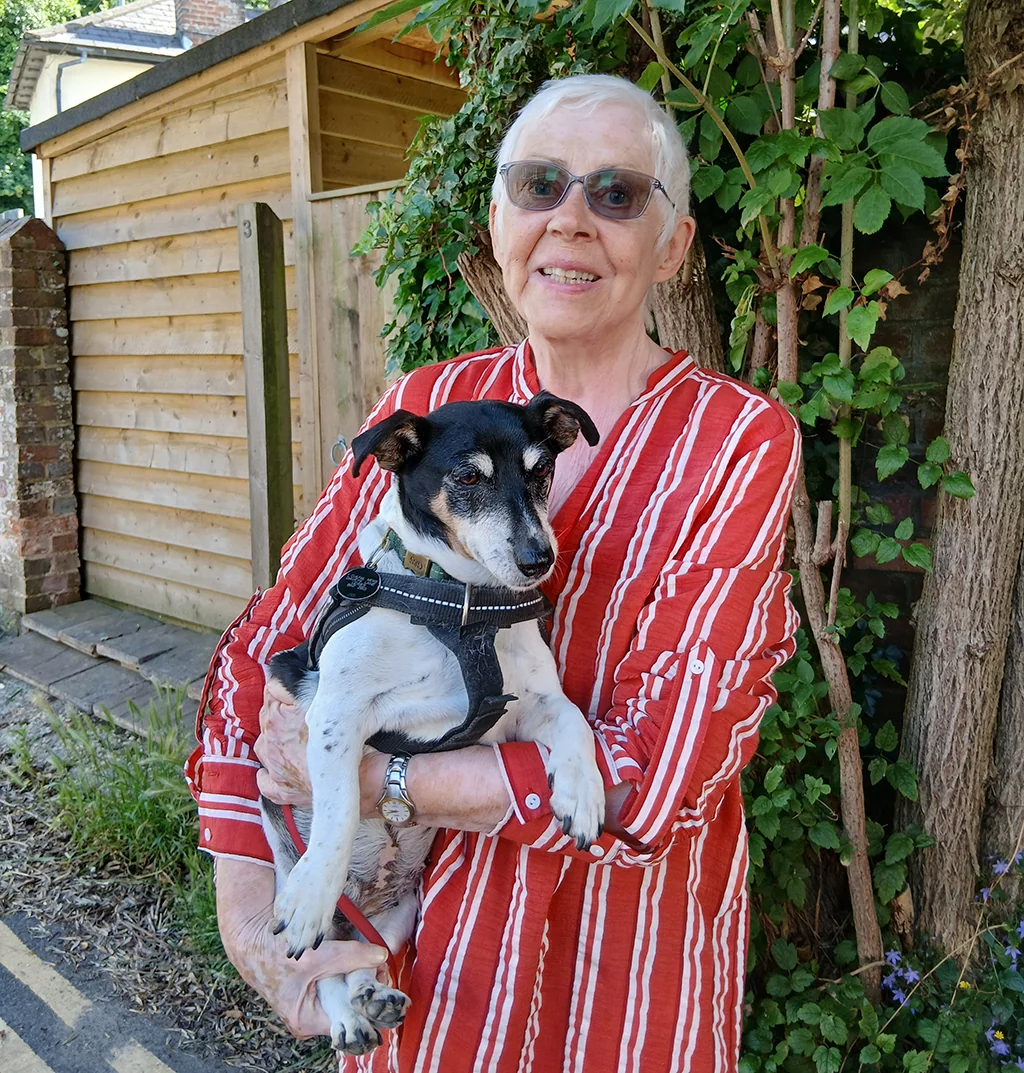
When Pat Vickers from Lewes, East Sussex took her 15-year-old Jack Russell x Dachshund, Gina, for a check-up, she was given a copy of the toolkit. She got in touch with BSAVA PetSavers to say:
“I wanted to get in touch to say that when I took Gina for her 6 monthly check up and vaccinations, I was given your booklet about ageing pets and how to look after them! So nice to have – and great that it’s free.”
What does the toolkit tell you to look out for?
The booklet is full of helpful info and things to be mindful of, including:
- Mobility: Difficulty getting up from lying or sitting, stiff movements, limping or less willingness to go on walks. These can be signs of conditions like osteoarthritis, and might also be a sign of pain
- Teeth: Smelly breath shouldn’t be written off as ‘dog’s breath’. The toolkit says an estimated 85% of dogs over 3 show signs of dental disease, and it becomes more common with age
- Weight: Over half of dogs are overweight, and weight gain often creeps up as dogs slow down. Weight loss can be just as important to check
- Behaviour and confusion: Staring at walls, getting lost in familiar places, waking at night or toileting accidents could be signs of canine cognitive dysfunction – often called doggy dementia – or of other problems
- Drinking and toileting: Drinking more than usual is one of the most important changes to notice, and the booklet explains how to measure it at home
- Lumps: Older dogs often get lumps, and many are harmless, such as fatty lipomas. But according to the toolkit, every lump should be checked by a vet
The toolkit also recommends a free tool from the University of Liverpool – the Dog Mobility App (DogMA) – for keeping an eye on your dog’s movement.
How to use the checklist
- Work through the checklist at least every six months
- Keep your completed checklists so you can compare them over time
- Take photos or videos of anything that worries you to show your vet
- Don’t wait. Tell your vet about any new or unusual signs, however small they seem
The toolkit also recommends senior dogs have health checks with their vet at least twice a year. Dogs age at different speeds, and larger dogs tend to age sooner. The toolkit’s guide is that larger dogs are senior at around 6 to 8, and smaller dogs at around 7 to 10.
Where to get your copy
Your vet practice may give you a copy at a check-up, as Pat’s did. Or you can find out more and download a copy from BSAVA PetSavers.
Helping your older dog, day or night
If you spot something on the checklist, or you’re just not sure, you don’t have to wait for the next appointment. Every Petgevity policy includes unlimited FirstVet video calls with UK-registered vets, 24 hours a day.
They can help you decide what to do next, and where needed they’ll refer you to a local practice. If your dog is seriously ill or injured, contact your local vet straight away.
Looking after an older dog can also bring costs, so it’s worth knowing where you stand. Our older dog insurance has no upper limit on your dog’s age. We could also cover your dog for any pre-existing conditions they may have with our Lifetime Plus policy, subject to acceptance*.
*Cover for pre-existing medical conditions is subject to acceptance. They will not be covered unless you have declared them and they are shown on your Confirmation of Cover.

