Dog knuckling explained
The early sign of degenerative myelopathy every owner should know.
Owe Carter
3 March 2026
If you’ve ever noticed your dog dragging their paw or walking in an unusual way, it’s natural to wonder whether it’s something serious. One subtle symptom – known as knuckling – can sometimes be an early sign of a neurological condition called Canine Degenerative Myelopathy (DM).
To help dog owners recognise the warning signs early, expert vet Dr Emma Chandley explains what knuckling is, what causes it and when to seek veterinary advice.
What is knuckling in dogs?
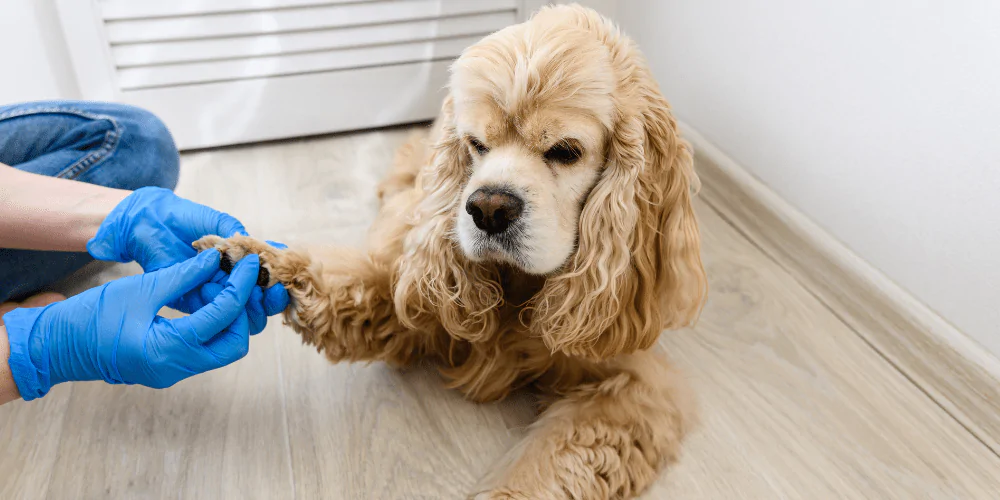
Knuckling occurs when a dog’s paw curls under, so the top of the paw touches the ground instead of the pads. You might notice your dog dragging their paw, standing on the top of their foot, or placing their paw incorrectly when walking.
Dr Emma Chandley explains: “A paw that curls under that your dog doesn’t correct can be a sign of Canine Degenerative Myelopathy (DM). This is a progressive neurodegenerative disease of the spinal cord, which affects the nerve pathways responsible for coordination and limb function.
“One early sign can be delayed correction when the paw is placed incorrectly, meaning the dog may drag or stand on the top of the paw without immediately realising.”
This delayed response can indicate problems with nerve communication between the spinal cord and limbs.
What is degenerative myelopathy?
Degenerative myelopathy is a progressive neurological condition that affects a dog’s spinal cord. Over time, it interferes with the nerves responsible for movement and coordination – most commonly in the hind legs.
Although it’s considered uncommon, it can affect a wide range of breeds, including crossbreeds.
Dr Chandley advises owners to act quickly if you notice symptoms: “DM is an uncommon, progressive condition with no cure. Once diagnosed, progression typically occurs over months to a few years, with the general prognosis sitting between 1-3 years to live.”
Early veterinary assessment can help rule out other causes and ensure your dog receives appropriate care.
Early signs of degenerative myelopathy
In the early stages, symptoms may be subtle and easy to miss. These can include:
- Scrapes or grazes on the paws from dragging
- Worn or scuffed nails
- Slight wobbliness in the back legs
- Difficulty jumping or climbing stairs
- Weakness when standing still
Because these changes can develop gradually, they’re sometimes mistaken for normal ageing.
How to check your dog at home: the paw-flip test
If you’re concerned, there’s a simple check you can try at home.
Dr Chandley says: “You can check by doing the ‘paw-flip test’. Gently turn the hind paw so the top rests on the floor. A healthy dog will usually correct this position immediately. If correction is delayed or absent, veterinary assessment is advised.”
This test isn’t a diagnosis, but it can help highlight when further investigation is needed.
How degenerative myelopathy progresses
As DM advances, symptoms typically become more pronounced. Dogs may develop:
- Weakness or paralysis in the hind legs
- Muscle loss
- Loss of bladder or bowel control
- Weakness in the front legs
- Breathing difficulties in advanced cases
While progression varies between dogs, supportive care can help maintain quality of life.
Supporting a dog with degenerative myelopathy
Although there’s no cure, many dogs can continue to enjoy life with the right support.
Dr Chandley says: “Some dogs with advanced DM may benefit from mobility aids such as rear support carts, which can help maintain independence and quality of life once hind limb weakness becomes severe.
“While there is no cure for DM, dogs can be supported with protective boots to reduce trauma from dragging, alongside physiotherapy and tailored exercise programmes to help maintain muscle strength.
“Importantly, DM itself is not typically a painful condition; supportive care focuses on keeping your dog comfortable and mobile. Should incontinence develop, practical methods such as absorbent bedding or canine nappies may help maintain hygiene.”
Simple home adjustments – such as non-slip flooring, ramps and orthopaedic bedding – can also make daily life easier.
How degenerative myelopathy is diagnosed
There’s no single test that confirms DM immediately. Instead, vets diagnose it by ruling out other possible spinal or neurological conditions.
Dr Chandley explains: “Diagnosis of DM is usually made by ruling out other spinal conditions. Vets may have your dog undergo neurological examinations, blood tests, MRIs, and, in some cases, testing for a genetic mutation. This process can be costly, and pet insurance can help support owners through the diagnosis.
“I would advise owners to check their individual policy terms and consider upgrading if needed to keep pace with their dog’s changing needs.”
Early investigation can help make sure your dog receives appropriate treatment and support.
A reassuring message for owners
Receiving a diagnosis of degenerative myelopathy can feel overwhelming. But many dogs continue to enjoy meaningful, happy lives for months or even years with the right care.
Dr Chandley says: “Degenerative Myelopathy can affect many breeds including crossbreeds.
“To reassure owners, although DM is progressive, many dogs continue to enjoy a good quality of life for a period following diagnosis with appropriate support. Simple adaptations such as non-slip flooring, orthopaedic bedding, mobility aids and physiotherapy can make a meaningful difference.
“Most importantly, this condition is not the result of anything an owner has done wrong. Support is available for both pets and their families during what can be an emotional time.”
When to see a vet
If you notice knuckling, dragging paws or changes in your dog’s mobility, it’s always best to seek a vet’s advice straight away. Early assessment can help identify the cause and see your dog receives the care they need.
Being aware of subtle changes in your dog’s movement can make a real difference – helping protect their comfort, mobility and quality of life.
Rebuilding strength and nerve awareness is a key part of managing knuckling. To learn how low-impact exercise and hydrotherapy can support your dog’s rehabilitation, listen to our podcast episode with Dr Julia Mewes: Injury recovery for dogs: Hydrotherapy & mobility.
Protect your furry friend with lifetime dog insurance from Petgevity.

