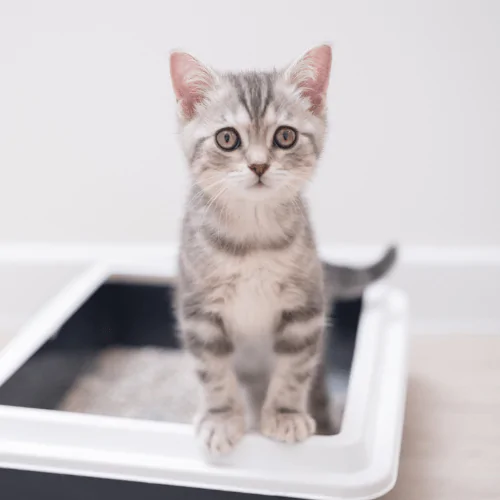
How to litter train a kitten
Lucy Hoile
31 July 2023
| 10 minutes read
Cats are naturally clean animals but sometimes need a little encouragement to toilet in the right place. Expert cat behaviourist Lucy Hoile explains all you need to know about kitten toileting.
Learn how kittens first learn to use the litter tray and how to set up your home for indoor and outdoor toileting success. Plus find out what to do if your kitten suddenly stops using their tray.
- How to train a kitten to use a litter box
> How long does it take to litter train a kitten? - How to set up your home for kitten toileting success
> Encouraging your kitten to keep using their litter tray - How to litter train a cat
- Training your cat to toilet outside
- Why is my cat suddenly not using their litter tray?
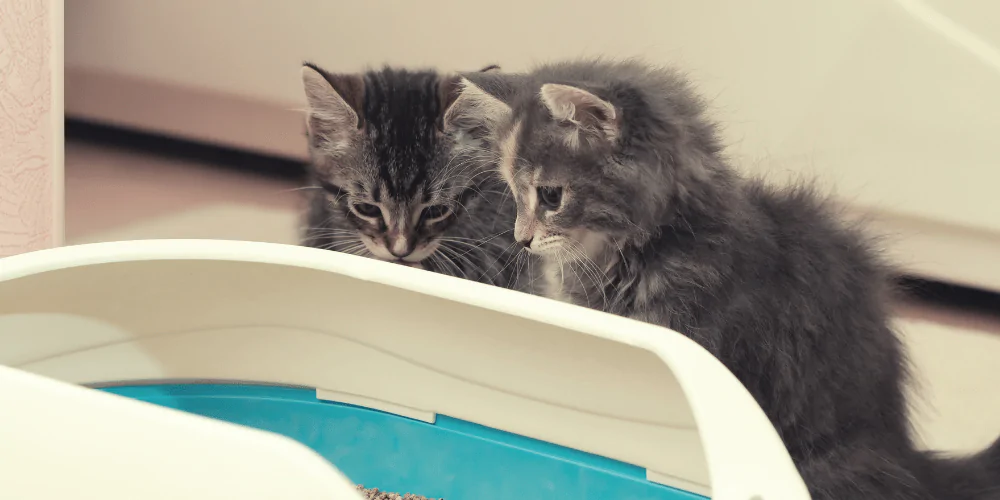
How to train a kitten to use a litter box
Most cat parents don’t need to worry about litter training their kittens as responsible breeders and rescues will do the groundwork for you.
Here’s how litter training a kitten works:
- From birth to 3-4 weeks old – Toileting is all handled by mum in those very early weeks. She stimulates and licks her kittens to help them wee and poo. If you’re hand-rearing kittens you can learn how to replicate this stimulation using cotton pads or similar.
- Around 3-4 weeks old – The kittens are now capable of toileting themselves and will start looking for somewhere they can rake and dig up to hide their poo. This is because they’re a prey species and have a natural instinct to cover their tracks. Place litter trays close by and the kittens will find their way to them, especially if they can see their mother and siblings using them.
- Around 6-8 weeks old – At this stage the kittens should be consistently using their litter trays and ideally not have any toileting issues. Any problems are usually a sign of not being able to easily reach or use their toileting area. It can also suggest they are experiencing stress.
A few important need-to-knows about the litter training stage:
- You can pick up and put your kitten in the tray if you notice them walking around and behaving like they’re looking for something.
- You can also place your kitten in their litter tray after they’ve eaten, first woken up, and when you return home. They will often need to go at these times.
- Litter trays need to be within easy reach as your kitten may look for the next best thing if they’re difficult to find. This could be laundry or blankets as they’re easy for your kitten to rake with their paws.
- Any behaviours they learn before eight weeks can stay with them forever. So it’s key to teach them early on that a litter tray is their toileting spot – not your laundry!
- Ask the breeder about your kitten’s current set-up before you bring them home. It’s a big red flag if they aren’t using litter trays.
> How long does it take to litter train a kitten?
It only takes a few weeks to reinforce the toileting behaviour once your kitten is able to take themselves off and find a suitable spot.
This means your kitten should already be litter trained when you bring them home between eight and 12 weeks old.
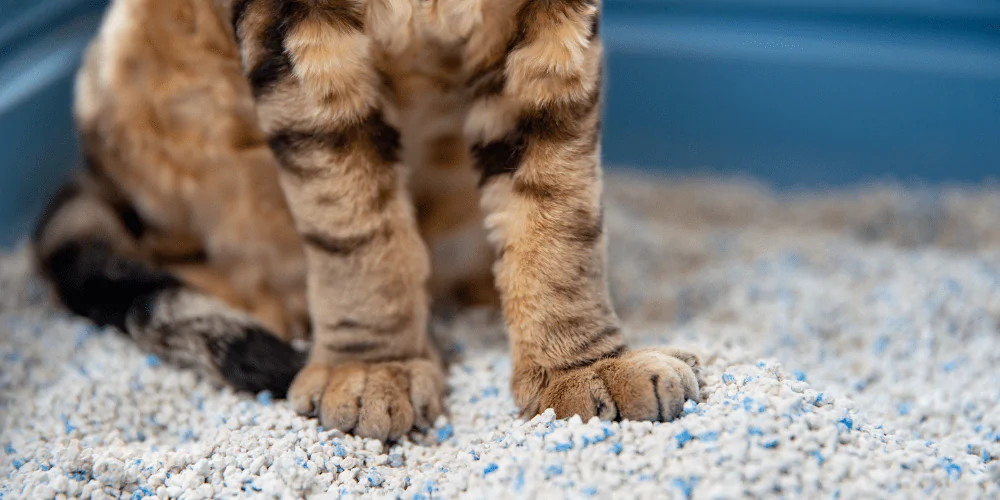
How to set up your home for kitten toileting success
You should have very few accidents with a healthy kitten when bringing them home.
But you’ll need to make sure you have a suitable set-up for their toileting needs, so here’s what I recommend…
Choosing your litter tray
- For kittens, choose a tray that’s shallow on all sides and easy to access (this doesn’t need to be expensive). You’ll need to replace this with a bigger tray as they grow up.
- At first, avoid hooded trays and those with flaps/doors as they can be challenging for little kittens to climb into. Your kitten could get stuck trying to use it.
- You’ll just need one tray to begin with as your kitten should be confined to one room.
- Once they have access to the whole house, increase the number of trays to make toileting convenient.
- By the time you introduce your kitten to the household cats, there should be one litter tray each, plus an extra one.
Where to put your litter tray
- Place trays where your kitten likes to spend their time to make it easy for them to find.
- Most people tend to put litter trays in the utility room or bathroom as they’re the most hygienic. But think about whether this is the best place from your kitten’s perspective.
- Put trays somewhere quiet and away from disturbances – for example, not near the washing machine if you choose the utility room.
- Keep the litter trays away from any windows, doors, and cat flaps as these can make your kitten feel vulnerable.
- Litter trays should be kept away from food and water bowls.
- Don’t let your dog or other cats near your kitten’s litter tray. It’s fine for your cats to share as long as there’s plenty of trays to choose from.
Picking your litter type
- Kittens want to be able to rake through their litter so go for something quite soft and fine.
- Stay away from chunky pellet types and clumping litter as your kitten could swallow some while they’re playing and investigating.
- Try and use the same litter from the breeder/rescue to keep things consistent for your kitten.
- If you do need to change the litter type, do so gradually, adding a handful of new litter each day.
- Always keep the tray clean and frequently scoop out the litter – leaving any mess can be off-putting to your kitten rather than reinforcing.
> Encouraging your kitten to keep using their litter tray
Now your house is all set up for your kitten’s toileting needs, it’s time for encouragement. There’s a few things you can do to help them keep using their litter tray:
- Don’t stare at your kitten while they do their business. They can find direct eye contact unsettling and everyone needs a bit of privacy.
- Rewarding with treats isn’t needed for most cats as immediately offering food can scare or spook them. Instead, try quietly reassuring and praising them after they come out of the tray.
- Keep them on the same diet as their last home and make sure they’re on suitable kitten-specific food to avoid tummy troubles.
- A calm environment is key, so keep any other stresses to a minimum and stay away from making big changes. Friends and family will want to meet your new kitten but this can be stressful while they’re settling in.
Never punish your kitten – smacking, shouting, spraying them with water – for not using their litter tray and leaving a mess on the floor. Things will only get worse and they’ll start toileting in secret areas to hide from you.
How to litter train a cat
Just like a kitten, your adult cat should naturally gravitate towards peeing and pooing in a litter tray. But this will also depend on their experience so far – what are they used to toileting on?
You can set them up for successful toileting habits by giving them a suitable litter tray that meets their specific needs.
There’s a few things you’ll need to do slightly differently from kittens:
- Choose a bigger and deeper tray so there’s plenty of room for them to rake
- You can now use clumping litter (which is also easy to scoop out)
An unclean litter tray is one of the biggest reasons your cat will avoid using it. So remember to regularly empty it after your cat has done their business.
Training your cat to toilet outside
Some cats like to go to the toilet outside and so may not use a litter tray. But it’s still important to have a tray in the house so they can wee and poo inside when going outside is difficult.
If your cat poos outside, you might need to be prepared for some possible upset with the neighbours. Certain felines prefer to do their business in other people’s gardens!
Here’s some options to set up your garden for your cat’s toileting needs:
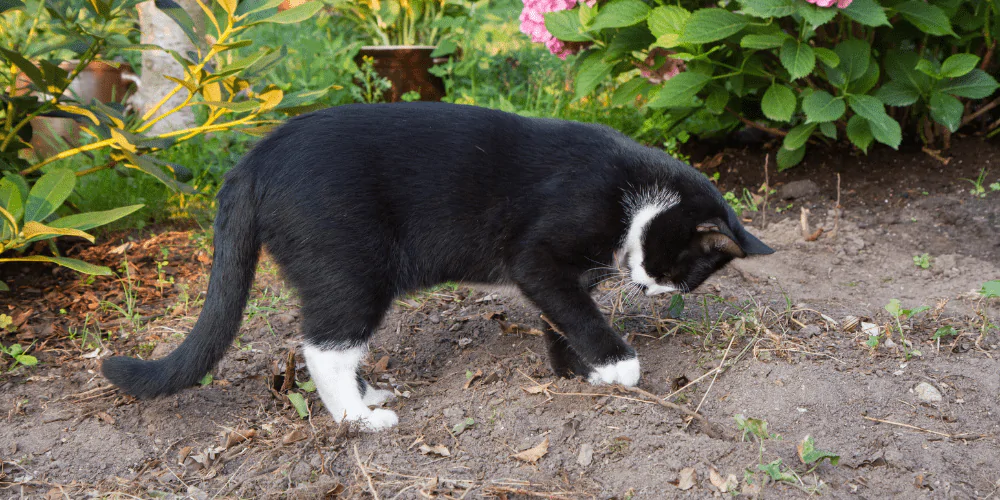
- Create an area with sand, soil or gravel they can dig up and rake – a flower bed works and some cats even like a plant pot
- Make a cat latrine with a filtration system using larger and smaller type gravels under a layer of soil or sand
- Set up a wooden house with a cat flap and then pop a litter tray inside
A few things to keep in mind with outdoor toileting:
- Be wary of litter trays designed for the outdoors as they’re weatherproof and so not always easy to access
- Your cat needs lots of seclusion and privacy, so fill your garden with cat-friendly shrubs, flower beds, and sheltered areas
- Open up nooks and crannies to give them even more options to tuck themselves away
Always remember that although your cat may love being outside, there’s times when they won’t want to go out. This could be because:
- It’s snowing and raining
- The ground is hard and they can’t rake it like they’d want to
- Other cats in the neighbourhood may be scaring them
- Neighbours may have a dog that barks when your cat is in the garden
This is why you need to still give them toileting areas in the house as well as the garden.
Why is my cat suddenly not using their litter tray?
Health
One of the most common reasons that cats suddenly stop using their litter tray is because they’re poorly.
Cats are prone to cystitis and kidney problems, so speak to your vet if you’re worried your feline might have a urinary issue.
Stress
Your kitty might not feel safe toileting in their tray if something is stressing them out.
Cats still using their tray but also spraying against a vertical surface can be a sign of territorial marking or stress.
Examples of what could be triggering stress in your cat include:
- Other cats trying to play or pounce on them while they’re using the tray (or even sitting on top of the tray if it’s a covered style)
- Being watched while they go to the toilet – this could be other cats, dogs, or humans
- Not feeling comfortable using their usual outdoor tray, but then having no indoor option
- Having a negative experience while using their tray – such as hearing fireworks, thunder, or loud children
You may need to get your feline a completely new tray (with the same litter) and put it in a new area. This can help to set up a new routine and build a positive experience again.
A qualified cat behaviourist can help you figure out what’s causing your cat stress and how to make them feel happier.
Using the wrong type of tray
You’ll be updating your kitten’s tray set up as they grow and need more space. But watch out for:
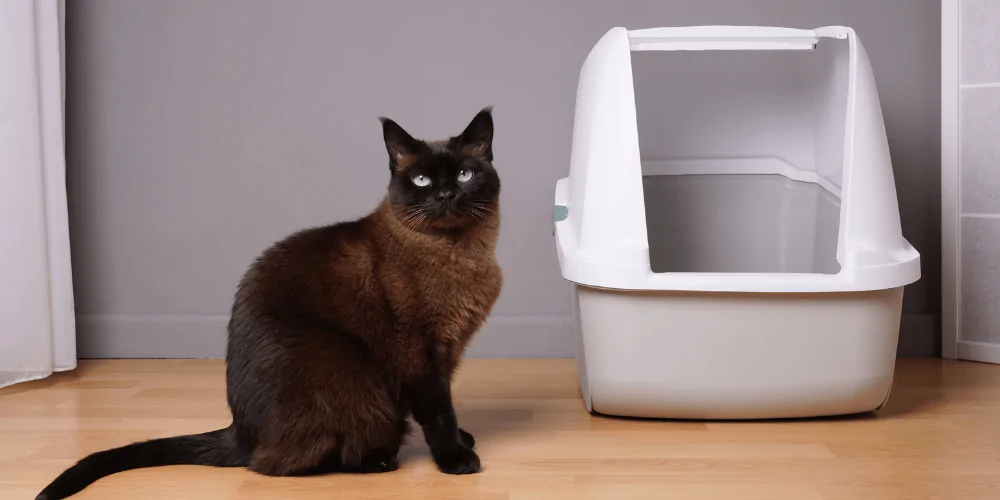
- Trays with a top opening – these are hard for your cat to get in and move around (plus they can get stuck if another cat sits on top)
- Trays that are too small – your tray needs to be one and a half times the length of your cat’s body (not including their tail)
You can try using something like a plastic under-bed storage box if you need something bigger than a standard litter tray.
Changes
Keeping things consistent for your cat will help them feel comfortable using their tray.
Changes in the house might be throwing off your cat’s toilet habits, for example:
- Swapping to a different type of litter
- Moving the tray to a different place in the house
- Holidays and other events causing disruption and changing the look and feel of the house
Protect your new feline throughout life’s adventures with Petgevity pet insurance for kittens.

