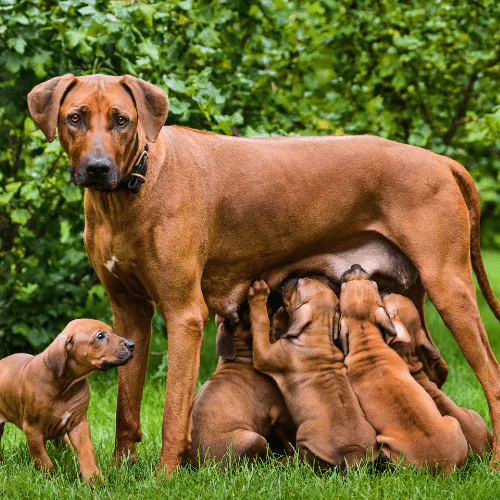
Guide to dog pregnancy
If your dog gets pregnant, here’s a practical guide for owners
Philippa Short
22 January 2026
| 14 minutes read
Whether you’re planning a litter or simply want to understand what happens during canine pregnancy, this guide walks you through the process step by step. Here expert dog behaviourist Philippa Short discusses dog pregnancy – from mating to birth and beyond – with clear, practical advice for dog owners.
- How dogs become pregnant
> When can you confirm a dog is pregnant? - How long are dogs pregnant for?
> Common signs of dog pregnancy
> When can you feel puppies moving? - Looking after your pregnant dog
> Exercise during dog pregnancy
> Feeding a pregnant dog - The final fortnight of dog pregnancy
> Preparing for labour and whelping
> Early signs of labour in dogs - Stages of dog labour
> Stage one: early labour
> Stage two: delivering the puppies
> Supporting your dog during birth
> Recording and monitoring newborn puppies - When to call the vet during labour
- Caring for mum after the birth
> Toileting after whelping
> Feeding after whelping
> Bathing after whelping
How dogs become pregnant
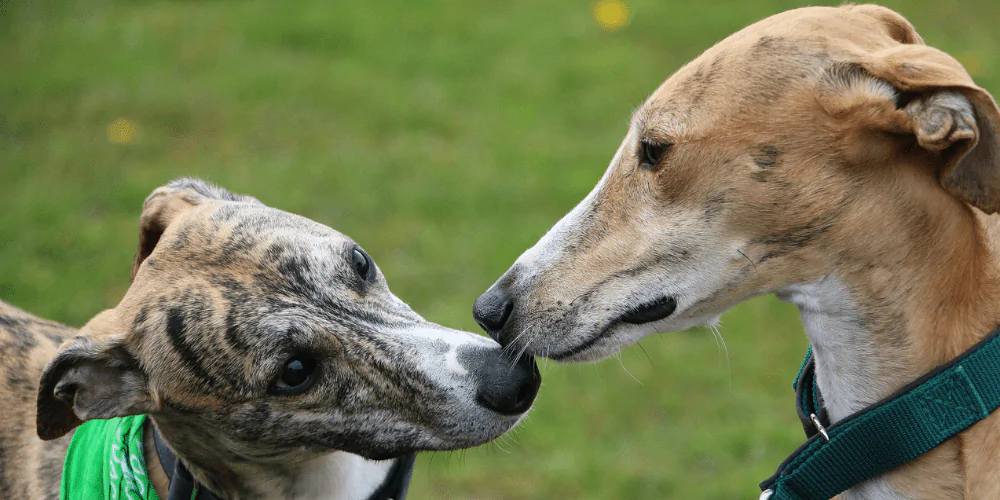
For a female dog to conceive, she must be mated while she’s fertile during her season. When she’s ready, she’ll stand still with her tail held to one side, allowing the male dog to mount. Breeders usually aim for two matings, provided the female is relaxed and willing each time.
If a mating has been successful and her body signals that she’s finished, she’ll refuse further attempts. This should always be respected – never try to force another mating, particularly if she was previously receptive.
Female dogs can become pregnant from their first season. Most come into season around twice a year, with each cycle lasting roughly three weeks, though some can extend closer to four.
Once the vulva is swollen and the bleeding changes to a lighter discharge, she’s typically fertile. This is most often between days nine and 16 of the cycle, but it can happen earlier in some dogs.
If you’re planning a litter, a progesterone blood test is strongly recommended. This pinpoints ovulation within a short window and is especially useful for first seasons, when timing can be unpredictable.
When can you confirm a dog is pregnant?
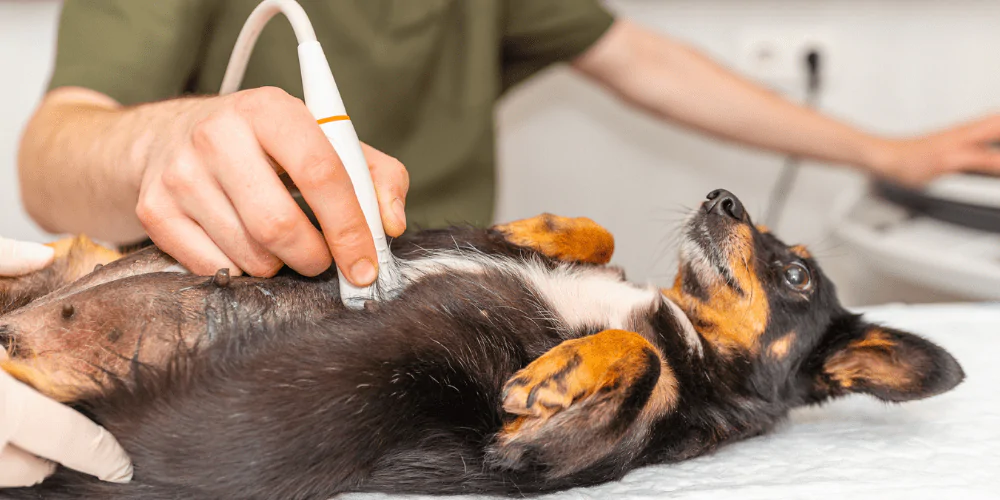
The most reliable way to confirm pregnancy is through veterinary testing. A blood test can usually detect pregnancy from around three weeks after mating, while an ultrasound scan is typically carried out after four weeks.
These checks can be done at your vet practice, though some owners also choose to work with a qualified canine midwife.
How long are dogs pregnant for?
The average canine pregnancy lasts around 63 days, although anything between 59 and 65 days is considered normal.
If puppies arrive before day 59, contact your vet immediately, as premature puppies may have underdeveloped lungs. Equally, if your dog goes more than five or six days past her due date, veterinary advice is essential, as oversized puppies may require a caesarean section.
Common signs of dog pregnancy
Pregnancy signs vary depending on breed, hormones and litter size. You may notice things such as:
- Mild nausea or retching, particularly in the early stages
- Changes in appetite, ranging from fussiness to increased hunger
- Gradual enlargement of the nipples, which may lengthen and darken
- Increased clinginess or emotional sensitivity
- Nesting behaviour, including digging, shredding or rearranging bedding
Some dogs dig in the garden or pull apart soft furnishings. This isn’t bad behaviour – it’s instinctive preparation for birth.
Seek veterinary help immediately if your dog shows signs of distress, persistent vomiting or diarrhoea, cries in pain, or has any unusual discharge.
When can you feel puppies moving?
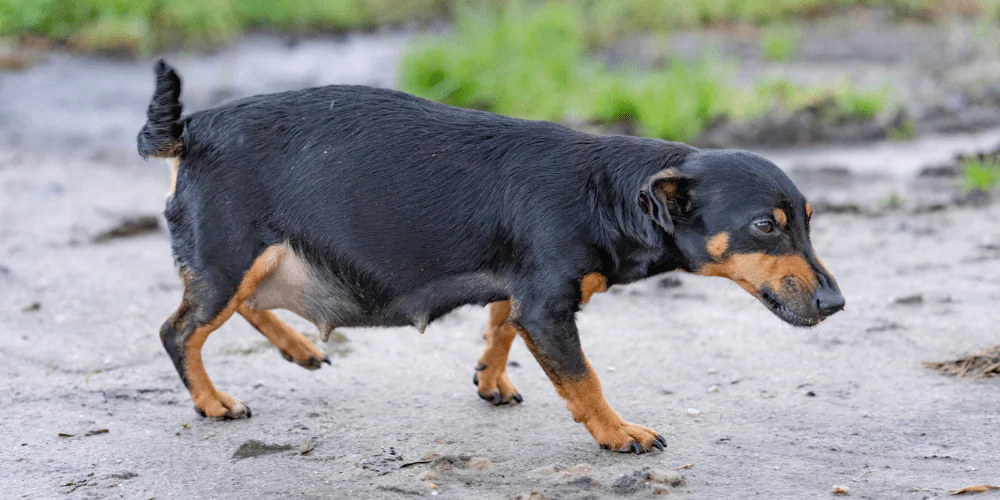
Feeling puppies move depends on the breed, body shape and litter size. In some dogs, movements are clearly visible as the abdomen expands. In others, they’re harder to detect, especially if the puppies are positioned deep within the uterus.
If you’re unsure how many puppies your dog is carrying, your vet can advise on further checks later in pregnancy.
Looking after your pregnant dog
Exercise during dog pregnancy
Exercise should be adjusted as pregnancy progresses. From around 30 days, avoid rough play or busy dog areas where accidental knocks could occur.
That said, gentle activity is still important. Allow your dog to set the pace, choosing calm walks or secure, private spaces where she can move freely without risk.
Feeding your pregnant dog
Nutrition plays a key role in a healthy pregnancy:
- Feed a balanced, high-quality diet suitable for pregnancy
- Avoid simply increasing portion sizes too early, as this can lead to oversized puppies
- Aim for nutritional support without excessive weight gain
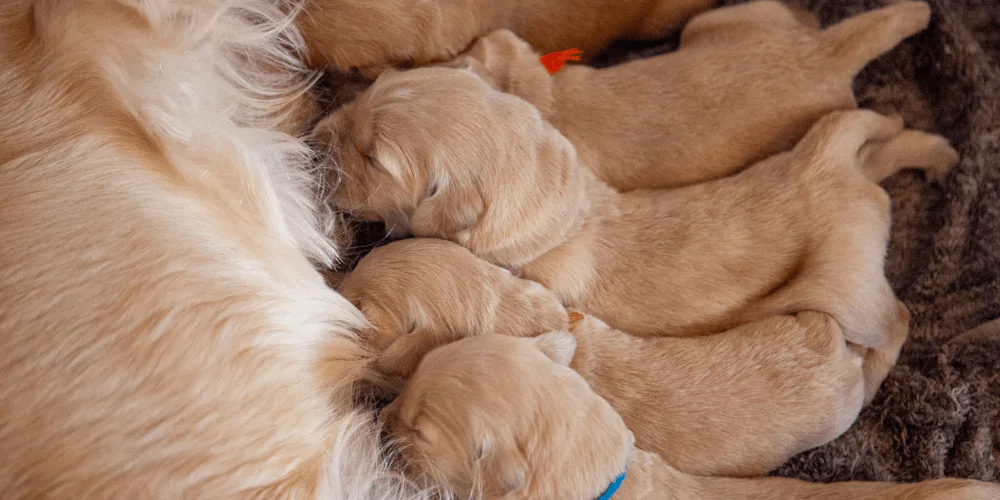
- As space in the abdomen reduces, offer smaller meals more frequently
The final fortnight of dog pregnancy
Preparing for labour and whelping
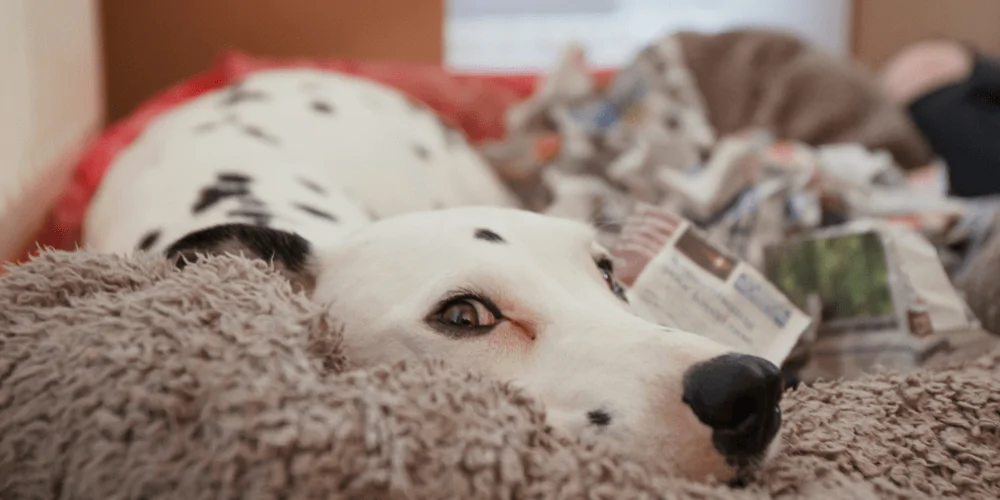
Whelping is the term for dogs giving birth. You should set up a whelping box at least two weeks before the due date. This should be a sturdy, four-sided box with low rails to prevent puppies being trapped.
Choose a quiet, low-traffic area of the home that can be kept at a stable temperature. Line the box with puppy pads and a fitted vet bed rather than loose blankets.
Limit access to trusted household members only until the puppies are at least three weeks old.
It’s also wise to:
- Confirm which vet provides out-of-hours emergency care
- Discuss caesarean availability in advance
- Arrange help for transport if needed
- Keep emergency contact numbers close by
Early signs of labour in dogs
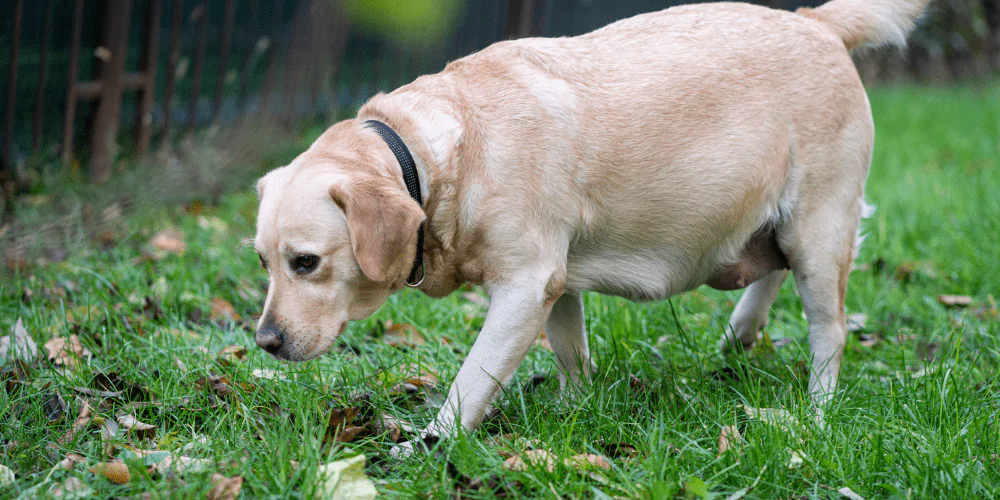
In the final days, your dog may show:
- Increased restlessness or discomfort
- Frequent requests to go outside
- Reduced appetite
- Heightened nesting behaviour
- Guarding of chosen birthing areas
- A noticeable drop in body temperature around 48 hours before labour
Stages of dog labour
Stage one: early labour
During this phase, your dog may:
- Dig and rearrange bedding
- Pant heavily
- Change position frequently
- Appear unsettled or uncomfortable
- Occasionally vomit
This stage can last several hours.
Stage two: delivering the puppies
Active labour begins when your dog starts to push. Puppies usually arrive head-first and may still be enclosed in their sac. Your dog will normally break the sac, sever the cord and clean the puppy herself.
Ensure there is one placenta for each puppy, even if it passes separately.
Supporting your dog during birth
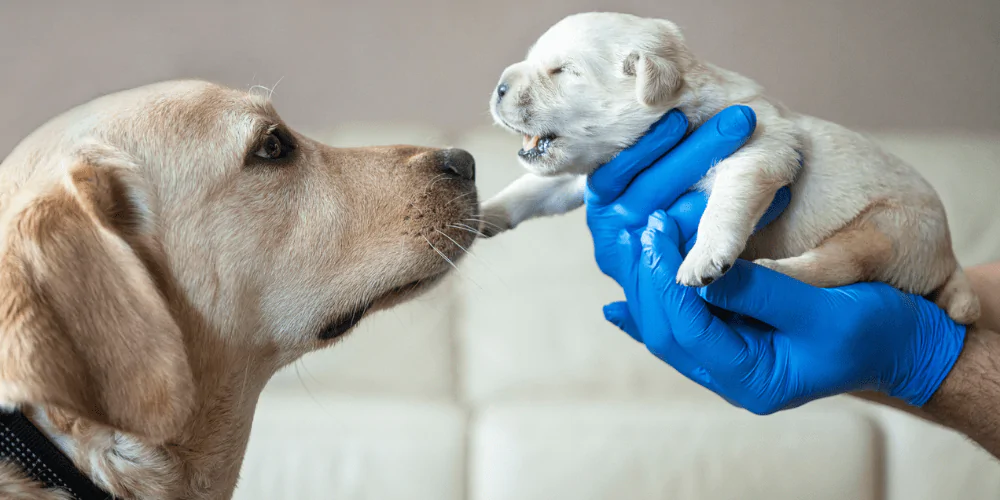
If a puppy is born still in its sac and mum doesn’t open it immediately, gently tear it open with your fingers so the puppy can breathe.
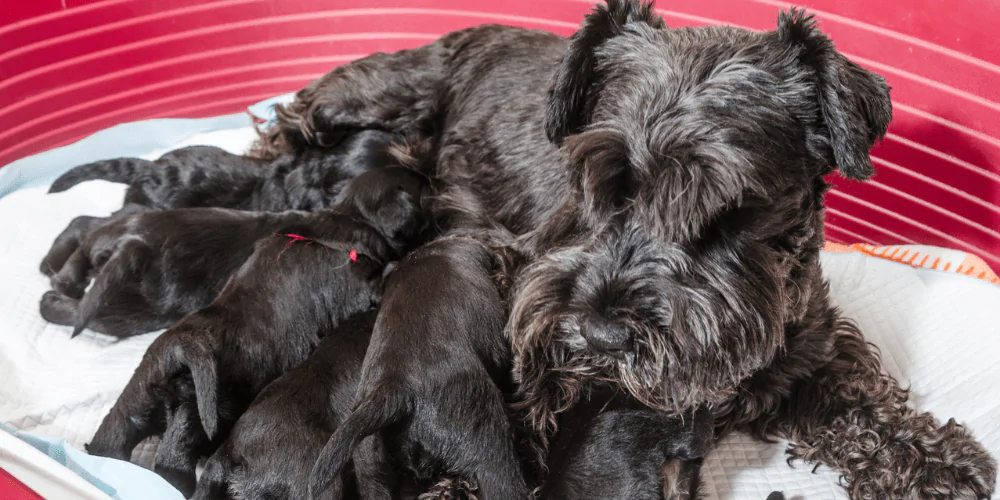
Your dog will usually stimulate her puppies by licking them. Only step in if a puppy appears weak or unresponsive, using a warm towel to gently rub and encourage breathing.
Recording and monitoring newborn puppies
Keeping records helps you track growth and spot issues early:
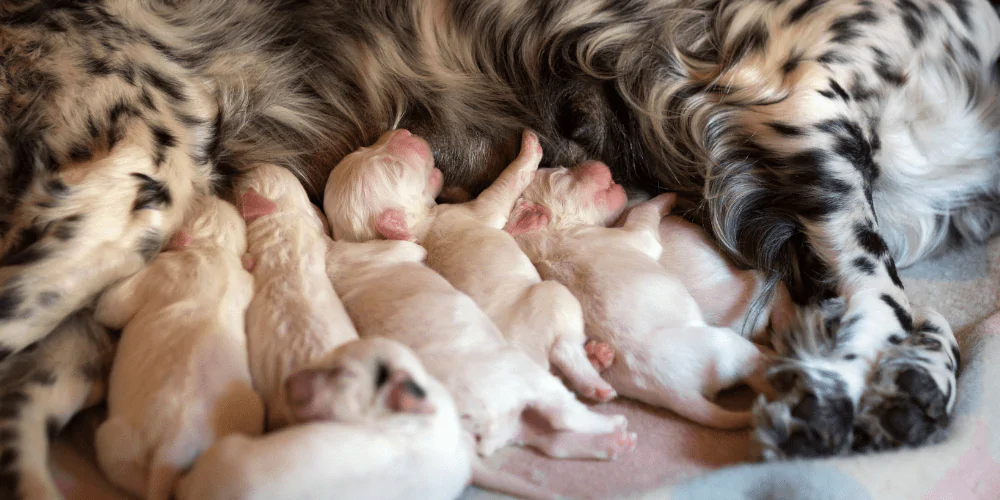
- Note each puppy’s sex, markings and birth order
- Use small, safe markings to help identify individuals
- Weigh puppies regularly using kitchen scales
- Quickly check for visible abnormalities such as cleft palate
Keep handling calm, brief and always within mum’s sight.
When to call the vet during labour
Contact your vet urgently if:
- Your dog appears distressed at any point
- She strains for over two hours without producing a puppy
- There is a strong, unpleasant smell. This may indicate a puppy has died and heightens the infection risk to mum
Sadly, not all puppies – or mothers – survive birth. This risk should always be considered before breeding.
Caring for mum after the birth
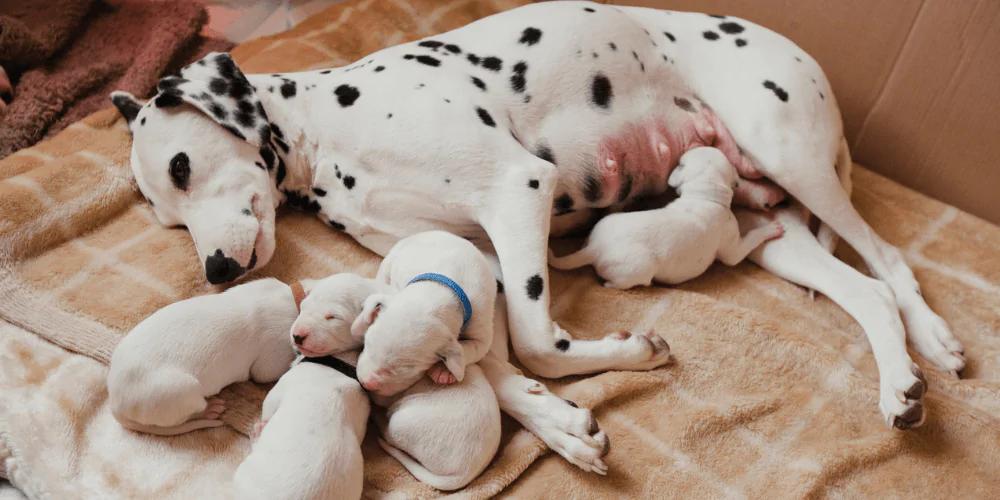
Once labour is complete, your dog should settle and focus on her puppies. Some cope immediately, while others – particularly first-time mums – may need gentle reassurance.
Stay with her for the first 48 hours and avoid letting other pets near the puppies until she is comfortable.
Toileting after whelping
Allow your dog to toilet wherever she feels safest initially. If she needs to go outside, ensure she can return straight to her puppies.
Feeding after whelping
- Keep fresh water beside the whelping box
- Start with light, easily digested food
- Offer small, frequent meals for the first few days
Bathing after whelping
After two or three days, you can gently wash her rear if needed. Choose a safe, non-slip area such as a walk-in shower, avoiding any lifting that may strain her body.
Help protect your dog throughout her life with comprehensive dog insurance from Petgevity.

