The most scenic dog walks in the UK
10 of the most stunning, dog-friendly walks UK-wide, recommended by Dog Owner's Guide.

Dog Owner's Guide
17 September 2026
| 7 minutes read
From huge sandy beaches overlooked by castles to peaceful lochs surrounded by mountains, you don’t have to climb the UK’s highest peaks to find some of its most spectacular scenery.
We’ve teamed up with Dog Owners Guide, the UK’s dog friendly lifestyle and travel platform, to find 10 of the most scenic places to walk your dog across the UK.
The aim wasn’t to find the longest or most challenging routes. In fact, quite the opposite. These are walks rather than hikes, allowing you to experience incredible scenery on a relatively accessible dog walk, with routes you can generally enjoy in around two hours or less. Spanning England, Scotland, Wales and Northern Ireland, here are the dog walks worth adding to your list, in no particular order.
1. Westonbirt Arboretum – Silk Wood, Gloucestershire 🌳
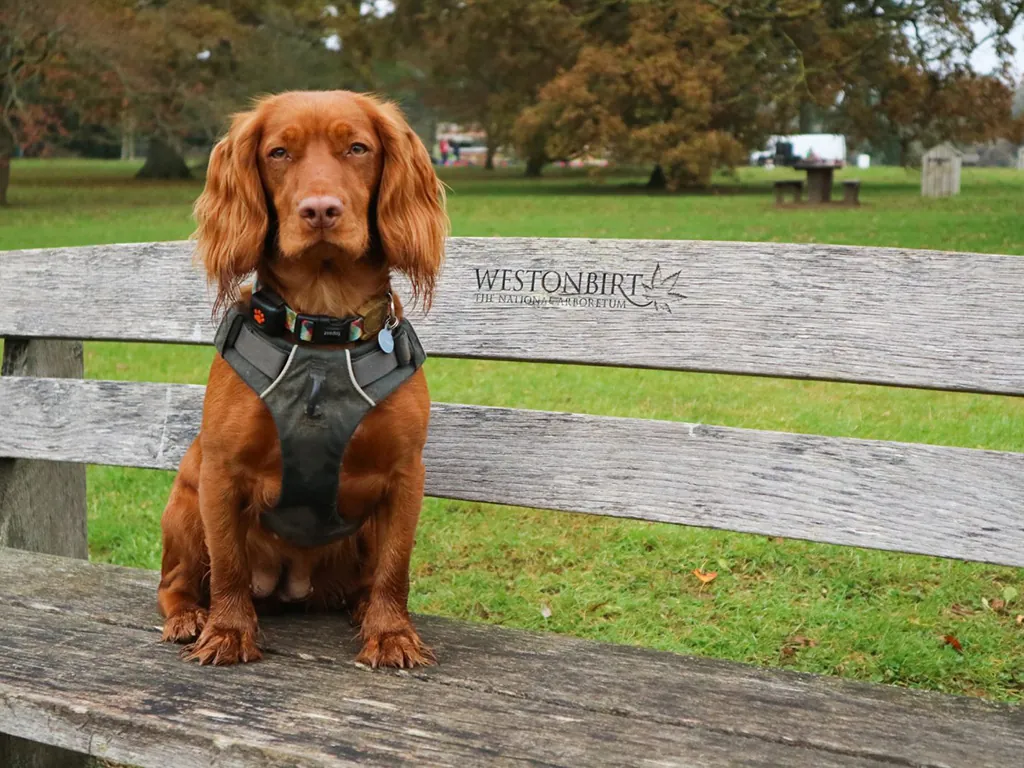
If your idea of a scenic dog walk involves woodland rather than coastline, Westonbirt is difficult to beat. Home to thousands of trees from around the world, the arboretum changes dramatically with the seasons and is particularly spectacular during autumn.
For this walk, we’re specifically heading into Silk Wood, the dog-friendly side of Westonbirt. Follow the established trail through the woodland, taking in both ancient woodland and some of the arboretum’s impressive tree collection along the way.
Distance: 3.5 miles
Time: Approx. 1.5 hours
Difficulty: Easy
Our chosen Westonbirt route on OS Maps
Explore Westonbirt Arboretum – Silk Wood on Dog Owner’s Guide →
With thanks to @frankiethechocolatewcs.
2. Giant’s Causeway, County Antrim 🪨
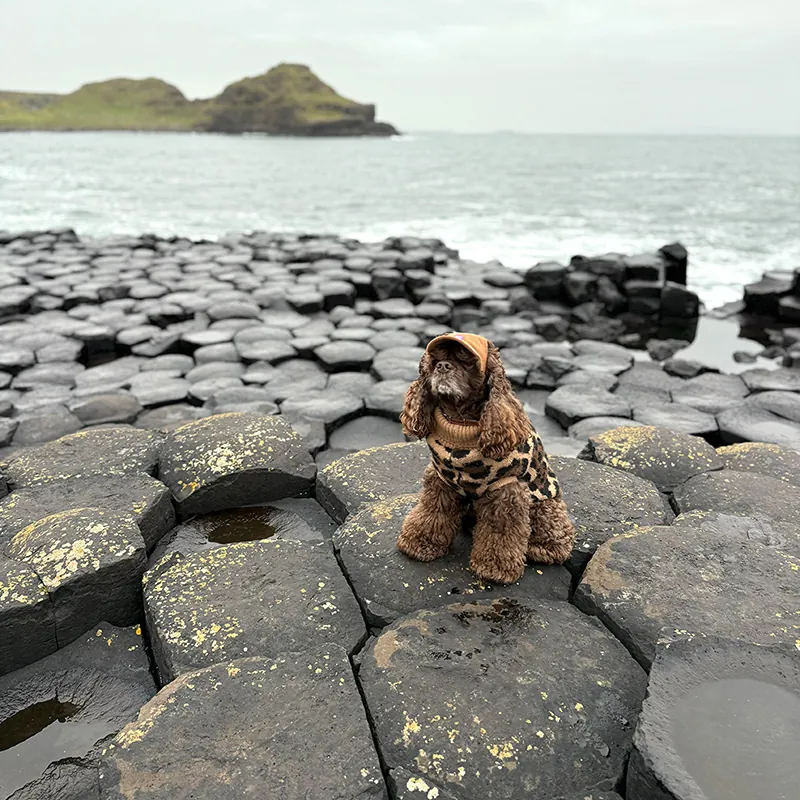
Few dog walks come with a landscape quite like the Giant’s Causeway. Around 40,000 interlocking basalt columns meet the Atlantic Ocean, creating one of Northern Ireland’s most recognisable natural landmarks.
For a relatively short walk, follow the Blue Trail from the Visitor Centre down towards the famous stones. The path runs beneath the cliffs with the North Atlantic alongside you before reaching the Causeway itself. At just 0.8 miles each way, it’s the shortest walk on our list and takes approximately 25 minutes each way, although you’ll want to allow plenty of extra time to explore and take in the scenery. The route is officially graded easy, although there are some steep sections and the stones themselves can become slippery when wet.
Distance: 2 miles
Time: Approx. 1 hour
Difficulty: Easy
Our chosen Giant’s Causeway route on OS Maps
Explore Giant’s Causeway on Dog Owner’s Guide →
With thanks to the snappily dressed @jordan_cocker.
3. Loch Morlich & Glenmore Forest, Cairngorms, Scotland 🏔️🐕
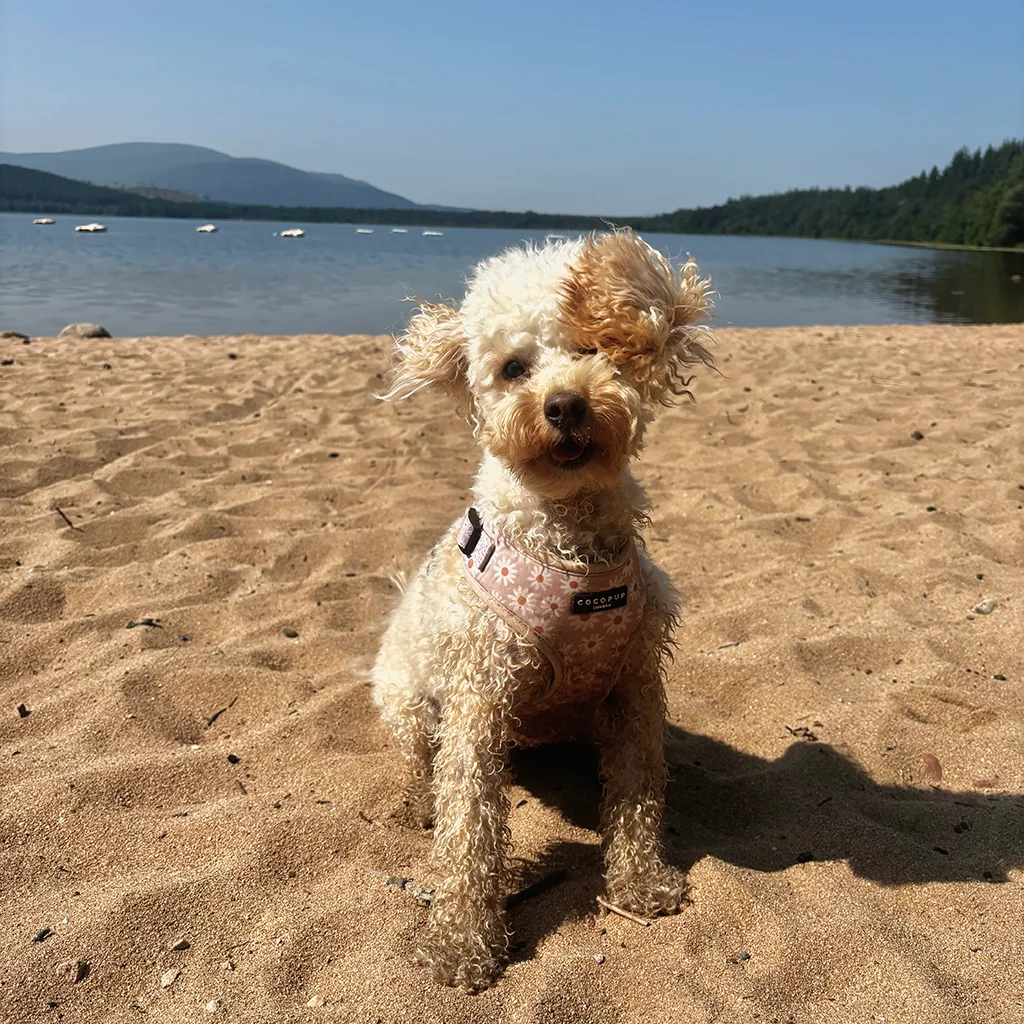
Loch Morlich gives you classic Scottish mountain scenery without actually having to climb a mountain. Surrounded by Glenmore Forest and overlooked by the Cairngorms, the freshwater loch even has its own golden sandy beach.
We recommend following the circular trail around Loch Morlich, winding through the surrounding pine forest with glimpses across the water to the mountains beyond. Start or finish with some time on Loch Morlich Beach, where you’ll get some of the best views across the loch towards the Cairngorms. The route is mostly wide and relatively flat, although there are some uneven sections, short slopes and road crossings along the way.
Distance: 4 miles
Time: Approx. 2 hours
Difficulty: Easy
Our chosen Loch Morlich route on OS Maps
Explore Loch Morlich & Glenmore Forest on Dog Owner’s Guide →
With thanks to @moragthecavapoo.
4. Bamburgh Castle & Beach, Northumberland 
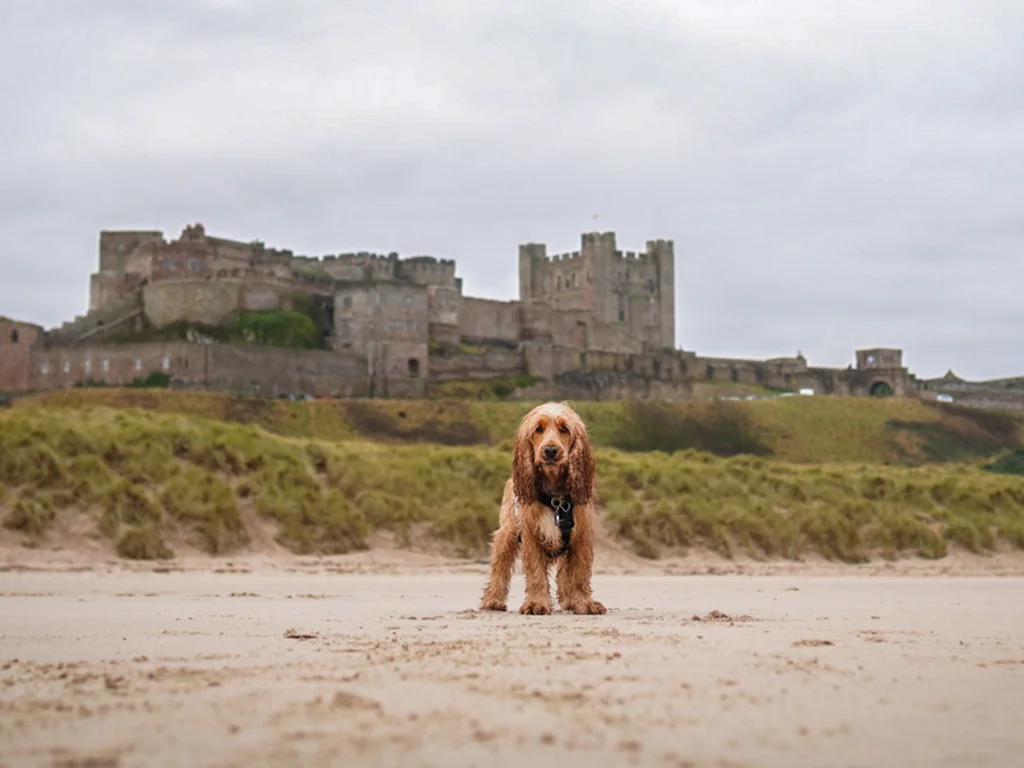
Few beach walks come with a backdrop quite as impressive as Bamburgh. The vast sandy beach is overlooked by Bamburgh Castle, which sits dramatically above the dunes.
We recommend a shorter circular starting near the castle and heading down onto Bamburgh Beach. Follow the shoreline with the castle behind you before looping back through the dunes towards the village. You can easily extend the walk along the beach if you fancy going further, but the shorter route gives you some of the best views without committing to the full walk to Seahouses.
Distance: 3.5 miles
Time: 1.5 hours
Difficulty: Easy
Our chosen Bamburgh OS Maps
Explore Bamburgh Castle & Beach on Dog Owner’s Guide →
With thanks to Jen @lifewithmyspaniels.
5. Rhossili Bay, Gower, Wales 🌊
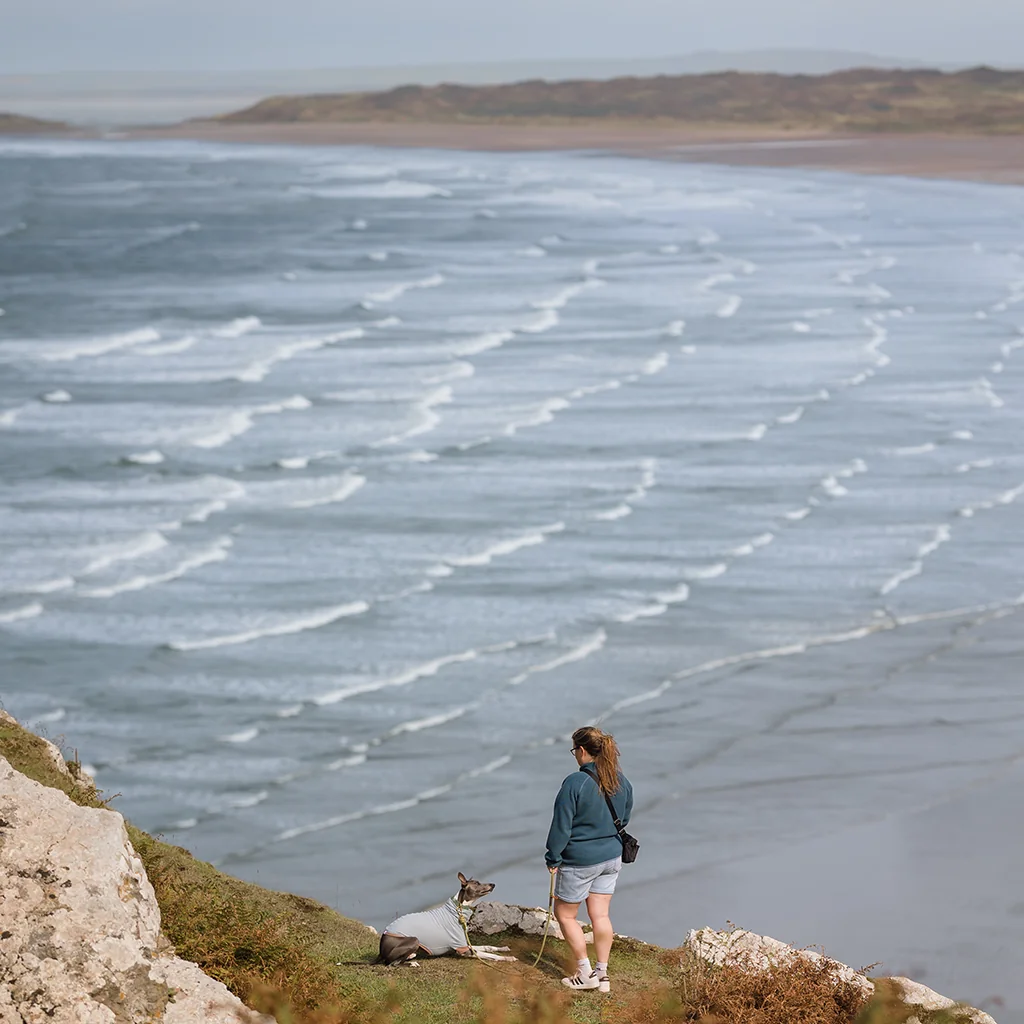
Three miles of golden sand backed by dramatic headland make Rhossili Bay one of the most spectacular landscapes on the Gower Peninsula.
Our recommended circular takes you up onto Rhossili Down, where a little extra effort rewards you with incredible views across the bay and towards Worm’s Head, before descending back towards the coast. This route also comes in at just over two hours., Bbut if you’re pushed for time, a simple out-and-back walk along Rhossili Beach will still give you some spectacular scenery without committing to the full circular.
Distance: 4 miles
Time: Slightly over 2 hours
Difficulty: Moderate
Our chosen Rhossili route on OS Maps
Explore Rhossili Bay on Dog Owner’s Guide →
With thanks to @thenimblewhippet.
6. Holkham Beach & Pinewoods, Norfolk 🌊
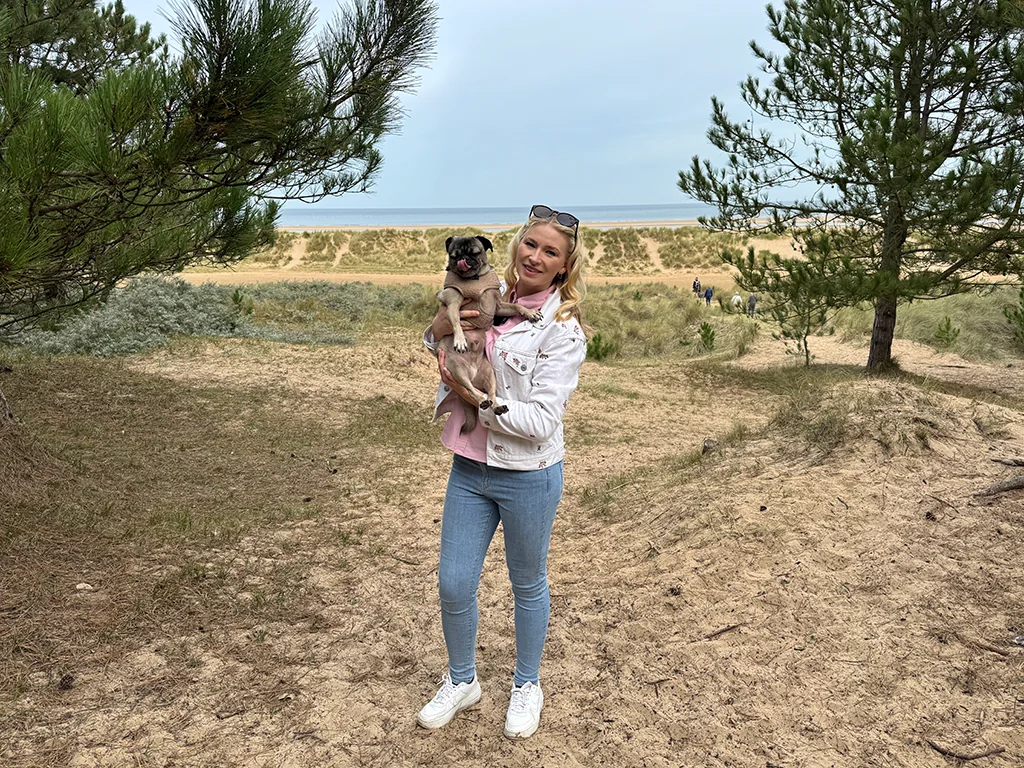
With never-ending sand and pinewoods running behind the dunes, Holkham offers one of the most distinctive coastal landscapes in England.
We recommend combining the beach and pinewoods on a five mile circular walk, heading out across Holkham Gap onto the vast beach before looping back through the pinewoods. At low tide in particular, the beach feels enormous, making it a wonderful spot for a picnic along the way. You can easily tailor the route too, making it as long or as short as you like depending on how far you fancy walking.
Distance: 5 miles
Time: Approx. 2 hours
Difficulty: Easy
OS Maps route
Explore Holkham Beach & Pinewoods on Dog Owner’s Guide →
With thanks to @Ruby_the_chocolate_cockapoo.
7. Lulworth Cove to Durdle Door, Dorset 🌊
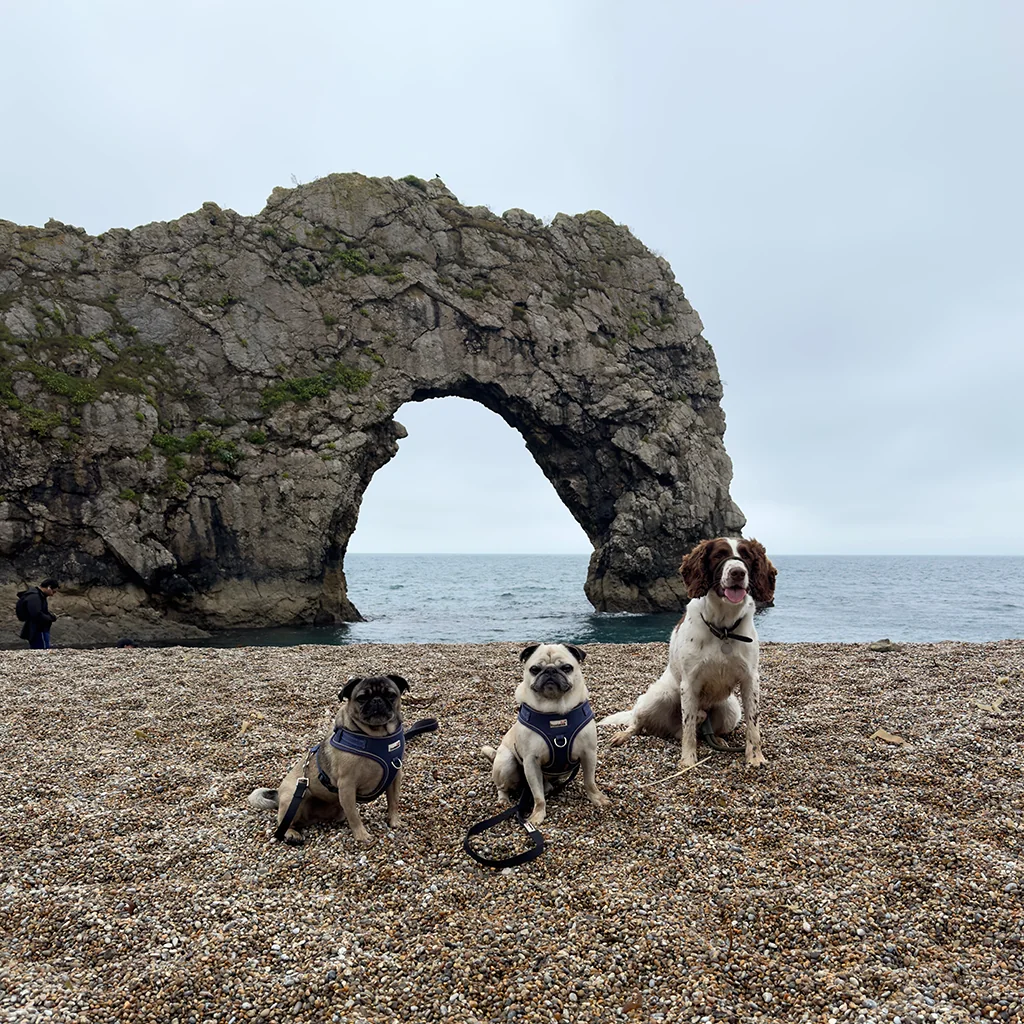
Starting at Lulworth Cove, the route climbs onto the coast before heading towards Durdle Door, with panoramic sea views and Man O’War Bay along the way. It’s a relatively short walk, but with some steep climbs and descents, expect a little more effort than the distance might suggest.
While most walks on this list tend to take two hours or less, we’re making an exception for this one. The route itself takes a little over two hours. And once you factor in stopping to take in the views, you’re probably looking at closer to two and a half hours. Trust us – it’s worth it.
Distance: 4 miles
Time: Slightly over 2 hours
Difficulty: Moderate
Our chosen Durdle Door and Lulworth Cover route on OS Maps
Explore Durdle Door on Dog Owner’s Guide →
With thanks to @norathemerlepug.
8. Wollaton Park, Nottinghamshire 🌳
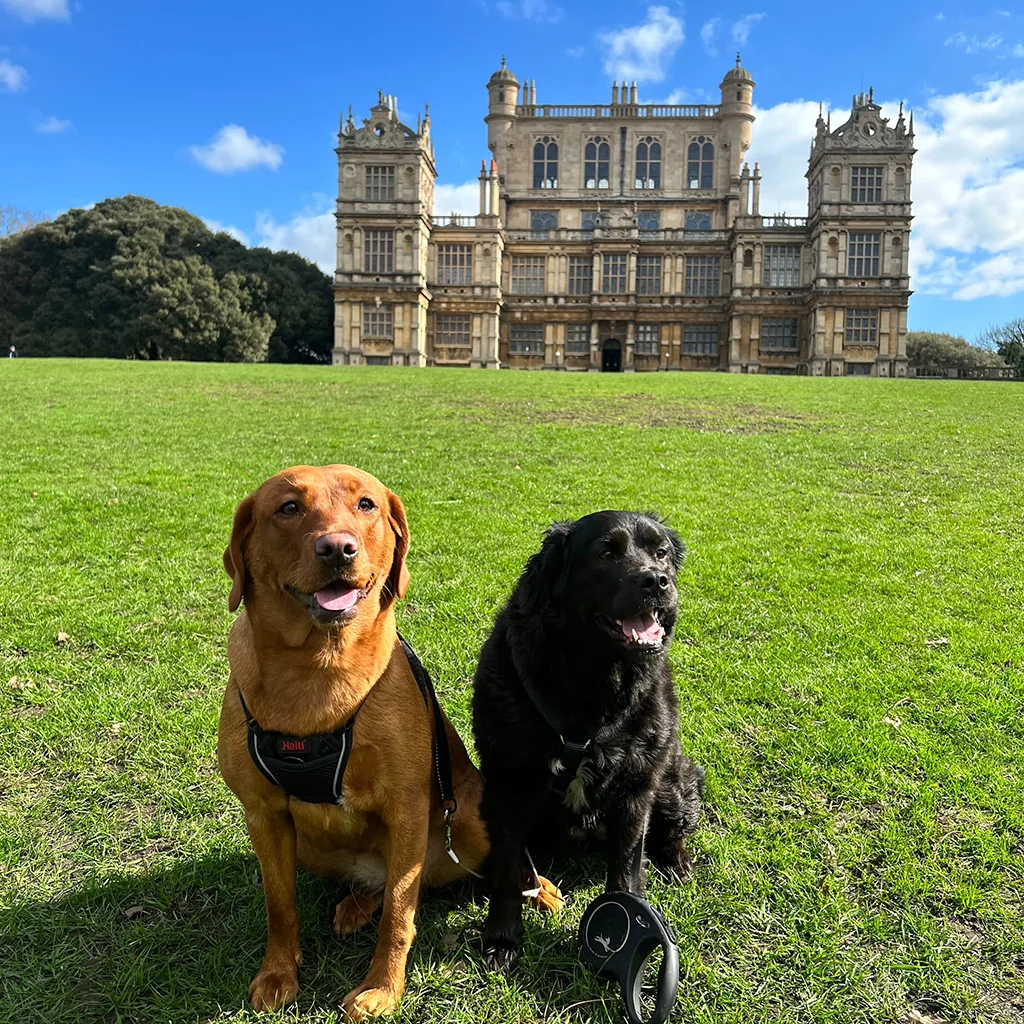
Set around an impressive Elizabethan hall, Wollaton is also home to a historic deer park. Enjoy sweeping parkland, woodland, a lake and wide-open views – despite being just outside Nottingham city centre.
There are several paths to choose from across the estate, so the walk can easily be adapted. We recommend a loop through the deer park and around the lake to experience a good mix of Wollaton’s scenery without needing to cover a huge distance. Allow some extra time to coo at the resident deer along the way.
Distance: 4 miles
Time: Approx. 2 hours
Difficulty: Easy
Our chosen Wollaton Park route on OS Maps
Explore Wollaton Park on Dog Owner’s Guide →
9. Buttermere Lakeshore, Lake District 🐟
You don’t have to head up into the fells to experience some of the Lake District’s most spectacular scenery. Buttermere is surrounded by mountains, with their reflections mirrored across the lake on a calm day.
We recommend a circular walk around Buttermere, taking in the lakeshore and some of the best views across the water. At around four miles, it gives you plenty of those classic Buttermere views while keeping this firmly in dog walk rather than hike territory. There are shorter options too if you don’t fancy completing the full loop.
Distance: 4 miles
Time: Approx. 2 hours
Difficulty: Easy
Our chosen Buttermere Lakeshore route on OS Maps
Explore Buttermere Lakeshore on Dog Owner’s Guide →
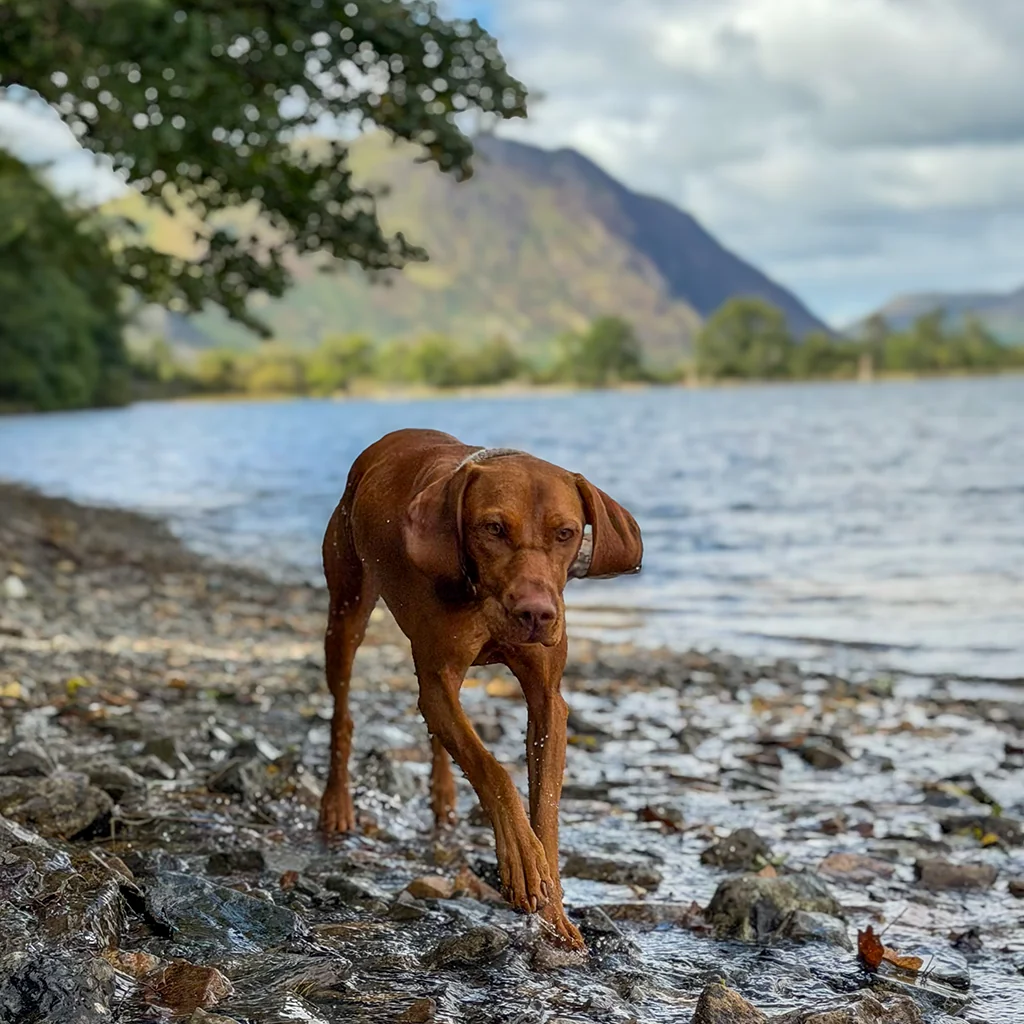
With thanks to @maya_india_lena.
10. Chee Dale Stepping Stones, Peak District 🌊🪨
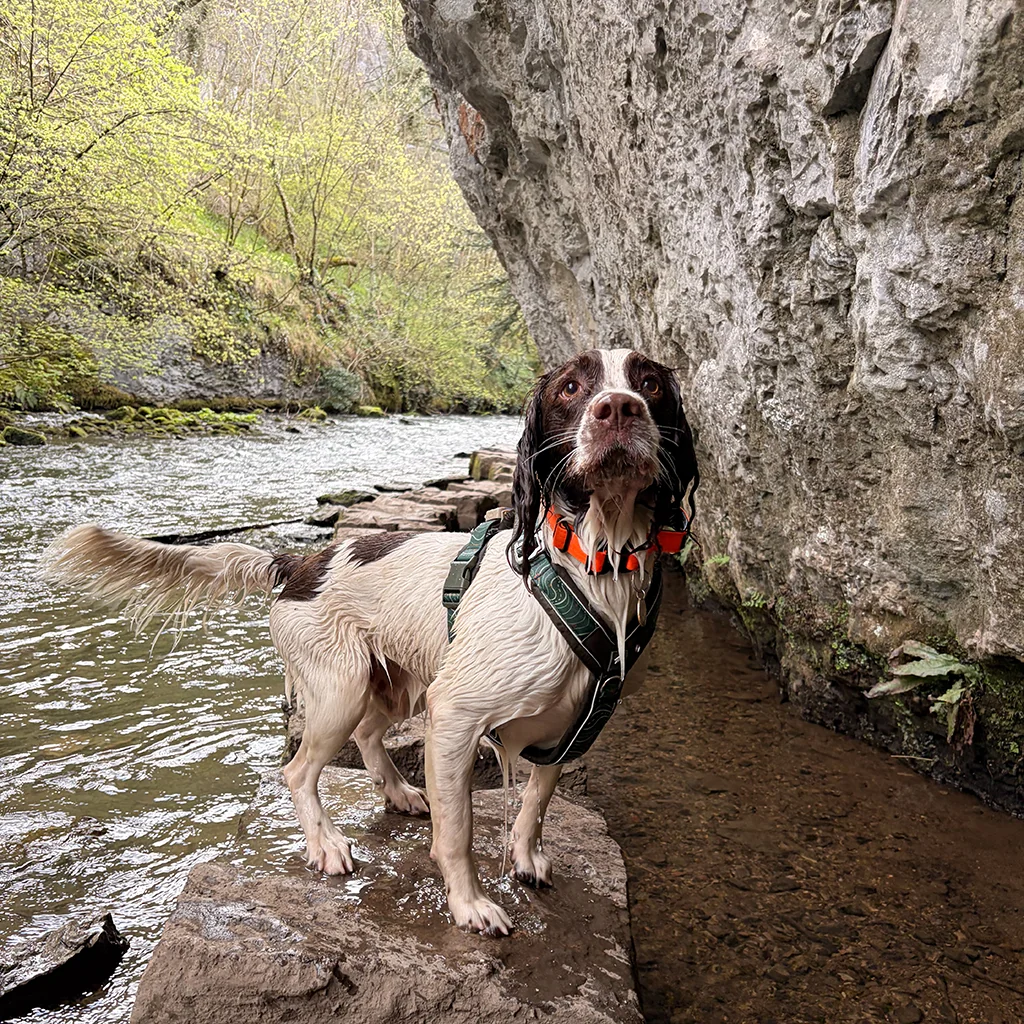
Tucked into a dramatic limestone gorge in the Peak District, Chee Dale combines riverside paths, woodland and towering cliffs, with the River Wye winding through the valley below.
The highlight is undoubtedly the famous Chee Dale stepping stones, which take you right alongside the river beneath the limestone cliffs. We recommend a shorter route through the dale that takes in both sets of stepping stones without committing to one of the longer Peak District walks. Expect some uneven, rocky and potentially muddy sections along the way, particularly after wet weather.
Distance: 2 miles
Time: Approx. 1 hour
Difficulty: Moderate
Our chosen Chee Dale route on OS Maps
Explore Chee Dale Stepping Stones on Dog Owner’s Guide →
With thanks to @agirlandherspaniel.
Find your next scenic dog walk
You don’t need to climb a mountain or spend all day on the trails to experience some of the UK’s most spectacular scenery. From beaches and lochs to woodland and historic parkland, these walks prove some of the best views can be enjoyed on a relatively easy dog walk.
For more information on each walk, including dog-specific tips from those who know them best, explore the full collection on Dog Owner’s Guide.
Why are dog walks so important?
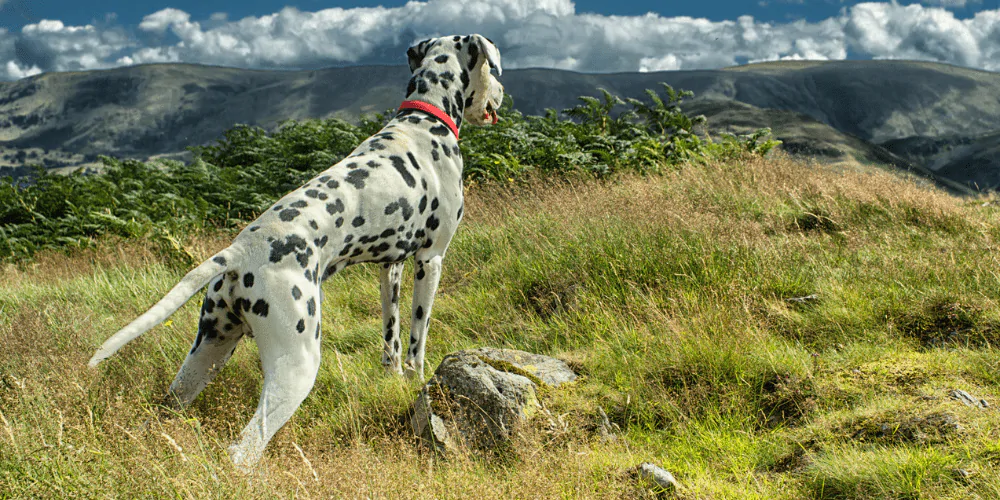
‘Walkies’ is a word that no doubt gets many tails wagging. They’re key to your dog’s physical and mental well-being, whether you’re in the city, the countryside or the seaside.
Here expert vet Dr Corinne Wigfall highlights some of the many benefits of regular dog walks.
1. Physical health and fitness
Regular walks give your dog the physical exercise they need to maintain a healthy weight, strong muscles and good cardiovascular health. Consistent activity benefits joint health, improving flexibility and lowering the risk of obesity-related conditions.
- Remember that each dog is an individual, so tailor your walks to their age, breed, and ability.
- High-energy breeds benefit from walks by getting physical and mental stimulation, while older or less active dogs might enjoy gentle exercise to maintain mobility.
- By adjusting walks to your dog’s pace and ability, you can help them get the right exercise to stay healthy and happy.
- If you’re unsure of your dog’s exercise needs, ask your vet for advice.
Don’t forget that having dog insurance can help protect against the unexpected if your dog’s health takes an unexpected turn.
2. Mental stimulation
Walking isn’t just good for your dog’s physical health – it’s super important for their emotional well-being. They discover a variety of new scents, sights, and sounds, all of which keep them mentally stimulated.
- Take your dog on a ‘sniffari’ by scattering treats in the grass and encouraging your dog to sniff out the treats.
- Adding fetching games and training to the mix is another great way to keep your pup mentally stimulated.
3. Socialisation
Walks can help your dog’s socialisation by allowing them to meet other dogs and people. Interactions with other four-legged friends help them to learn appropriate social behaviour. It also helps them get used to being around different people and other types of animals, making them more adaptable in various settings.
4. Stronger pet and parent bond
Walks can help form strong bonds between dogs and their parents. Quality time outdoors can create positive interactions and build trust and communication.
- Encourage them to show you where they want to walk (if it’s safe to do so) as this gives them choice and helps build confidence.
- Reward positive behaviour with praise or treats to help strengthen your bond even further.

