Cushing’s disease in dogs

  • Up to £15,000 vet fees

  • No compulsory excess or bill share, even as your pet ages†

  • No upper age limit

  • Free 24/7 access to FirstVet video consultations

  • All pre-existing conditions considered*†

Why choose Petgevity pet cover for Cushing's disease in dogs?

Vet fees up to £15,000

More info

To suit your pet’s needs, choose vet fee cover from £1,000 to £15,000. The limit resets every year you renew.

Design your own pet insurance

More info

Policies as unique as your pet. Set your own limits, excess and optional extras, for cover as snug as a collar.

Switch with unbroken cover

More info

If you switch to us from a like-for-like policy, there’ll be no gap in cover, with protection starting straight away**.

What is Cushing’s disease in dogs?

Content by Dr Emma Chandley BVetMed PGCertSAS MRCVS 

Cushing’s disease is a hormonal condition caused by prolonged exposure to excessive levels of cortisol. Cortisol is an important hormone involved in metabolism, immune function and the body’s response to stress. But persistently high levels can affect many different organs.

The name Cushing’s disease is commonly used to describe pituitary-dependent hyperadrenocorticism, where a usually benign tumour of the pituitary gland produces too much adrenocorticotropic hormone (ACTH). This stimulates the adrenal glands to produce excessive cortisol.

A less common form occurs when a tumour develops within an adrenal gland and produces cortisol independently. Long-term treatment with corticosteroid medication can also cause signs of Cushing’s. This is known as iatrogenic hyperadrenocorticism.

What Causes What Causes
Overview
  • Cushing’s disease causes prolonged excess cortisol in the body.
  • It’s most commonly diagnosed in middle-aged and older dogs.
  • Increased drinking, urination and appetite are common signs.
  • Panting, a pot-bellied appearance, muscle weakness and skin changes can also occur.
  • Treatment can control the condition, but most dogs require long-term management.
What Causes What Causes
What causes Cushing’s disease in dogs?

There are several possible causes of hyperadrenocorticism. The most common is a small tumour of the pituitary gland, which results in excessive ACTH production and causes overstimulation of the adrenal glands. This is called pituitary-dependent hyperadrenocorticism (PDH) and accounts for the majority of naturally occurring cases.

A smaller number of cases are adrenal-dependent hyperadrenocorticism (ADH), where a tumour within an adrenal gland produces excessive cortisol. These tumours can be benign or malignant. Long-term administration of corticosteroid medication can cause a different form of hyperadrenocorticism, so your vet will consider your dog’s medication history when investigating the condition.

What Causes What Causes
Which breeds are most affected?

Cushing’s can affect any breed or size of dog, but it is more commonly diagnosed in middle-aged and older animals. Pituitary-dependent disease is reported more frequently in smaller breeds, while adrenal tumours are relatively more common in larger dogs.

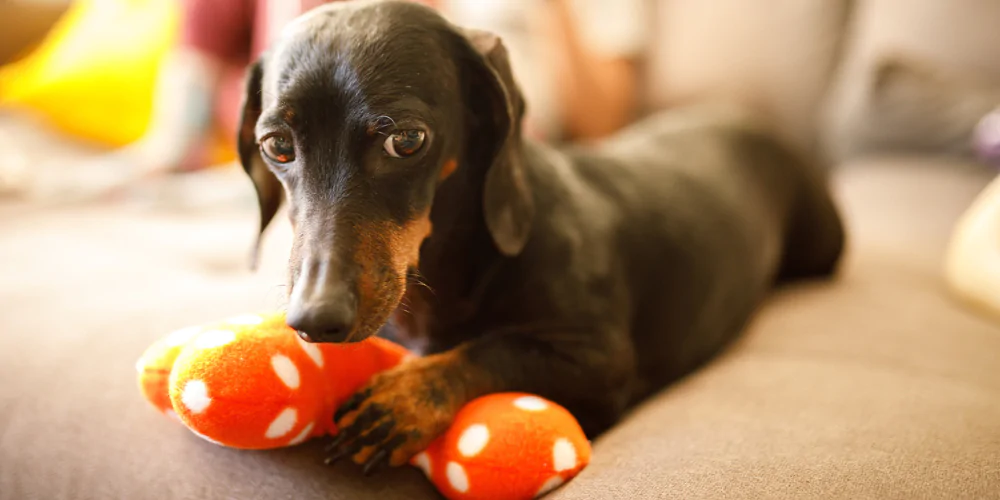
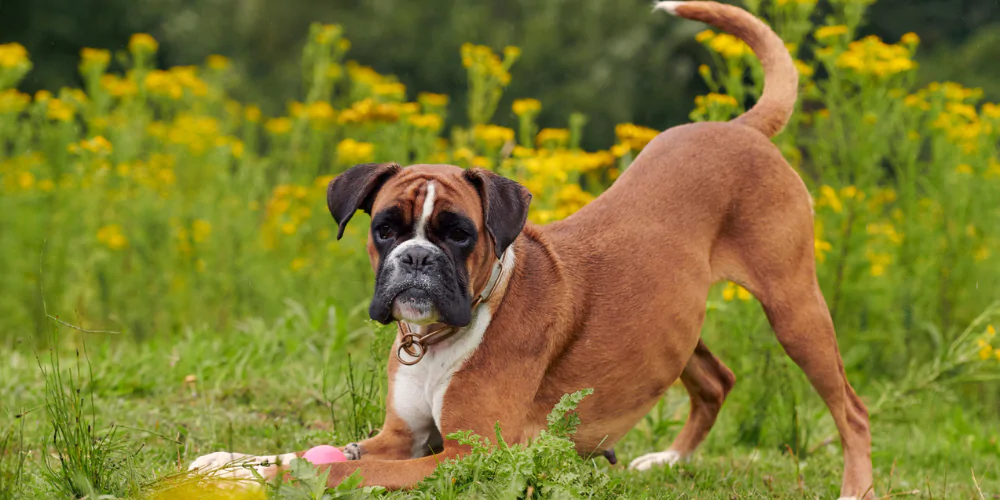
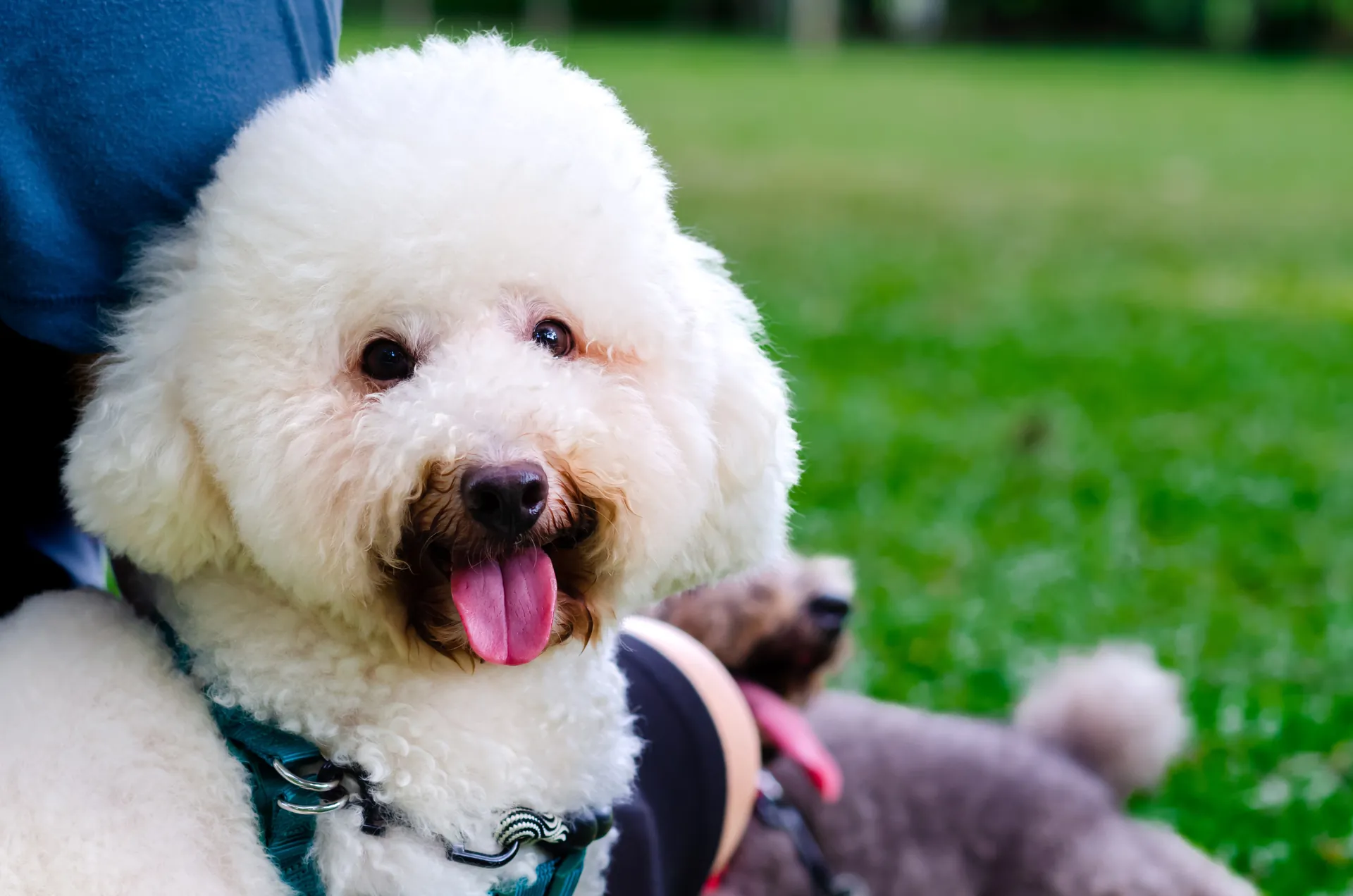
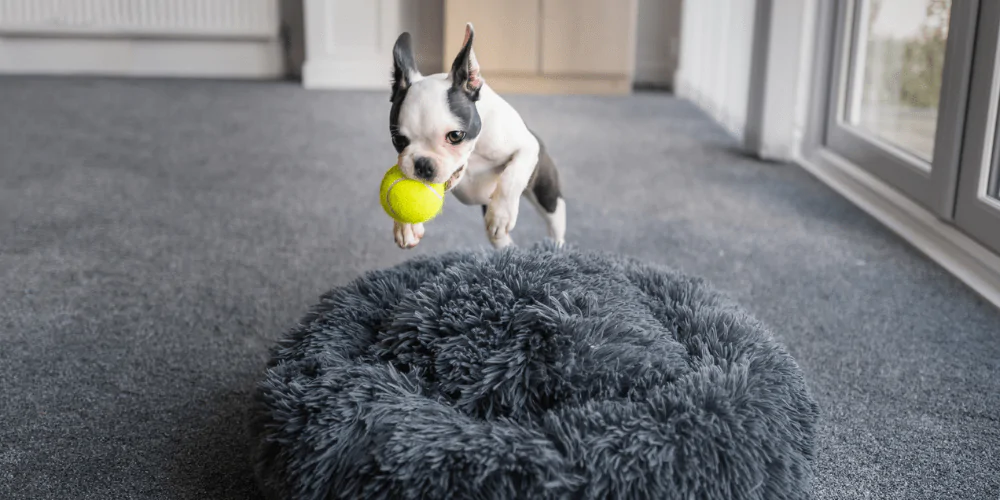
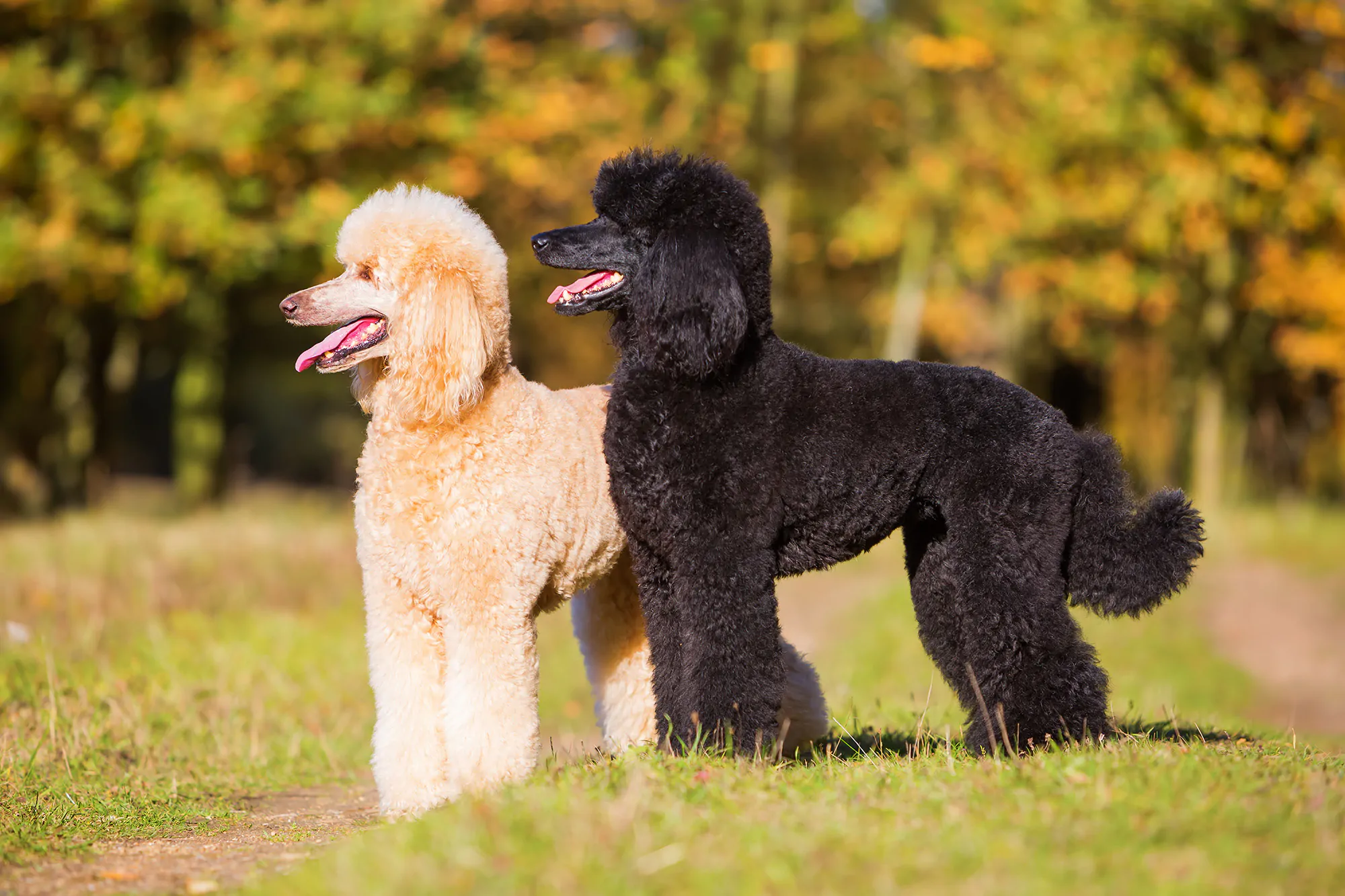
Some breeds, including Miniature Poodles, Dachshunds, Boxers, Boston Terriers and Beagles, have been reported to have an increased risk. However, breed predisposition does not mean that an individual dog will necessarily develop Cushing’s disease.

What Causes What Causes
What are the signs and symptoms of Cushing’s disease?

Cushing’s usually develops gradually, and the signs can initially be quite easy to overlook.

Common signs include:

  • Increased thirst
  • Increased urination
  • Increased appetite
  • Panting
  • A rounded or pot-bellied abdomen
  • Muscle weakness or muscle loss
  • Hair loss
  • Thin or fragile skin
  • Recurrent skin infections
  • Lethargy or reduced exercise tolerance

Some dogs develop several of these signs, while others may initially have only one or two. Increased thirst and urination are particularly common. Your dog may drink considerably more than usual, need to go outside more frequently or start having accidents indoors.

Excess cortisol also affects muscle tissue and fat distribution, which can contribute to a pendulous abdomen and reduced muscle mass. Changes to the skin and coat are also common and may include thinning of the skin, hair loss and recurrent infections. As many of these changes can also occur with other illnesses, especially in older dogs, they do not automatically mean that a dog has Cushing’s.

What Causes What Causes
Diagnosis

Diagnosing Cushing’s disease is not always straightforward. There’s no single test that’s 100% accurate. Your vet will first assess your dog’s history, the clinical signs noted and routine blood and urine test results.

More specific blood tests are then generally recommended when there’s a reasonable clinical suspicion of hyperadrenocorticism, rather than simply because a laboratory abnormality is present. Routine blood tests may show changes associated with Cushing’s, including an increase in alkaline phosphatase (ALP), although these findings are not specific to the disease. Urine testing can also provide useful information.

If Cushing’s is suspected, your vet may recommend an endocrine test to assess how the adrenal glands are responding. The low-dose dexamethasone suppression test (LDDST) is commonly used as the initial screening test, while an ACTH stimulation test may be more appropriate in some patients. The choice of test depends on the individual dog, taking into account the clinical signs and whether other illnesses are present.

Once hyperadrenocorticism has been confirmed, further testing may be needed to determine whether the cause is pituitary or adrenal dependent. Abdominal ultrasound can assess the adrenal glands, while CT or MRI may be recommended in selected cases – particularly where assessment of a pituitary tumour is important.

What Causes What Causes
Treatment of Cushing’s disease

Treatment depends on the underlying cause and the individual dog’s health. Most dogs with naturally occurring hyperadrenocorticism are managed medically. Trilostane is commonly used to reduce cortisol production and control the clinical signs. It does not remove the underlying pituitary tumour, so treatment is generally ongoing. Regular monitoring is essential because too little cortisol suppression can leave the disease poorly controlled, while excessive suppression can cause potentially serious problems.

Other medical treatments, including mitotane, may be considered in selected cases. Dogs with adrenal-dependent disease may be candidates for surgical removal of the affected adrenal gland. This can potentially be curative in appropriately selected dogs, but adrenal surgery is a significant procedure and careful assessment is needed before it’s recommended.

In selected dogs with pituitary-dependent disease, specialist treatments such as hypophysectomy or radiotherapy may also be considered. These options are generally available through specialist referral centres. Dogs receiving treatment need regular veterinary monitoring. Medication requirements can change over time, and blood tests and assessment of clinical signs help your vet determine whether treatment remains appropriate.

What Causes What Causes
Prognosis

Cushing’s is generally a lifelong condition, especially when it’s caused by a pituitary tumour and managed medically. That said, with appropriate treatment and monitoring, many dogs can have a good quality of life for several years. The long-term outlook depends on the underlying cause, the dog’s age and general health, the presence of other diseases and how well treatment controls the excess cortisol.

Untreated Cushing’s can have serious consequences because prolonged cortisol excess affects multiple body systems. Dogs may be more prone to complications including hypertension, diabetes mellitus, recurrent infections, muscle weakness and thromboembolic disease.

What Causes What Causes
Our expert says...

“Cushing’s is one of those conditions that can creep up gradually, so owners don’t always notice how much their dog has changed. Increased drinking, more frequent urination, a bigger appetite, and heavier panting can initially seem relatively minor, particularly in an older dog.

“I often find that owners notice the changes more clearly when they look back over several months. They may realise that their dog has gradually become less active, lost muscle, developed a different body shape or started drinking much more than they used to.

“Diagnosing Cushing’s can be challenging as it may take lots of different tests to come to a diagnosis. The clinical signs and routine blood and urine results all need to be considered before deciding whether specific hormonal testing is appropriate.

“If the diagnosis is confirmed, regular monitoring is an important part of treatment because the aim is to control the disease without suppressing cortisol too much.

“The good news is that many dogs respond very well to treatment. Cushing’s is usually something we manage rather than cure. But with the right treatment and monitoring, affected dogs can continue to enjoy a good quality of life for years.”

Emma Chandley – BVetMed PGCertSAS MRCVS 

What Causes What Causes
Can I get insurance for a dog with Cushing’s disease?

If you’re thinking about buying a Petgevity Lifetime Plus policy, we’ll consider all pre-existing conditions when offering cover for your dog* – including Cushing’s disease. 

When you apply for dog insurance, you need to let us know: 

  • Which medical conditions they’ve had in the last two years 
  • Their health status now

Find out more about Petgevity’s dog insurance for pre-existing conditions.

What Causes What Causes

What’s included in your pet cover

Choosing Petgevity to protect your pets gives you more than just vet fee cover. Here's what you get from our policy.

Dental accident

More info

Covers your pet up to the chosen vet fee limit if they have a dental accident or injury. Always be sure to take your pet for annual dental check-ups, and follow your vet’s advice.

Behavioural treatment

More info

Get expert help with your pet’s mental and emotional wellbeing, as advised by your vet. Cover up to your chosen vet fee amount or the cost of up to 12 sessions, whichever is lower (Lifetime Plus); or up to £1,000 (Lifetime).

Complementary therapy

More info

As advised by your vet, this covers alternative treatments like acupuncture or hydrotherapy. Cover up to your chosen vet fee amount (Lifetime Plus); or up to chosen vet fee amount or £1,500, whichever is lower (Lifetime).

Emergency care

More info

If you can’t look after your pet due to an emergency, such as an unplanned hospital visit, this covers you for up to £1,500 (Lifetime Plus) in minding costs.

Third-party liability for dogs

More info

Covers you for legal costs if your dog causes injury to somebody or their pet, or causes loss or damage to someone’s property. Protects you for up to £2 million in a legal action.

Choice of optional extras

More info

Need extra protection? Choose from several optional extras to cover your pet’s needs, including dental illness, or cover if your pet is stolen or lost.

Award-winning pet insurance provider

best_pet_insurance_provider_logo

Defaqto 5 star rating when you choose vet fees over £4,000 with all optional add-ons included.

Basic cover alone has 3 star rating

best_pet_insurance_provider_logo

Three-time winner National Insurance Awards Pet Insurance Award 2022, 2023 & 2024.

best_pet_insurance_provider_logo

Awarded Best Pet Insurance Provider at The Money Mentor Awards 2024

Compare our multi-pet cover†

petgevity-logo-white p-only-petgevitylogo ManyPets Petplan Agria
Maximum vet fees £15k per year £15k per year £12k per year £20k per year
Cover for pre-existing conditions? ✓ ✓ ✗ ✗
No compulsory excess? ✓ ✗ ✗ ✗
No compulsory co-payments for older pets? ✓ 20% (from age 9) 20% (from age 7) Min. 10% (from any age)
Tailor limits per pet on a multi-pet policy ✓ ✓ ✓ ✓
Dental treatment for accidents? ✓ ✓ ✓ ✓
Behavioural treatment and complementary therapy? ✓ ✓ ✓ ✓

†For Lifetime Plus policies only – details correct as of 10 September 2024 via competitor websites. Competitor products are subject to their own T&Cs and can have different limits and requirements for cats versus dogs at different ages. For full details, please check the relevant policy wording.
For full details of Petgevity pet insurance, please read our policy wording.

Frequently asked questions about Cushing's disease

  • Is Cushing’s disease common in dogs?

    Cushing’s is one of the more commonly diagnosed endocrine disorders in dogs and is seen particularly in middle-aged and older animals.

  • How long can a dog live with Cushing’s disease?

    Many dogs can enjoy a good quality of life for several years with appropriate treatment. Prognosis varies depending on the type of Cushing’s, the dog’s overall health, and response to treatment.

  • Is Cushing’s disease painful for dogs?

    Cushing’s doesn’t necessarily cause obvious pain – but the condition can cause weakness, skin problems and other complications that affect a dog’s comfort and quality of life.

  • Can Cushing’s disease be cured?

    Some adrenal tumours can potentially be cured by surgical removal. Most pituitary-dependent cases are managed rather than cured, although specialist surgery or radiotherapy may be appropriate in selected dogs.

  • Should I be worried if my dog is drinking more water?

    Increased thirst is a common sign of Cushing’s. But there are many other possible causes, including kidney disease and diabetes. A persistent increase in drinking should be discussed with your vet rather than assumed to be Cushing’s.

†Lifetime Plus policies only

*Cover for pre-existing medical conditions is subject to acceptance. They will not be covered unless you have declared them and they are shown on your Confirmation of Cover.

**Illnesses and symptoms won’t be covered in the first 14 days and accidents won’t be covered in the first 2 days of the policy. This is unless you are switching from another lifetime pet insurance product with no break in cover and the claim you want to make would have been covered by your previous policy. Other exclusions may apply to other sections.