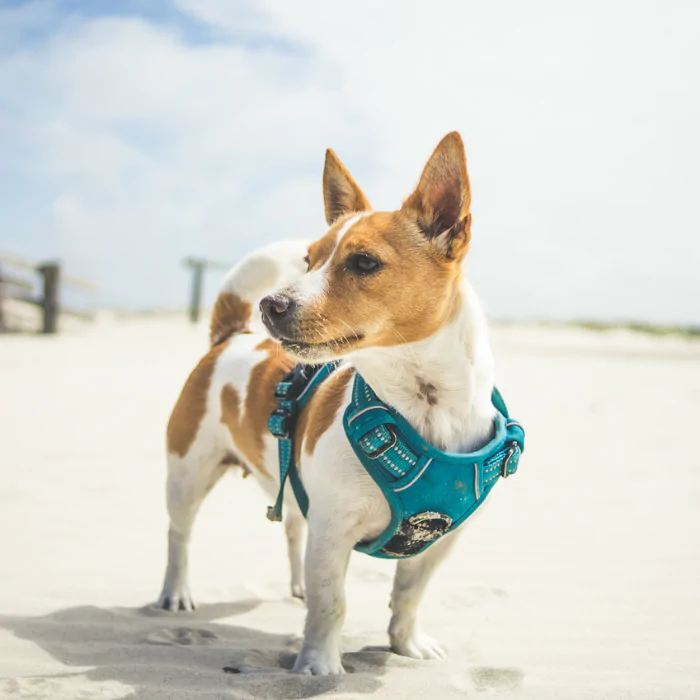
Dog collar or harness: what’s right for my pet? 🐕
Collar, harness or head halter? Here's how to choose the right walking gear for your dog

Nadeesha Fernando
28 May 2026
| 4 minutes read
Collar or harness – which is better for walking your dog? It’s one of those questions with no single right answer, since it really comes down to your individual dog.
We weigh up the pros and cons of each, look at a third option worth knowing about, and help you land on the right choice for your pet.
Table of contents
- Dog collars
> Pros of using a dog collar
> Cons of using a dog collar - Dog harness
> Pros of using a dog harness
> Cons of using a dog harness - Head-halters: a third option
- Is a harness or collar better for a dog?
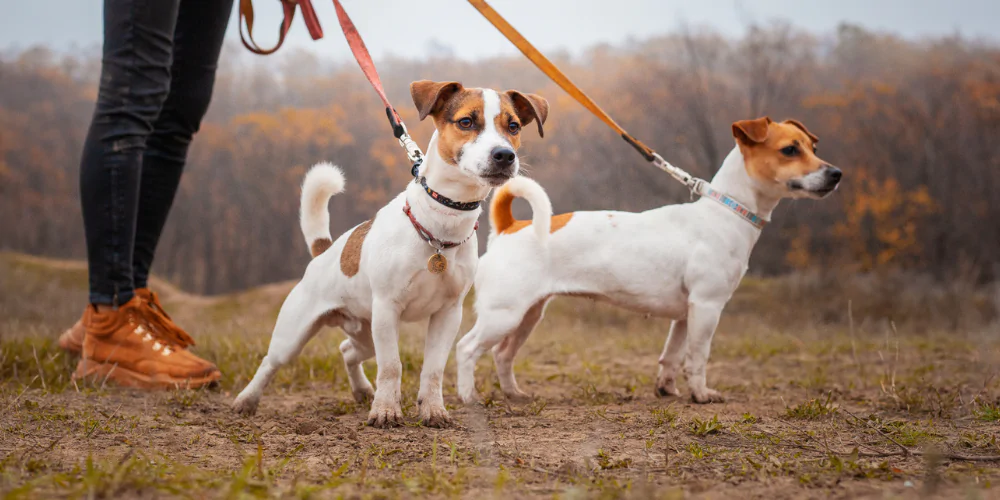
Dog collars 🏷
Dog collars come in a wide range of materials and styles, from leather to nylon, with some shapes designed for specific breeds. The Martingale collar, for instance, is built for breeds like Greyhounds and Whippets, whose narrow heads make them more likely to slip out of a standard collar.
A collar with an ID tag is also a legal requirement for every dog in a public place in the UK, showing the owner’s name and address. This is something worth bearing in mind when making your choice.
A lead that clips onto the collar is the most common option for dog walks.
Pros of using a dog collar
If your dog is likely to wear their collar all day anyway, it’s often the more convenient option for walks too. If they go missing, the collar’s details help reunite you. And it tells whoever finds them that your dog has a home, rather than being a stray.
Collars can also be a better fit for longer walks, since there’s no risk of the chafing around the legs or elbows that a harness can sometimes cause.
Cons of using a dog collar
If your dog’s a puller, a collar can cause real discomfort and even injury, since all the pressure lands on their neck. For the same reason, a collar and lead combination often isn’t suitable for dogs with respiratory conditions, or brachycephalic (flat-faced) breeds.
Choke, prong and pinch collars specifically aren’t recommended by the RSPCA. Some owners use them to curb pulling, but they work by causing discomfort – which risks both physical and emotional harm rather than solving the underlying problem.
Fit matters too. Check by sliding two fingers under the collar: if you can’t fit them in, it’s too tight. If you can fit more than two, it’s too loose.
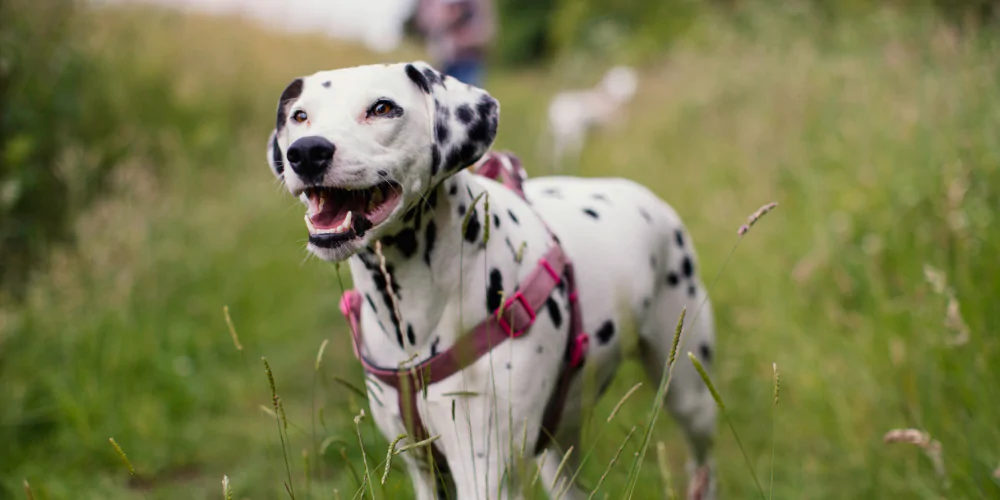
Dog harnesses 🦺
Harnesses come in two main styles: front-attaching, where the lead clips to a point on the chest; and back-attaching, where it clips between the shoulder blades.
Pros of using a dog harness
Harnesses tend to suit pullers much better than collars, since the pressure from the lead spreads across a larger area of the body rather than concentrating on the neck. Plus they’re generally harder for a dog to slip out of.
Front-attaching harnesses in particular can help discourage pulling, since a tug on the lead gently redirects the dog sideways rather than letting them push forward. Back-attaching harnesses tend to suit calmer walkers better, and are often easier to clip on and off.
For brachycephalic breeds, a harness is usually the better choice full stop, since a collar can put too much pressure on the neck and affect their breathing.
Cons of using a dog harness
Some dogs take a little time to get used to wearing a harness at first, though gradual introduction usually sorts this out. Poor fit, an incorrectly attached harness, or a dog who pulls hard can all lead to chafing. And long-furred dogs can occasionally find their coat gets tangled or matted underneath one.
Fit matters here too, just as it does with a collar. Once it’s on, you should be able to fit two fingers snugly under every strap. Check there’s no rubbing at the armpits, and watch your dog’s first few walks for any signs of discomfort or an odd gait, which can point to a poor fit.
Head halters: a third option 🐶
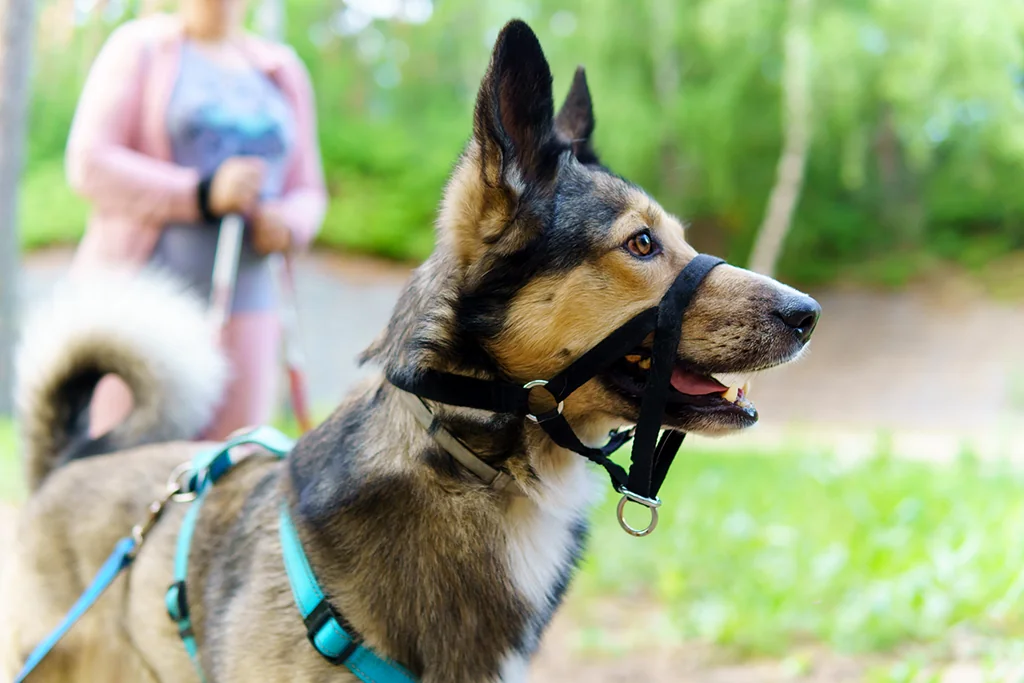
Collar and harness aren’t the only choices – head halters (sometimes known by brand names like Halti or Gentle Leader) are worth knowing about too, particularly for strong or persistent pullers.
A head halter loops around the muzzle and behind the ears, working on the same principle as a headcollar on a horse: where the head goes, the body tends to follow. This gives you a lot of control with comparatively little physical effort, since there’s no pressure at all on the throat.
They’re not a muzzle, even though they can look a bit like one at first glance. Your dog can still open their mouth, pant, drink and take treats normally while wearing one.
That said, they do need a proper, gradual introduction, since plenty of dogs find them a bit odd to begin with. Pawing at their face is a common first reaction. Never attach a lead directly and yank – sudden, forceful movements with a head halter can strain the neck.
If you’ve got a particularly determined puller, and a collar or harness alone isn’t cutting it, it’s worth asking a trainer or behaviourist for guidance on introducing one properly.
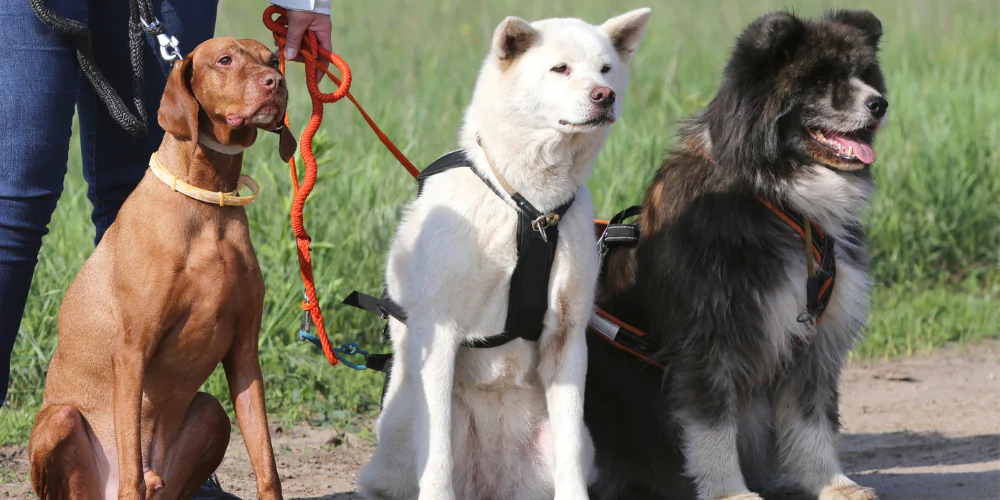
Is a harness or collar better for your dog? ⚖
There’s no single right answer here. It’s worth considering how much your dog tends to pull, how likely they are to slip a collar, and how comfortable they seem in a harness as an alternative.
If you’ve recently got a new pup, puppy lead training is a good moment to introduce both a collar and a harness. Then you can properly weigh up which suits them best.
Older dogs are likely already settled into wearing one or the other. But with a bit of patience, most can adjust to something new if you decide to switch.
Ultimately, go with whatever your dog’s most comfortable in, and whichever option you feel keeps them safest out on your walks.
When it comes to getting the right dog insurance, the right fit is essential. With Petgevity’s flexible lifetime policies, you can tailor cover down to your individual circumstances, ensuring it fits your dog like a collar. Or a harness.

