Diabetes in dogs

  • Up to £15,000 vet fees

  • No compulsory excess or bill share, even as your pet ages†

  • No upper age limit

  • Free 24/7 access to FirstVet video consultations

  • All pre-existing conditions considered*†

Why choose Petgevity pet cover for diabetes in dogs?

Vet fees up to £15,000

More info

To suit your pet’s needs, choose vet fee cover from £1,000 to £15,000. The limit resets every year you renew.

Design your own pet insurance

More info

Policies as unique as your pet. Set your own limits, excess and optional extras, for cover as snug as a collar.

Switch with unbroken cover

More info

If you switch to us from a like-for-like policy, there’ll be no gap in cover, with protection starting straight away**.

What is diabetes in dogs?

Content by Dr Siân Burwood MRCVS

Diabetes mellitus (known just as diabetes to most) is a hormonal condition where the body doesn’t make enough insulin. Insulin is the hormone that controls blood sugar, and when not enough is produced, the glucose the body needs for normal cell function stays in the blood stream instead of going into the cells.

As blood sugar rises uncontrolled, dogs feel very hungry and thirsty but lose lots of weight. And when blood sugar is very high, it can cause an emergency condition called diabetic ketoacidosis (DKA). This is fatal if not treated.

Diabetes is a very serious condition that needs lifelong treatment. But it can be effectively managed when dedicated owners carefully control their dog’s diet and commit to giving insulin injections, alongside regular vet checks. Diabetes mellitus is not the same thing as diabetes insipidus, a different hormone condition.


What Causes What Causes
Overview
  • Diabetes is a serious hormone condition in dogs where they don’t produce enough insulin
  • Uncontrolled blood sugar levels lead to increased thirst, weeing and appetite along with weight loss, or – in more serious presentations – collapse and death
  • Diabetes can be managed with at home insulin injections and a controlled diet
  • With committed caregivers, diabetic dogs can have a good quality of life for 1-2 years after diagnosis
  • Diabetes needs lifelong treatment and an investment of time, emotion and money to treat successfully
What Causes What Causes
What causes diabetes in dogs?

Diabetes in dogs is usually caused by an auto-immune disease where the body’s own immune system mistakenly attacks and destroys the cells in the pancreas that make insulin. It can also sometimes happen after a dog has had pancreatitis where scarring damages the insulin producing cells.

The human categories of type I and type II diabetes do not really apply in dogs. And while obesity is a problem for diabetic dogs, diabetes cannot be controlled with diet alone as it can be in some human cases.

What Causes What Causes
Which breeds are most affected?

Any dog can develop diabetes, but some dog breeds are known to be more at risk. This includes Samoyeds, Cairn Terriers and Tibetan Terriers. The exact genetic cause of this is not known and there’s no test for this.

Samoyeds image by Christian Testa

What Causes What Causes
What are the signs and symptoms of diabetes?

The first signs of diabetes in a dog are:

  • Increased thirst and increased weeing
  • Increased hunger
  • Weight loss despite the hunger
  • Lethargy

Any of these symptoms mean a visit to the vet is needed over the next week or so.

Signs of diabetic ketoacidosis include:

  • Vomiting and diarrhoea
  • Not eating
  • Very low energy
  • Wobbliness
  • Collapse
  • Breath that smells sweet like pear drops

This is an emergency and your dog needs to be seen by a vet (your own or their out-of-hours provider) immediately.

What Causes What Causes
Diagnosis

Diagnosis of diabetes can be simply made by looking at glucose levels in a dog’s blood and urine. Other blood tests will also be recommended to see how the rest of the body is coping with the diabetes.

What Causes What Causes
Treatment of diabetes

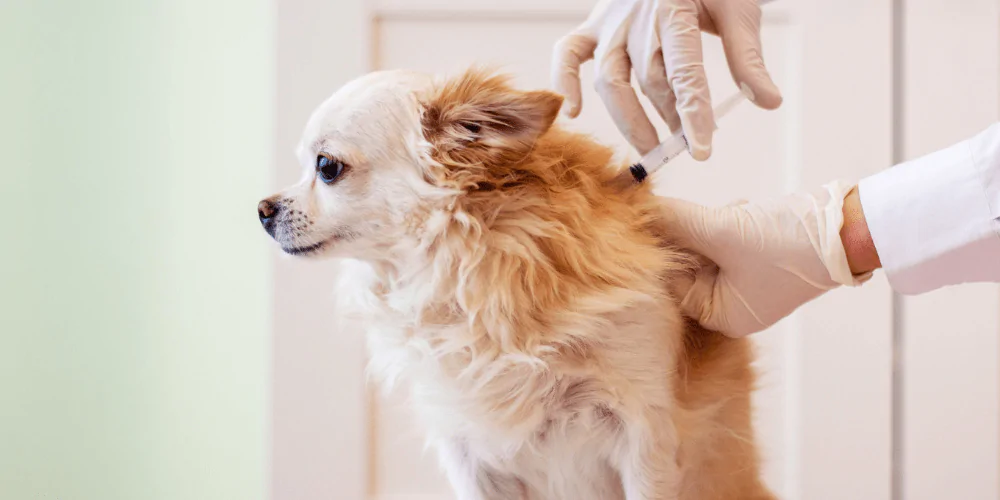
Treatment of diabetes in dogs relies on the caregiver giving injections of insulin to their dog at home, usually twice a day, alongside a carefully controlled diet. While this may seem scary at first, your vet practice team can teach you how to do this and support you as you learn.

Finding the right dose of insulin for your individual dog takes time, and isn’t straightforward in every case. You’ll need regular vet check ups, especially during this stabilisation period. Your vet will need to keep doing blood tests to make sure the dose of insulin isn’t too high or too low.

Treatment of DKA is an emergency and can be fatal if the dog’s blood sugar and vitals cannot be stabilised. After treatment of DKA, the process of starting insulin therapy at home will need to be started.

What Causes What Causes
Prognosis

Diabetes is a lifelong condition, and does require considerable commitment of time, emotion and finances. The prognosis is excellent when treated consistently and correctly, but is not very good at all if management is poor. The prognosis is also worse if a dog presents in DKA.

What Causes What Causes
Our expert says...

“Diabetes is not an uncommon diagnosis for vets in practice, and can be either very rewarding or very difficult to treat.

“I always offer euthanasia as an option at the time of a diabetes diagnosis, because if it’s not treated properly, it can cause serious welfare problems. There’s no denying it’s expensive and time-consuming for owners.

“Despite this, the majority of caregivers go on to provide excellent care for their dogs, and as vets and nurses we are always happy to help support you.”

Dr Siân Burwood MA VetMB MRCVS

What Causes What Causes
Can I get insurance for a dog with diabetes?

If you’re thinking about buying a Lifetime Plus insurance policy, we’ll consider all pre-existing conditions when offering cover for your dog* – including diabetes. 

When you apply for dog insurance, you need to let us know: 

  • Which medical conditions they’ve had in the last two years 
  • Their health status now

Find out more about Petgevity’s dog insurance for pre-existing medical conditions.

What Causes What Causes

What’s included in your pet cover

Choosing Petgevity to protect your pets gives you more than just vet fee cover. Here's what you get from our policy.

Dental accident

More info

Covers your pet up to the chosen vet fee limit if they have a dental accident or injury. Always be sure to take your pet for annual dental check-ups, and follow your vet’s advice.

Behavioural treatment

More info

Get expert help with your pet’s mental and emotional wellbeing, as advised by your vet. Cover up to your chosen vet fee amount or the cost of up to 12 sessions, whichever is lower (Lifetime Plus); or up to £1,000 (Lifetime).

Complementary therapy

More info

As advised by your vet, this covers alternative treatments like acupuncture or hydrotherapy. Cover up to your chosen vet fee amount (Lifetime Plus); or up to chosen vet fee amount or £1,500, whichever is lower (Lifetime).

Emergency care

More info

If you can’t look after your pet due to an emergency, such as an unplanned hospital visit, this covers you for up to £1,500 (Lifetime Plus) in minding costs.

Third-party liability for dogs

More info

Covers you for legal costs if your dog causes injury to somebody or their pet, or causes loss or damage to someone’s property. Protects you for up to £2 million in a legal action.

Choice of optional extras

More info

Need extra protection? Choose from several optional extras to cover your pet’s needs, including dental illness, or cover if your pet is stolen or lost.

Award-winning pet insurance provider

best_pet_insurance_provider_logo

Defaqto 5 star rating when you choose vet fees over £4,000 with all optional add-ons included.

Basic cover alone has 3 star rating

best_pet_insurance_provider_logo

Three-time winner National Insurance Awards Pet Insurance Award 2022, 2023 & 2024.

best_pet_insurance_provider_logo

Awarded Best Pet Insurance Provider at The Money Mentor Awards 2024

Compare our multi-pet cover†

petgevity-logo-white p-only-petgevitylogo ManyPets Petplan Agria
Maximum vet fees £15k per year £15k per year £12k per year £20k per year
Cover for pre-existing conditions? ✓ ✓ ✗ ✗
No compulsory excess? ✓ ✗ ✗ ✗
No compulsory co-payments for older pets? ✓ 20% (from age 9) 20% (from age 7) Min. 10% (from any age)
Tailor limits per pet on a multi-pet policy ✓ ✓ ✓ ✓
Dental treatment for accidents? ✓ ✓ ✓ ✓
Behavioural treatment and complementary therapy? ✓ ✓ ✓ ✓

†For Lifetime Plus policies only – details correct as of 10 September 2024 via competitor websites. Competitor products are subject to their own T&Cs and can have different limits and requirements for cats versus dogs at different ages. For full details, please check the relevant policy wording.
For full details of Petgevity pet insurance, please read our policy wording.

Frequently asked questions about Cushing's disease

  • What are the first signs of diabetes in a dog?

    The first signs of diabetes in a dog are increased thirst, increased weeing, increased appetite and weight loss. If you see any of these, go to your vet for a blood and urine test.

  • What are the causes of diabetes in a dog?

    Diabetes in dogs is usually caused by destruction of the cells in the pancreas that produce insulin, either through auto-immune disease or pancreatitis. Unlike humans, being overweight is not itself a cause of diabetes, but it does not help if they are overweight.

  • What diet should my diabetic dog be on?

    Diabetic dogs should be on a high-protein, high-fibre and low-GI-carbohydrate diets to help even out changes in blood glucose. Food should be given at the same time in the same amount each day. Speak to your vet for the best advice about how to do this.

  • Can I treat my dog’s diabetes without insulin?

    It’s not possible to treat a diabetic dog without insulin, as diabetes in dogs is about lack of insulin production rather than insulin resistance (as seen in some human and cat types of diabetes). If you do not give insulin to a diabetic dog, the condition will be fatal.

  • What is the life expectancy of a dog with diabetes?

    If controlled well, a dog with diabetes can have 1-2 years of good quality life after diagnosis. Dogs who live less than this may have other conditions as well as the diabetes, or their diabetes and diet is not being properly managed.

†Lifetime Plus policies only

*Cover for pre-existing medical conditions is subject to acceptance. They will not be covered unless you have declared them and they are shown on your Confirmation of Cover.

**Illnesses and symptoms won’t be covered in the first 14 days and accidents won’t be covered in the first 2 days of the policy. This is unless you are switching from another lifetime pet insurance product with no break in cover and the claim you want to make would have been covered by your previous policy. Other exclusions may apply to other sections.